
How Disney's "Hexed" Team Built a Witch Realm, a Rebel Heroine, and a Score Made of Air


The morning after Disney Animation’s Hexed held its world premiere in Hollywood, I sat down with directors Fawn Veerasunthorn and Jason Hand, producers Roy Conli and Yvett Merino, and Academy Award-winning composer Kris Bowers to talk about how the film was built from the ground up, developing a witch realm with centuries of hidden history, and creating a score made largely out of air.
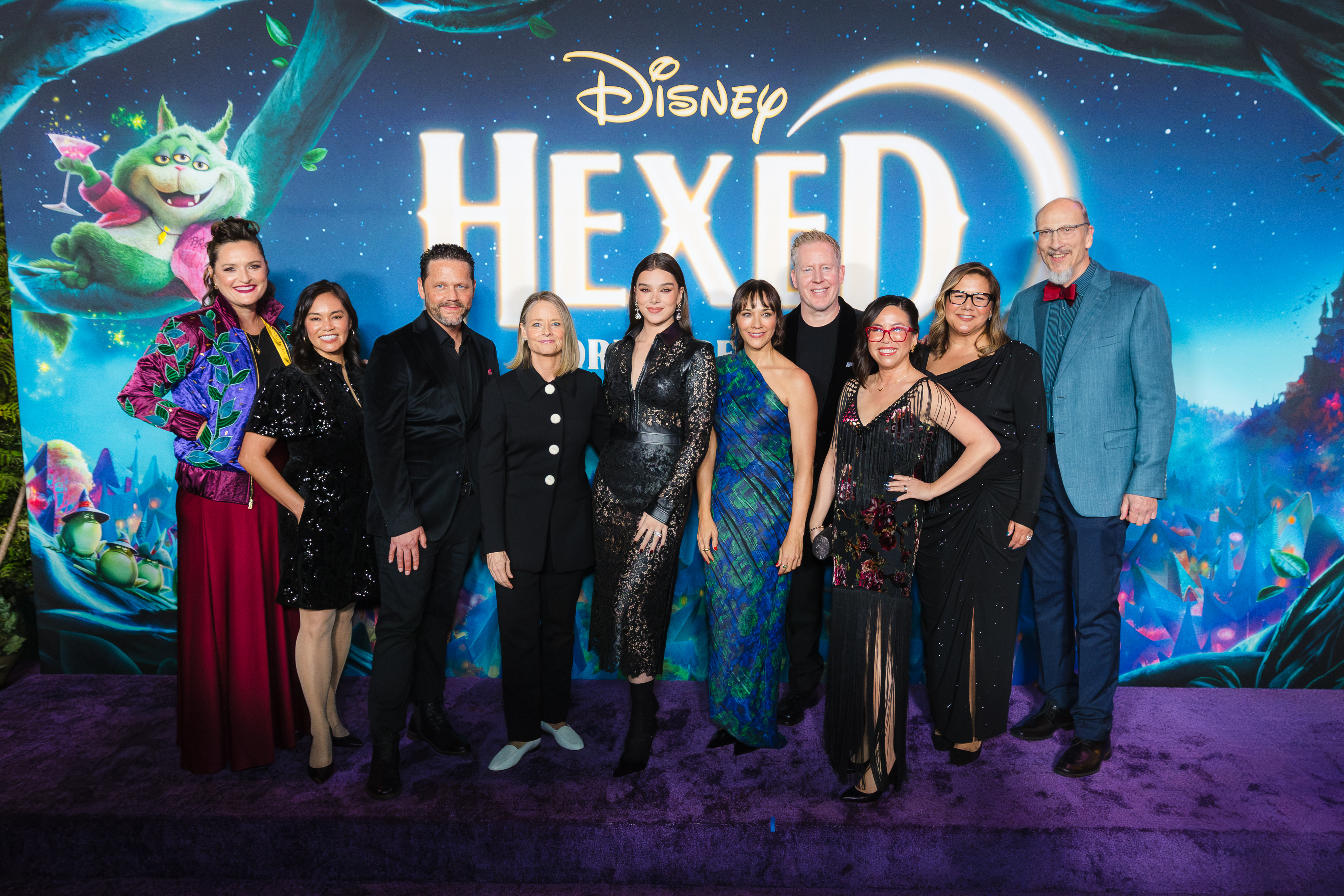
By the time of the premiere, the filmmakers had watched Hexed countless times, in pieces and in full. But they had never seen it with a public audience until that night. Director Fawn Veerasunthorn knew the film was landing when the tears started. "I heard someone start crying behind me, some sniffles, and then I looked down at my daughter, who was on my left, and she was also crying," she recalled. "I was like, whoa, it's happening."
Composer Kris Bowers brought his family to the premiere, which played in Dolby Atmos at the El Capitan. "Being at a point where my daughter can watch these films is really exciting," he shared. "Disney films have always had a special place in my heart since I was a kid. So much of my reason for being a composer is actually because of the music in those films. And so to be a part of an animated film for Disney that is going to be in the hearts of so many kids in this next generation means a great deal."
When Billie stumbles into the witch realm of Hexe, audiences get only glimpses of its history. Behind the scenes, though, the filmmakers mapped out far more than made it to the screen. "We have many boards of, like, it was created at this point, this date, after the Salem witch trials," revealed director Jason Hand. "We spent a lot of time doing that because we wanted to have the believability of a world that feels well researched. And it also has these incredible little elements, like there are sculptures of these two witches in the actual mountainside. It speaks to this unspoken history we have within the film."
Veerasunthorn added that those hints point to a larger purpose behind the realm. "We want to hint at the larger world outside of just the city, because it hints at a long history, a world well lived," she said. "This is a place that was created by witches for witches, for them to not have to hide who they are and be able to thrive and find their full potential."
Conli credited production designer Lorelay Bové for giving Hexe its look. "I don't think anyone has ever seen this world before," he said. "When people go to the theater, they're going to be amazed at where they are."
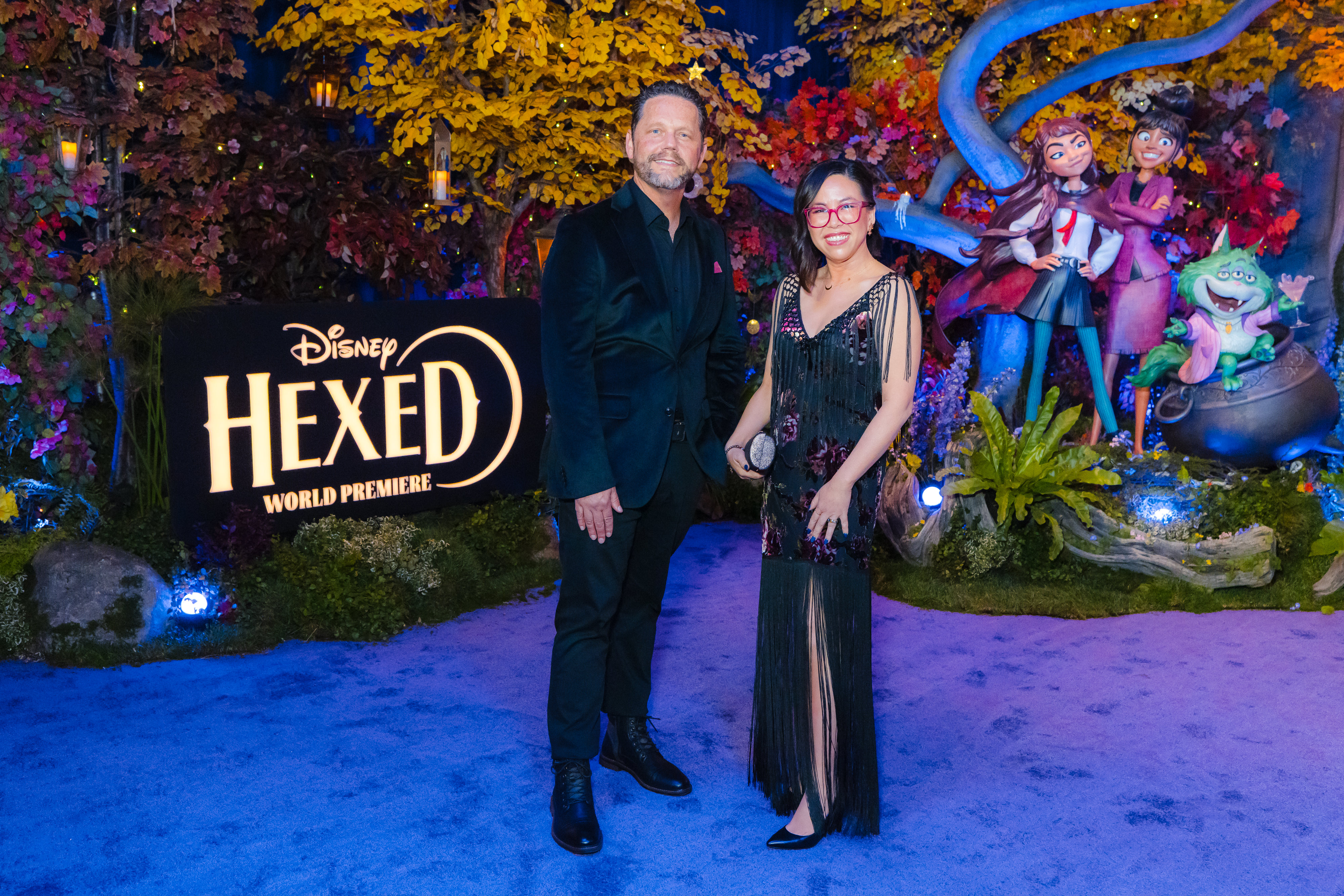
Billie Doe is not a typical Disney heroine. She is impulsive, rebellious, and prone to bad decisions. According to producer Yvett Merino, the story team found her by looking back at their own adolescence. "There was a lot of conversation about our teenage years, and the story team shared stories,” Merino said, hinting that Jason Hand may have inspired the moment when Billie borrows her mom’s car without asking. “That's what's so fun and relatable about her, because she is this young woman who's trying to figure out who she is and how she fits into this world, and doesn't quite feel right. I know I definitely felt those feelings as a 16-year-old, saying, 'Oh, I don't really fit in here.'"
Making Billie vulnerable took more work. Hand pointed to an early scene in which Billie tells her mother, Alice, that there's something she doesn't understand about herself. "Her mom kind of knows what it is, right? So there's this miscommunication happening between them," he said. "That was actually kind of a tricky thing to get right."
Veerasunthorn explained the theory the directors shared about their lead. "What Billie feels is that there's magic running in her veins that makes her feel like she's miscast in this world, and she doesn't quite have all the tools to know how to deal with that," she said. "But on top of that, it's a secret that her mom's keeping from her."
That secret ultimately opens the film up into a story spanning three generations, which Hand said came together gradually. "It was all through the process of discovering the story," he said. "We always knew that Alice was going to be from this world, and we needed a really strong reason why she left, and why if Billie came into this world, it would be such an earth-shattering event inside of Hexe. So when we connected all those dots and made it the three generations, it put pressure on every element of the story at once, and it made everything connected. Which, as storytellers, is something we're always looking for."
The magic in Hexed is rooted in nature, and the filmmakers wanted it to sound that way too. Veerasunthorn said they challenged sound designer Jeremy Bowker to give each character's spells a tactile quality. "Billie's magic, we want to hint at danger, something that cannot be controlled," she said. "So there's a bit of a crackling fire ember sound that Jeremy put something else over top of."
Hand admitted it took time to crack. "The classic is the bell sound, right? And we were like, we just can't do that. We have to find something different," he said. "So [Bowker’s] solution was really surprising to us."
For the score, Conli first noticed Kris Bowers through his work behind the camera. "I first became aware of Kris Bowers seeing a couple of documentaries that he directed that are just stunning," he said, citing the Oscar-winning short The Last Repair Shop, "which is all about music. And then we're all aware of his work over the years. He brought such depth and humor at the same time. It was really impressive."
"He truly was a gift to bring onto this film," said Merino. "The moment he came on and started sharing the music, it just elevated the story and the emotion of what we were telling."
Hand compared Bowers' approach to a legendary film composer. "He writes themes very similar to what John Williams would have done in scores, and he evolves those themes as the character evolves," he said. "I've seen the movie a lot of times. I made the movie. And his music is actually the thing that goes directly into my heart and makes me tear up and feel things. So that's a huge testament."
Bowers said his sound for the film took shape once the filmmakers zeroed in on one idea. "When we started talking about how important the idea of flight was in this film, and the more they focused on that with the story, the more I tried to find ways to use air in unexpected ways," he explained. "First it started with actually sampling bird sounds. There's a bunch of recordings of birds that we captured and then turned into instruments in different ways, each one having a different thematic connection to characters."
From there, he got experimental with woodwinds. "We recorded them spread massively apart in a room, and then we took those recordings and put them on speakers in another room and miked them in a different way," he said. "So there's a spatial, directional thing with that ensemble. And then there's a bunch of other unexpected wind instruments, like kazoo and nose flute and bird call whistles and all kinds of things." Combined with synthesizers, those elements gave him "a pretty unique palette" to layer over the orchestra.
The film's main theme accompanies its central flight sequence, but Bowers didn't write it to the footage. Instead, he spent two to three months with the filmmakers developing a three-minute stand-alone piece that explored all of the thematic elements he could later pull from. Even the shape of the melody was tied to flight. "We talked about even the direction of each of those notes, and when we choose to go up or down, or when we choose to go to an unexpected note," he said.
That original suite gets its own moment in the finished film. "That recording during the credits is actually that first piece of music," Bowers revealed. "Oftentimes we write a theme suite as composers almost as an exercise to just tell everybody what the score is going to sound like and feel like, and we don't often get a chance to record it. So to be able to record it and then also have it featured in the film was really exciting."
Bowers knew early on which songs would appear in the film, which let him plan how the score would lead into and out of them. One needle drop required a closer collaboration. "The Demi Lovato song, ‘Confident,’ is one where it's about half score, half song," he said. "We knew this song needed to carry a lot of this final action set piece, and they wanted to make sure that it felt as cinematic as possible. They were gracious enough to give me the stems, and then I was able to take those stems and break it through the whole sequence and orchestrate around that, so that it had this sound that matched the rest of the score."
When I asked if he hoped to one day hear his music in a Disney Park with his daughter, Bowers said that idea was part of the process from the start. Walt Disney Animation Studios Chief Creative Officer and co-writer Jared Bush often raised it. "Not in sort of a planning way, but more so just, we have to be mindful of that idea of this music being able to live outside of the context of the movie," Bowers said. "That's part of the reason why that main theme was written not to picture, because he was like, 'I want to be able to hear this piece of music and imagine it in a park, or imagine these other places, and really feel like it fits in those other spaces.' And so having that, even just in my imagination, was really fun."
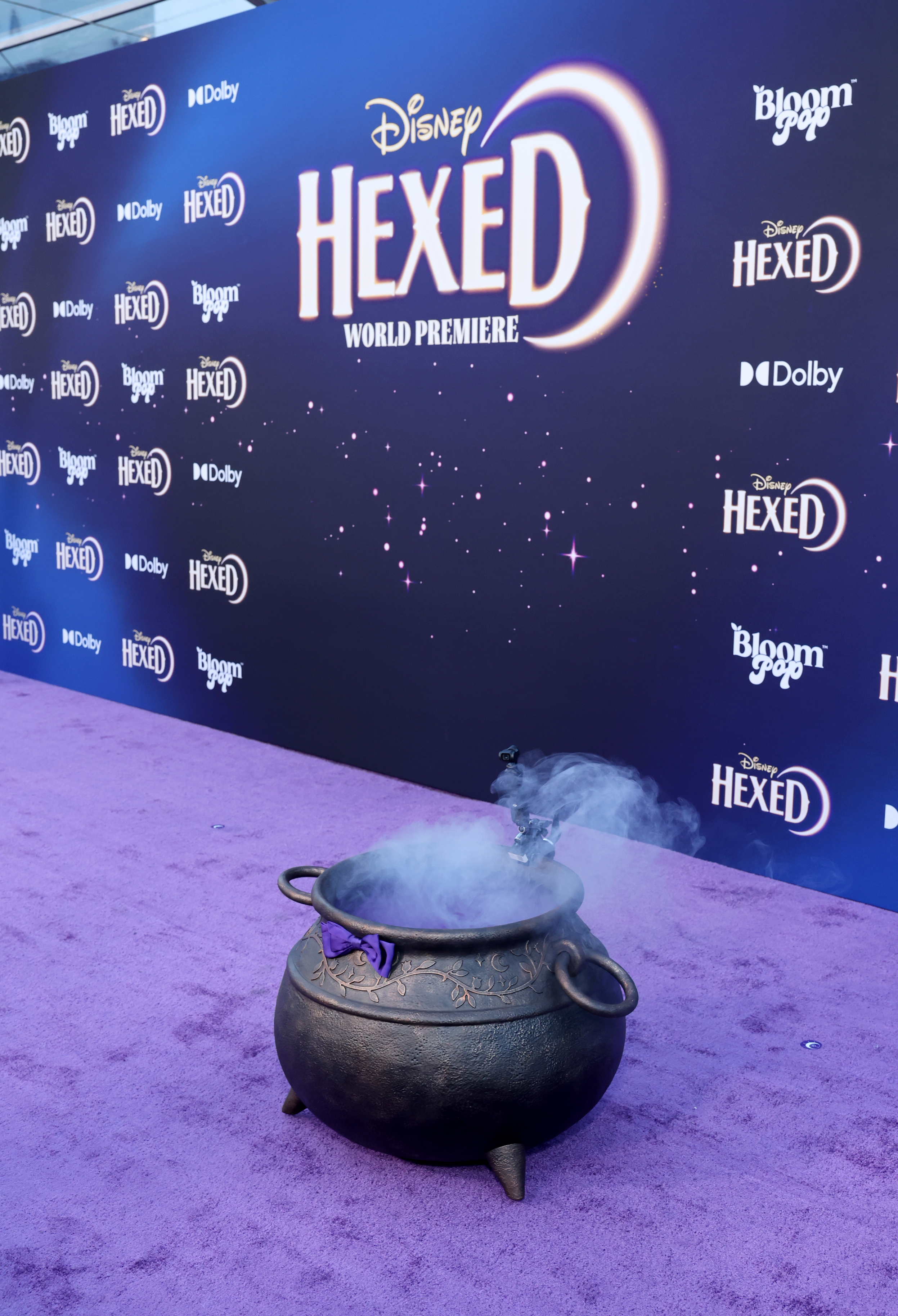
Bucket became my favorite character in the film; Billie's enchanted cauldron companion steals the show. "It's just the little puppy that you want to follow you around and always try to be so helpful," Merino agreed.
Conli's favorite character ended up being “Moon Hype Man,” a merch-hawking superfan voiced by WWE star Drew McIntyre. “He is absolutely brilliant," Conli said. "He's so much fun, and he's strung through the entire thing. He's the best."
For Veerasunthorn, the biggest surprise was Nigel, the skittish potoo bird voiced by Henry Winkler. "We wanted a character that helped Billie along the way. But once Henry Winkler came in, this person who didn't want to step out of the cage, I never thought he would be lovable," she said.
Hand said Winkler made the character his own in the recording booth. "He is an ad-lib machine. Every time he steps up there, he's got a new joke to throw in. It was just so much fun. What an amazingly nice guy. He's the real deal. I loved working with him."
After years of building Hexed in pieces, the filmmakers finally got to watch it all come together in front of an audience, and the reaction made the journey worthwhile. "We've shown the crew that worked on it; we've shown executives who are helping to market it," Conli said after the premiere. "To see
[it with] an audience, it was magic." Audiences everywhere can now experience that magic for themselves.Disney’s Hexed is now playing exclusively in theaters.