
Jeff Dunham Discusses Being a Disney Dad During DVC Member Cruise


Many Disney Vacation Club members may have been surprised to see Jeff Dunham on the program, as he is known for his mature material and playing large arenas. However, this rare intimate experience proved to be a Member Cruise highlight.
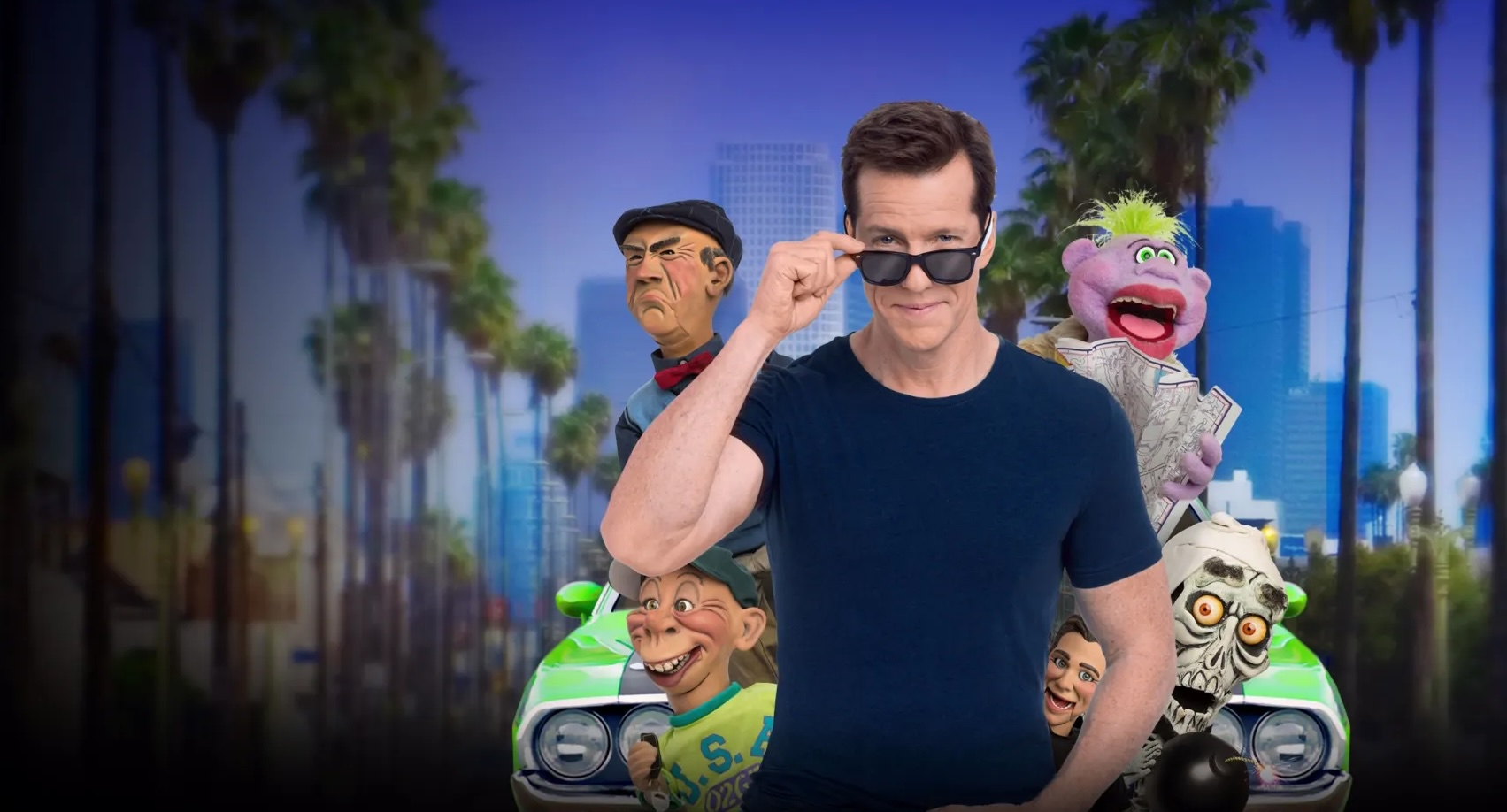
Jeff Dunham has spent decades performing for enormous audiences, becoming one of the most successful touring comedians in the world along the way. But when he joined Tony Shepherd for a conversation aboard the Disney Vacation Club Member Cruise, Dunham repeatedly tried to downplay his celebrity status. As far as he was concerned, he was there for a much simpler reason: he is a Disney dad.
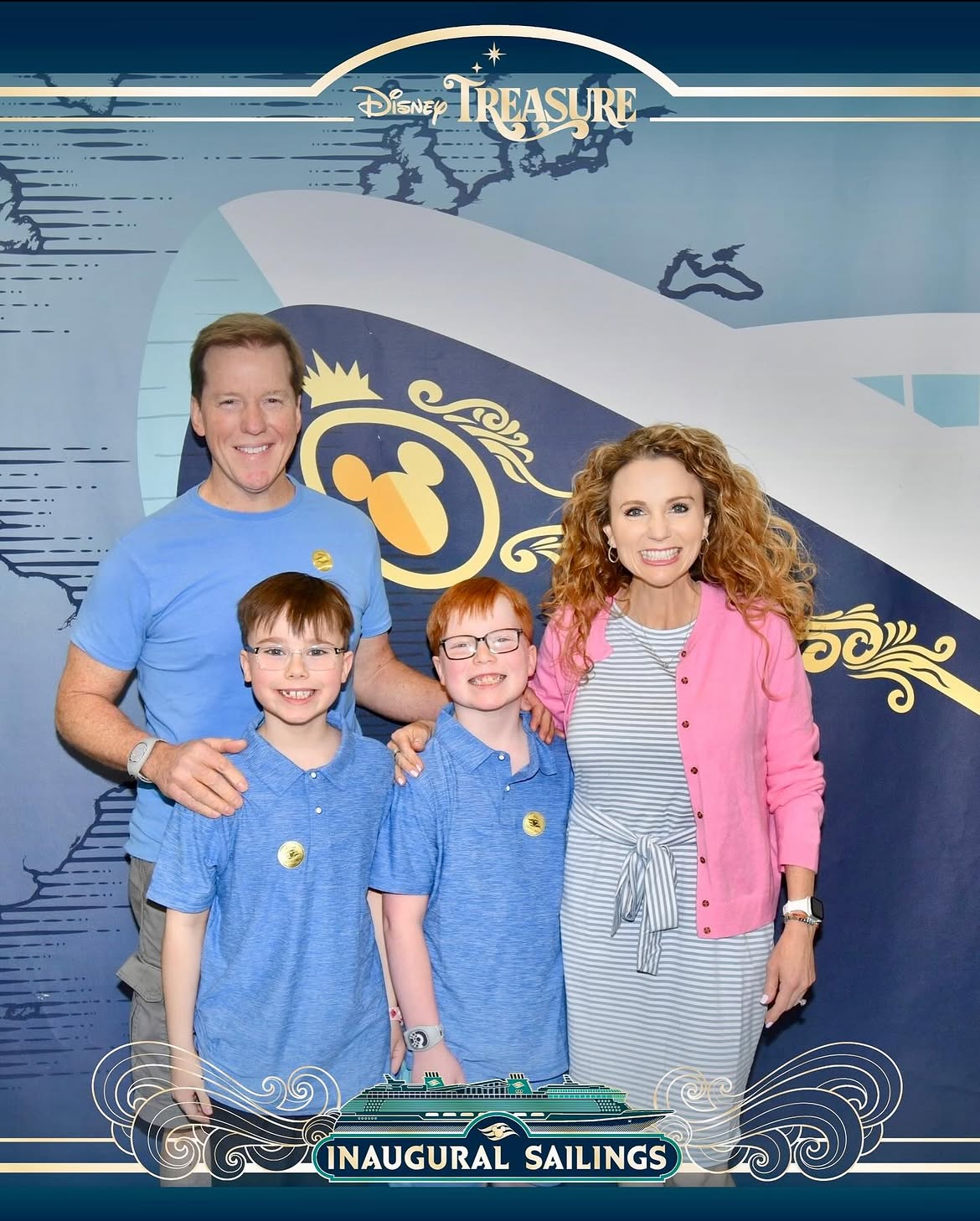
Dunham told the audience that Disney has been part of his family life for years. He raised his three daughters with trips to Disneyland, Walt Disney World and aboard Disney Cruise Line, and he has continued that tradition with his wife Audrey and their twin sons, Jack and James. The boys, now 10, were already enjoying their fifth Disney cruise.
That personal connection helped lead to Dunham’s friendship with Shepherd, who explained that he had admired Dunham’s work long before they became friends. Shepherd remembered first seeing him on The Tonight Show Starring Johnny Carson and later hiring Dunham for a project during his own years working in casting. The show was never produced, Shepherd joked, but at least Dunham still got paid. Years later, the two connected through their mutual enthusiasm for Disney. That eventually led Shepherd to introduce Dunham to Disney Vacation Club and invite him to join the Member Cruise.
Dunham seemed genuinely amused to discover how many Disney Vacation Club Members in the theater were already familiar with his live performances. When he asked how many people had attended one of his shows, a significant portion of the audience responded. “Disney fans actually go to my shows,” Dunham joked. “I am so ashamed of you.”
The contrast between Dunham’s sometimes-edgy comedy and the surroundings of a Disney event became an ongoing gag throughout the evening. Dunham said his goal was to give everyone a great show while remaining just restrained enough that Shepherd might someday invite him back. It was a goal that would become increasingly difficult once Walter and Peanut joined the conversation.
Another Disney connection came through John Stamos, who had appeared on the Member Cruise stage the previous evening. Dunham had watched Stamos’ presentation from the audience and was impressed by the videos, photographs and other material assembled to look back at his friend’s career.
Dunham joked that he could never compete with Stamos’ stories, although he could offer a slightly less interesting story for every great one Stamos told. The two live near one another and have become friends, with their shared love of Disney providing just one of their connections.
At one point, Stamos decided that he wanted to learn ventriloquism. He found someone making relatively inexpensive versions of classic-style ventriloquist figures, and Dunham was intrigued enough by the price that he told Stamos to get another for him.
When the figures arrived, Stamos came to Dunham’s home and the pair made a video together. Dunham admitted that the experience did not go entirely according to plan because Stamos had apparently practiced and was actually pretty good at ventriloquism.
Dunham did his best to make fun of his friend anyway, but then made the mistake of mentioning that he had always wanted to learn the drums. He immediately saw Stamos’ reaction and realized what was coming next. If Stamos could become the student in a ventriloquism video, Dunham could become the student while Stamos taught him to play drums. “You’re really going to make me a moron,” Dunham remembered thinking.
Dunham’s ventriloquism career began long before television specials, arena tours or Guinness World Records. As a child, he spotted a ventriloquist dummy in a toy store shortly before Christmas and showed it to his mother, who seemed to dismiss his interest and told him to put it back.
Apparently Santa Claus was paying attention because a ventriloquist figure was waiting beneath the Christmas tree. Within about three months, Dunham had taught himself enough ventriloquism to incorporate the figure into a third-grade book report.
From there, he simply kept going. Dunham performed throughout junior high and high school, continually working on his act while most kids his age were still figuring out what they wanted to do.
By seventh grade, Dunham said he already understood that show business consisted of two equally important parts, the show and the business. If he was serious about becoming a professional entertainer, he figured he needed what every professional entertainer seemed to possess at the time, a proper 8-by-10 publicity photograph.
His parents were supportive, but they were not about to spend a bunch of money on a professional photo shoot for their middle-school ventriloquist. Dunham therefore found a much less expensive alternative when school picture day arrived. He rode his bicycle to school with his dummy, Monty, packed in a suitcase on the back. When his turn came, he walked over to the photographer, sat down and placed Monty on his knee. The photographer was understandably confused and reminded Dunham that this was his actual school photograph. It would appear in the yearbook and remain there permanently, which was exactly what Dunham wanted.
Years later, when his own daughters refused to believe the story, Dunham pulled out the yearbook and showed them the evidence. He had not only gone through with the idea, but repeated the stunt the following year.
The childhood photographs became part of a slideshow Dunham shared during the Member Cruise conversation, giving him plenty of opportunities to make fun of his younger self. One photograph showed him wearing vividly mismatched pants, green socks and purple Converse shoes. “This is not an outfit that I put on by accident on a Saturday morning in the dark,” Dunham joked. This was an outfit his mother had knowingly allowed him to wear to school.
Another photograph showed just how far his parents were willing to go in supporting their son’s unusual passion. When the family visited Olan Mills for a formal family portrait, Monty came along too, and the resulting photograph featured Dunham, his parents and the dummy. This was not simply a novelty picture taken for a joke. Dunham said the portrait hung prominently in the family’s living room for years.
Behind all the jokes, Dunham said his parents’ encouragement meant a great deal to him. He believes parents should pay attention when their children find something they genuinely love and give them room to pursue it. “If they find a passion, let them run with it,” Dunham said, noting that the ideal outcome is finding something you love enough that it never really feels like going to work. For Dunham, ventriloquism never became a passing childhood hobby. It became his life.
By the time Dunham graduated from high school in 1980, he had established a very specific career goal. He wanted to perform on “The Tonight Show Starring Johnny Carson,” and he gave himself 10 years to make it happen.
His route there was anything but direct. Dunham attended Baylor University but stepped away for a year to join the Broadway production of “Sugar Babies,” eventually returning and graduating in 1986. He also developed another passion during those years and became a helicopter pilot. Dunham even built and flew his own helicopter, and for a while he was content remaining in Texas, flying and performing shows.
Eventually, one of his closest friends asked him why he was still there. Dunham realized his friend was right and that if he was serious about achieving the goals he had set for himself, it was time to head to Los Angeles.
In September 1988, Dunham packed his pickup truck with his belongings and ventriloquist figures, put the helicopter on a trailer and headed west. Remarkably, his Tonight Show dream initially seemed as though it might happen almost immediately.
After a talent booker saw Dunham perform at a comedy club, he was scheduled to appear on Carson’s show just before Christmas. Dunham bought a $2,000 suit, told his parents and relatives, and even saw the upcoming appearance listed in TV Guide.
There was one final hurdle. McCawley wanted to watch Dunham’s act at the comedy club one more time the night before the taping so they could iron out anything that might not work for Carson.
Dunham remembered noticing that McCawley left the club before the evening was over. Roseanne Barr happened to be there that night, so Dunham asked her what had happened and whether McCawley had seen enough of his act. “Oh yeah, it’s fine,” Dunham remembered Barr reassuring him. “You’ll be fine.”
The next morning, the phone rang. McCawley told Dunham that he was sorry, but he had been wrong. Dunham was not ready for “The Tonight Show,” and they were replacing him. For a performer who had spent eight years chasing that specific goal, the rejection was devastating. Dunham had to call his parents and relatives to tell them the appearance was off, and adding insult to injury, he recalled that the performer brought in to replace him was a woman named Merry Christmas, who was booked solely because of her name.
Dunham did not abandon the goal. He estimated that he auditioned for McCawley nine times altogether, receiving eight versions of “you’re not ready” or “you’re not funny enough” before finally getting the answer he wanted.
In April 1990, Dunham finally walked onto Carson’s stage, just one month before the 10-year deadline he had established for himself as a high school graduate. It was a Friday night, which Dunham remembered as Carson’s favorite night of the week, and he could hardly have asked for more intimidating company. The other guests included B.B. King and Bob Hope.
Dunham performed with Walter, and the character quickly started taking shots at the legendary men sitting nearby. When Dunham asked Walter if he knew who Carson was, Walter looked at the host and replied, “Oh yeah, that’s my wife’s first husband.”
Then Walter turned his attention toward Ed McMahon. At the time, McMahon was closely associated with the Publishers Clearing House sweepstakes and the commercials promising that someone might arrive at your door with an enormous prize. Walter looked over at McMahon and asked, “Don’t you have some envelopes to lick?”
The routine worked, and Dunham received one of the greatest compliments Carson could give a comedian. He was invited to come over and sit on the couch after his performance, something Dunham noted happened to relatively few comedians making their first appearance on the show.
Dunham even managed to get one more joke in before the night was over. During a commercial break, he leaned toward Carson and asked if the host would thank Walter at the end of the program because he thought he had a final line that might work. Carson agreed, and when the show concluded, he told Walter that he hoped he would come back to see them again.
Walter responded that it would be “a cold day” before that happened, although his actual choice of words was a little stronger. Dunham recalled that his mother was far less impressed by the joke than Johnny Carson was and admonished him afterward for using that kind of language on national television.
The conversation took a significant turn once Dunham brought Walter onto the stage. The famously grumpy character immediately began targeting Shepherd, repeatedly getting his name wrong and continuing an evening-long discussion about the host’s wardrobe.
The jokes became even more specific once Shepherd started asking about Walter’s Disney experiences. Asked whether he had visited a Disney Park before, Walter said that he had and identified his favorite attraction as “it’s a small world.” He then proposed a somewhat less wholesome addition to the classic Disney attraction, suggesting that it would be better if riders were given a shooting-gallery-style game along the way.
Shepherd wisely moved on. He tapped into his own background in casting and asked Walter which Disney character he thought he could play in a movie. After considering the possibilities, Walter landed on what seemed like the obvious choice, Carl Fredricksen from Pixar’s “Up.”
Walter had also been studying life aboard the Disney Dream and had accumulated a surprising number of complaints. One involved the placement of the cabin bathroom light switches which are famously outside the door. This prompted a routine about trying to find the correct switch in the middle of the night and inadvertently illuminating the entire room.
The ship’s Wi-Fi received its own review. Walter compared trying to use it to the scene in “Titanic” in which Rose throws the Heart of the Ocean overboard, except in his version, “That was actually her phone.”
Even the cruise director caught Walter’s attention. After learning his name was Jimmy, Walter wondered what had happened to last names at Disney and asked whether the cruise director was “trying to be like Sting.”
Shepherd explained that Disney tends to operate on a first-name basis and offered one particularly prominent example. “We call our CEO Josh.”
After Walter departed, Dunham explained the origins of another character who would become essential to his career. During college, he was trying to create what he described as his own Mickey Mouse, Kermit the Frog or Bugs Bunny, a central personality who could anchor the act and work in almost any situation.
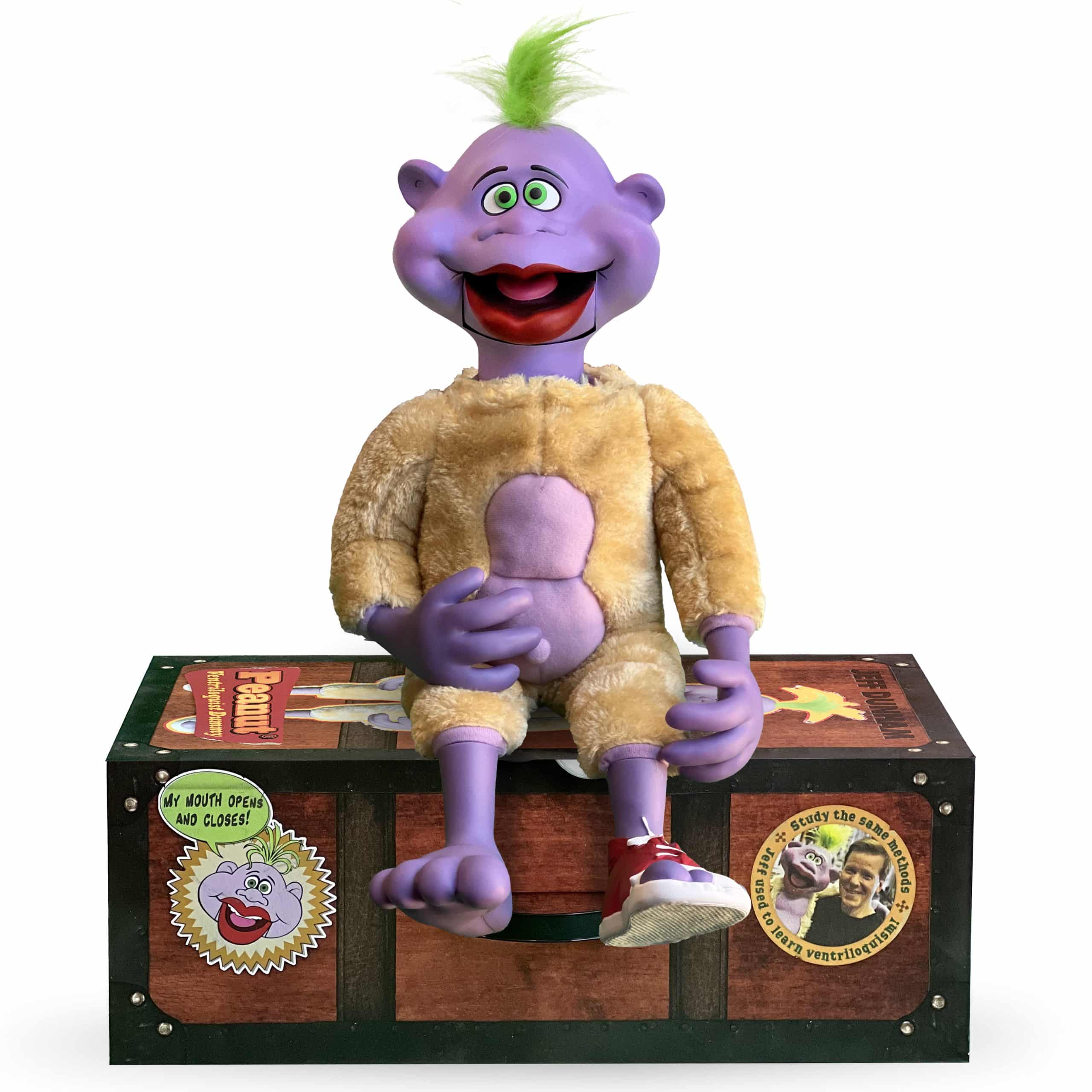
That search eventually produced Peanut. Unlike many of Dunham’s harder ventriloquist figures, which he built himself, Peanut was created by a woman Dunham knew who specialized in softer, Muppet-like puppets.
Dunham had a rough vision of what he wanted. The character would have a tan body, purple hands and face, and a little tuft of green hair, but he would not be any recognizable species. The puppet maker created drawings based on Dunham’s description, he suggested a few changes, and eventually Peanut emerged. The finished character looked nothing like the traditional little-boy ventriloquist figures audiences had seen for generations.
Dunham explained that each of his characters has played an important role in his career. José Jalapeño on a Stick actually predates Peanut, having originated during Dunham’s college years in 1983, while Peanut later became the central personality Dunham had been searching for. “I would not be sitting here right now were it not for each one of those characters,” Dunham said. Each one, he explained, helped propel his act toward something new.
Peanut brought a completely different energy when it was his turn to join Shepherd. Unlike Walter, he seemed genuinely excited to see the host, although Shepherd once again had trouble getting through a conventional interview without Dunham’s character taking control.
Shepherd asked Peanut if he was enjoying the cruise. Peanut explained that his experience had been somewhat limited because he had spent much of the voyage stuck in the cabin with Walter, which did not exactly constitute his idea of a vacation.
Shepherd tried to improve Peanut’s prospects by suggesting an activity for the next sea day. “You should ride the AquaDuck,” Shepherd told him. Peanut reminded Shepherd that he is made of felt, but Tony wisely replied, “We have a laundry.” That became part of the running joke of the evening, with Dunham repeatedly trying to stay on the Disney-approved side of the line while his own characters seemed determined to push him across it.
Dunham acknowledged the challenge directly. He had told Shepherd earlier that his goal was to entertain everyone while performing a show that would still allow Disney to invite him back, but controlling Walter and Peanut made that promise increasingly difficult.
The circumstances made it even funnier when Dunham observed one of the things he particularly enjoyed about this Disney cruise. Unlike many Disney vacations he had taken with his five children over the years, this particular Member Cruise had relatively few kids around. Dunham then admitted he was joking saying, “There’s no more fun than our family has coming on a cruise and being with so many nice folks,”
That inability to completely control what came out of his own mouth, or those of the characters sitting on his knee, became one of the charms of the presentation. Shepherd kept attempting to steer the conversation back toward Disney, Dunham kept trying to remain employable, and Walter and Peanut kept making both tasks substantially more difficult.
The Disney jokes also underscored something Dunham had emphasized from the beginning of the conversation. He was not approaching the Member Cruise as a comedian who had simply been booked for another corporate appearance. Dunham had been taking his family to Disney destinations for decades. His three adult daughters grew up visiting Disneyland and Walt Disney World and sailing with Disney Cruise Line, while he and his wife Audrey have continued those traditions with their twin sons, Jack and James. That was ultimately how Dunham described himself when explaining why he was aboard the Disney Dream. “I’m a Disney dad who happened to meet Tony and become friends,” he said.
Shepherd knew Dunham’s career was considerably more impressive than that description suggested. He reminded the audience of the enormous number of tickets Dunham has sold and the extraordinary reach his comedy has achieved, but Dunham kept returning to his role as a fan and father. He even attempted to quantify the family’s Disney devotion in the most Dunham-like way possible, joking that he had recently calculated how much money he had spent with Disney over the years.
The figure was $1.7 million. Then he reconsidered. “Actually, it was $17.1 million.” And that, he added, was before building five lightsabers.
By the time Dunham, Shepherd and Peanut wrapped up the conversation, the comedian seemed to have accomplished what he set out to do. He had shared the unlikely story of a childhood hobby that became a remarkable career, introduced the audience to a couple of the characters who helped make that possible and demonstrated that beneath all the insults and irreverence is a Disney dad who was genuinely delighted to be aboard. And, perhaps most importantly for Dunham, he appeared to have made it through the night without getting himself fired from a job he had never technically been hired for in the first place.