
"Phineas and Ferb" Returns: Dan Povenmire and Team on Season 5–6 and Color-Coding Comedy


LightBox Expo’s Phineas and Ferb panel doubled as a craft class and a status check on the Disney+ revival. Moderator/executive assistant Hurston Mazard Wallace set the stage for creator Dan Povenmire and writers Olivia Olson, Martin Olson, Josh Pruett, and Kim Roberson to trace the series’ production DNA — what changed, what didn’t, and why the new seasons feel like classic Phineas with clearer storytelling rails.
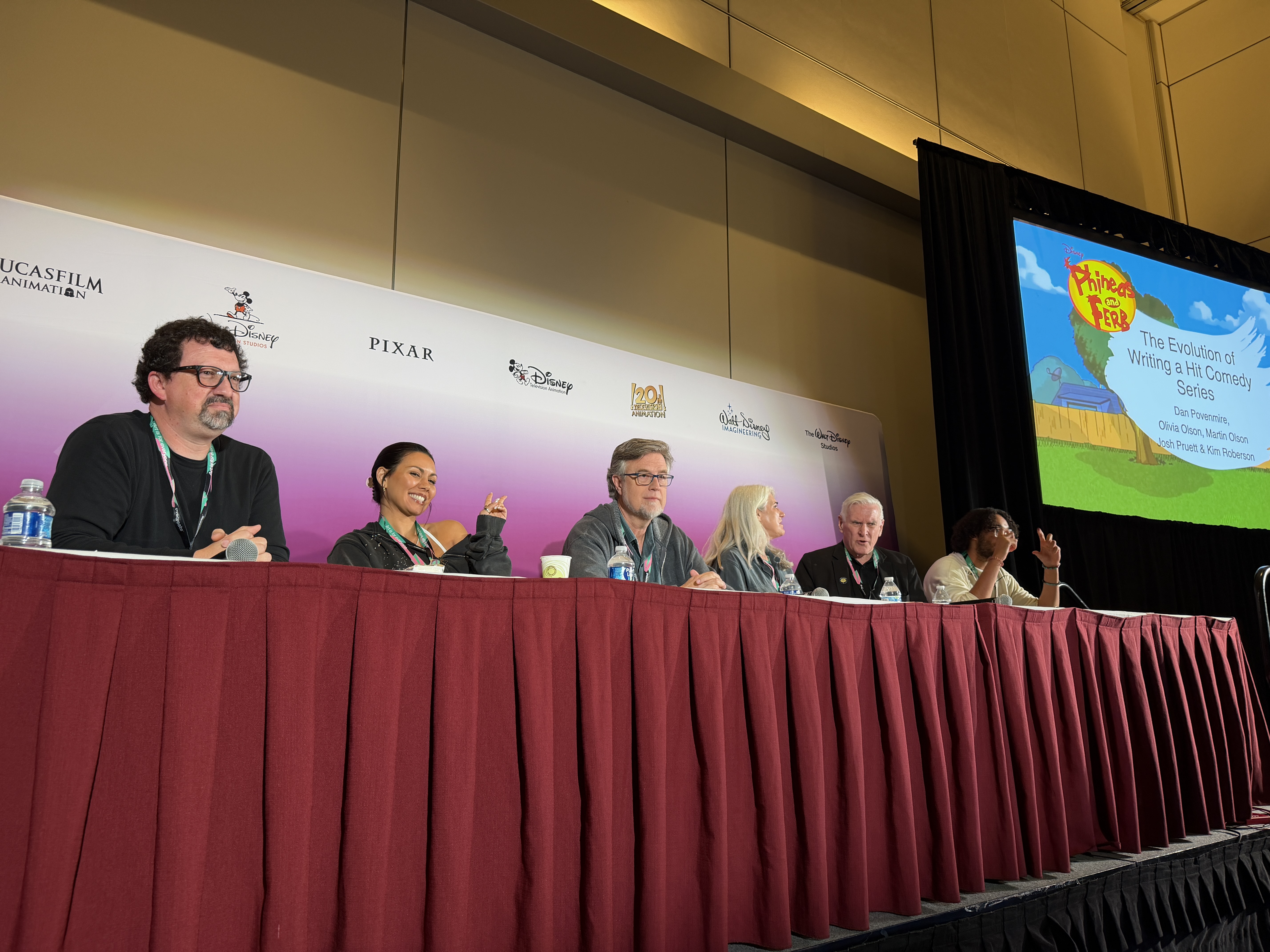
Povenmire looked back at Phineas and Ferb: Across the 2nd Dimension as the turning point. On the original series, the team thrived in an outline → storyboard pipeline where board artists wrote much of the comedy on the fly. They tried to scale that up for the feature, dividing the movie into “11-minute” chunks, only to hit a wall. “In a feature, you must move cleanly from scene to scene,” Povenmire explained. “Episodic tangents eat time without advancing the spine.”
Among the concessions from that earliest iteration of the show’s first feature film was a lot of gag work by Kim Roberson. Povenmire shared that Roberson’s hysterical Candace material killed in the room, but ultimately couldn’t bridge story beats and was cut, alongside a Vanessa appearance (Olivia Olson confirmed Vanessa had a role that didn’t make the final film). The emotional takeaway: great bits still matter; they taught the team what a feature cannot absorb.
Arriving at Phineas and Ferb the Movie: Candace Against the Universe, the crew flipped the workflow: script → boards, but with a promise not to be “precious” about dialogue. Artists could still pitch and plus gags, so long as the story path stayed intact. The result felt like a classic episode stretched to feature length, and it directly inspired the revival’s Season 5 hybrid model: start with a script for clarity, then open the doors wide for board-driven comedy during thumbnails and pitch.
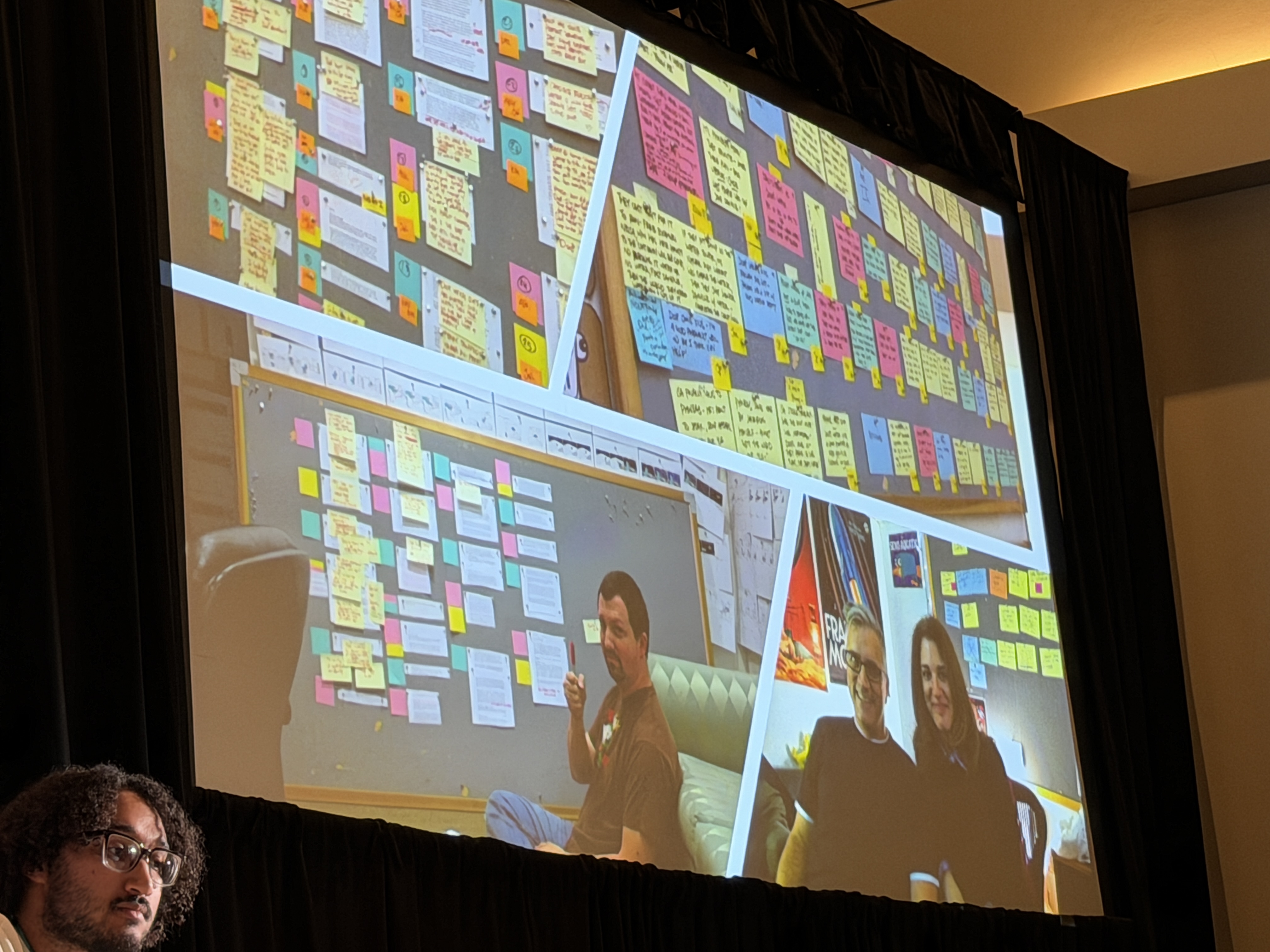
Povenmire was clear: the new run — 40 episodes/80 stories ordered — is not a return to outline-only. That old method demanded round-the-clock triage as boards drifted during cleanup. The current hybrid keeps one decisive “yes/no” voice in the room while inviting contributions from everyone, many of whom started in storyboards, so jokes remain visual and on-story.
A practical peek inside the room: color-coded story cards pinned along the wall— yellow for the boys, pink for Candace, blue for Perry, green for Doof — let the team literally squint from the doorway to see rhythm and character balance. If the pinks thin out, you need more Candace. That system, born in the original series, still shapes the revival.
Asked whether Candace is hardest to write, the panel described her as misunderstood, not malicious, motivated by fairness and safety, not cruelty. That ethos pays off in an upcoming Season 6 episode: Candace gets Phineas and Ferb off the hook when they’re about to be punished beyond what she deems reasonable. It’s a clean articulation of her core: justice, not spite.
On “Tropey McTropeFace,” landing Michael Bublé was the easy part. Povenmire said Bublé DM’d him on TikTok, they grabbed lunch, cleared label logistics, and then Dan and Olivia wrote the song in about 20 minutes. Bublé, a genuine fan whose family leaned on the show during a child’s treatment, recorded it for almost nothing and nailed it.
Even with scripts, the team still runs the very Phineas ritual: thumbnails go up on the wall for a full-crew Post-it pitch session. Writers and artists stack alt gags, staging, and line reads; later, Povenmire sweeps the room, leaving the one best option under each beat. More brains in the mix, one call at the end.
One last craft tip: say the story out loud. Povenmire recalled being ambushed into pitching the Star Wars special to visiting Lucasfilm execs. The special had a few holes in the plot and Dan was anxious about revealing it to the bigwigs. But as he told the story, he solved the remaining structural holes on the fly, proof that your ear catches what the page disguises. It’s also why the room reads scripts aloud to one another.
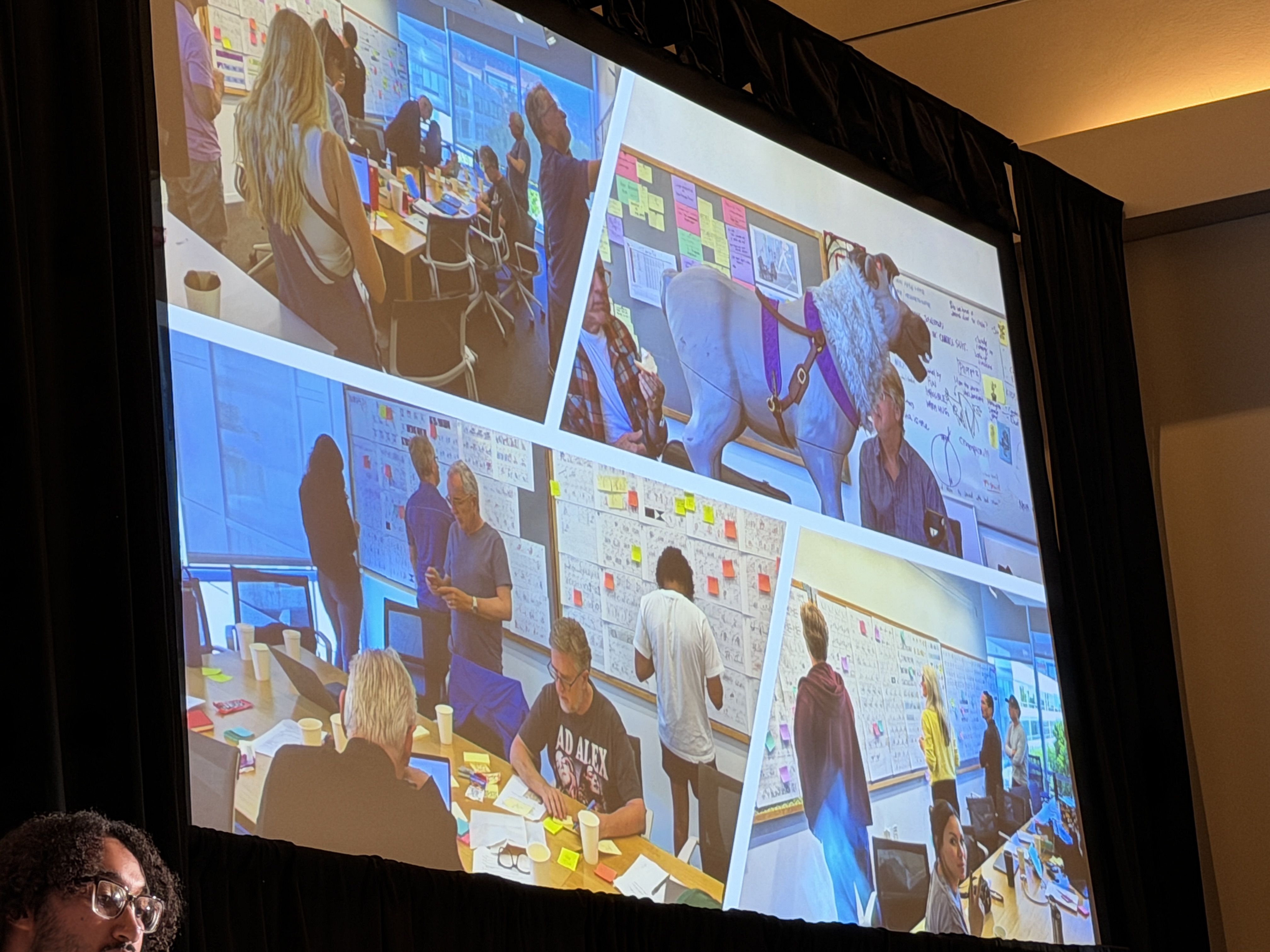
As the panel wrapped, what came through most clearly was that Phineas and Ferb’s longevity isn’t an accident. By constantly refining its process — learning from what doesn’t work as much as what does — the team has kept its signature mix of heart and absurdity intact. The revival may look sleeker behind the scenes, but the spirit remains the same: an open room, a stack of Post-its, and a creator who still believes that the stupidest idea in the room might just be the funniest.