
SIGGRAPH 2026: How Pond Rules Inspired the Different Teams Behind Pixar's "Hoppers"


Released earlier this year, the Pixar Animation Studios film Hoppers took us into the city of Beaverton and - through tech introduced in the film - into the mind and body of a beaver where we introduced to “Pond Rules” as denoted by King George (Voice of Bobby Moynihan). One of those rules, “We’re all in this together,” was not only a key part of the film, but also the mantra behind its production. During SIGGRAPH 2026 in Los Angeles, we got see the big part that mantra played amongst various departments and how they all - as the name would suggest - worked together to bring the story to life.
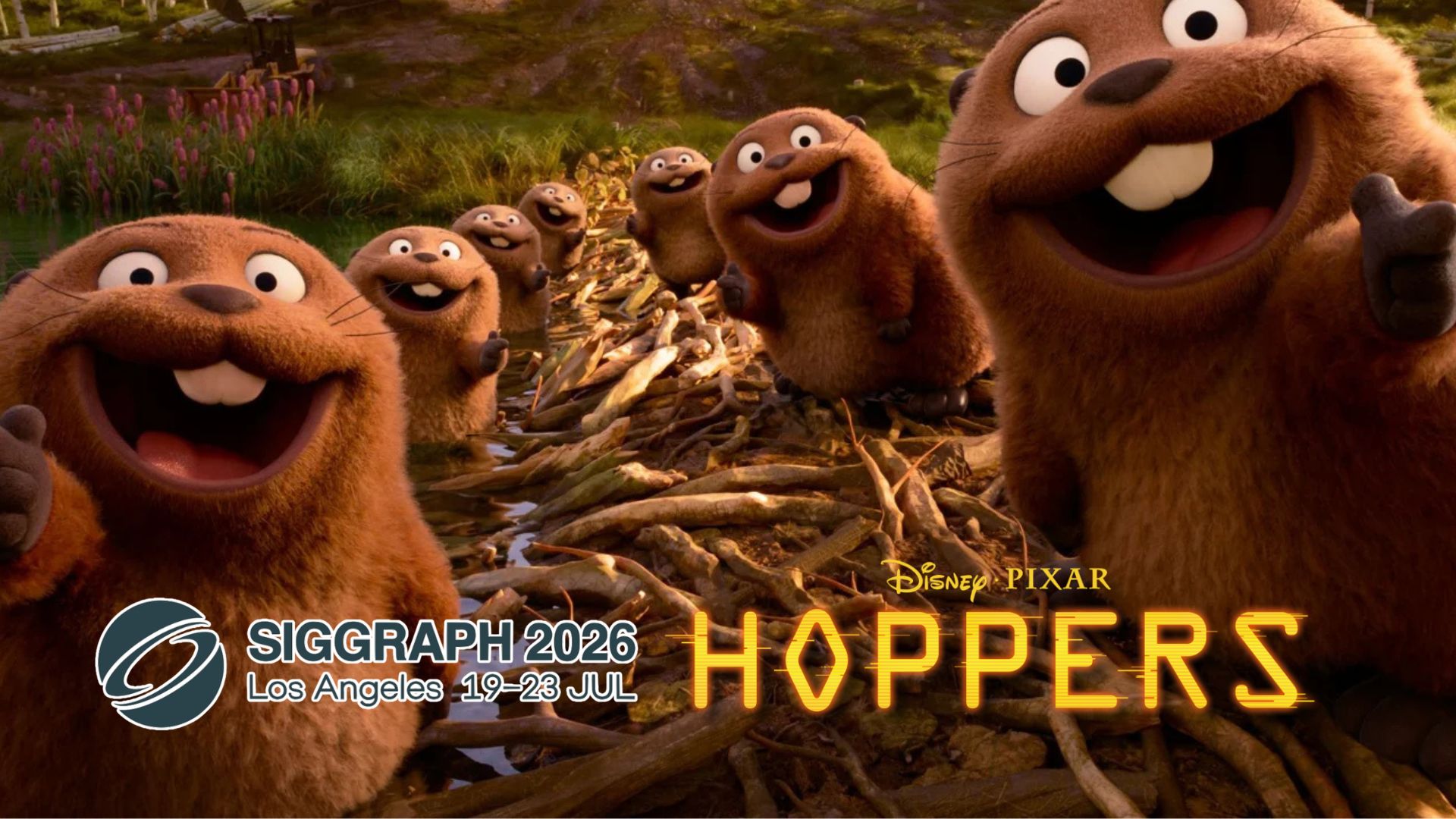
SIGGRAPH is the premier conference and exhibition on computer graphics and interactive techniques, making it the perfect place to show how the Hoppers teams took on their challenges together as a team in a new way. Starting with the distinct look the film has. Hoppers director Daniel Chong comes from a 2D background, known largely for his series, We Bare Bears on Cartoon Network. So when he took on Hoppers, there was a similar approach into how the team would tackle the movie. Computer Animation fans may know how the production pipeline traditionally works in the medium: After its various stages of pre-production, the production begins with Layout into Animation then Simulation followed by Effects and then Lighting. That’s not even counting the pipelines inside those individual departments that would each have their own individual goals.
While presenting, the team said that this pipeline is great and all, but quickly thrown out the window - showing a graphic that was reminiscent of those early ‘00s screen savers that would digitally draw literal pipes all over your screen. Instead, the teams were in constant communication and would forego their own individual goals and push forward simultaneously while working on the movie.
The panel included:
- Beth Albright, Visual Effects Supervisor,
- Ian Megibben, Director of Photography
- Jon Reisch, FX Supervisor
- Andrea Goh, Layout Lead
- Christina Garcia Weiland, Set Dress Lead
- Laurie Kim, Sim Lead
Together, they revealed some fun insight into the making of the movie, including a few tidbits that were new to us. Let’s dive into what we learned from the world of Hoppers.
The Fun of Fur
Okay, so lets recap the plot of Hoppers. There’s a trailer that sums it up best with Mabel (voice of Piper Curda) saying that new tech her professors are explaining to her - which can put a human into a robotic animal’s body - sounds exactly like the Avatar films, before Dr. Sam (voice of Kathy Najimy) quickly saying that this is “nothing like Avatar!” And that’s exactly what happens. To save a glade that Mabel and her grandmother once used to spend a lot of time in is being threatened by Mayor Jerry Generazzo (voice of Jon Hamm) and the only way to protect it is to have the animals return. So, Mabel “Hops” into a Beaver to lure another back to the glade to take up residence once again, and stop Jerry’s efforts of expanding a highway through the glade and destroying it.
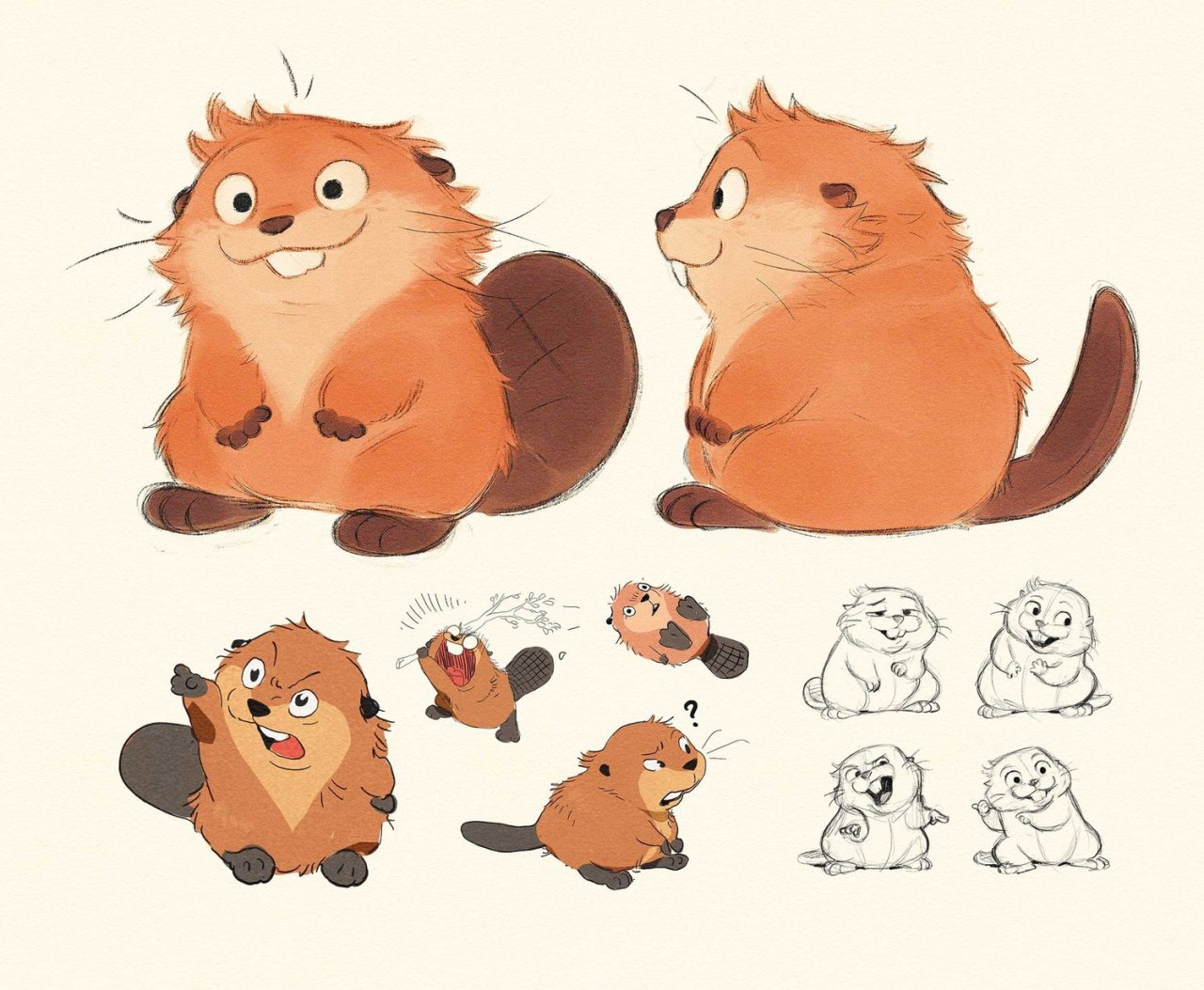
As such, there are a lot of animals and a lot of fur. Even on the robot versions. Early on it was mandated that unlike other productions from Pixar, this one would not have a photorealistic look. Nor could any of the animals then default to a plush toy-like look either. What they landed on was a look that felt more like a felted wool, and even hairlike at times. For animals that didn’t have fur - like Titus in his caterpillar form - they looked at other comforting and soft items, like mochi and steamed bao buns. The fur, especially on Mabel, also became a way for her to wear her short-tempered emotions on her proverbial sleeve. For this, inspiration was largely drawn from cats, who tense up and their fur stands on end when they are scared or angry. Throughout the film, Mabel’s fur does much of the same.
How Many Artists Does It Take To...?
As explained in the panel, the adoption of this new look - a far cry from the Pixar house style - did not look good after render when used with more traditional lighting methods. Lighting is an important part of the animation process, and one of the more standard methods - lighting the characters from the front, was making the fur look flat and not as good as they had hoped. After all, this film is more of an all-out comedy that needed a different kind of feel and high-key aesthetics that drive that point home..
While the phrase “hear me out” has taken on a different idea on social media, the lighting team had a bit of a “hear me out” moment and brought up old gum and soda commercials from the 90s. In a large swath of these, the main focus is lit from behind, accentuating especially fuzzy hairstyles of the era. So, using the virtual tools at their disposal, the lighting team took on a number of new methods throughout the film and showcased a demo that looked almost like a live-action set with reflectors and other devices to engulf the characters in light from behind or behind and to the side to really make them look their best.
The Eyes Are The Window
While the lighting might have been quite innovative, the eyes on our characters did just the opposite. Pixar Animation Studios is known for some of the most expressive eyes in animation history, beautifully drawn out and colored, complete with irises and other details that make them so absolutely stunning.
For Hoppers, 30 years of incredible eyes are gone. Instead, we get more traditional, cartoon-like, pupils. Which is exactly the point to bring home the different style of the film. However, they still needed that roundness and expression to help with certain emotional turns and other story points during the film. To get the little bit extra instead of just a black circle in a bigger white circle, there is a small reflection of the lighting to give that little bit of extra shine.
Was That Too Much?
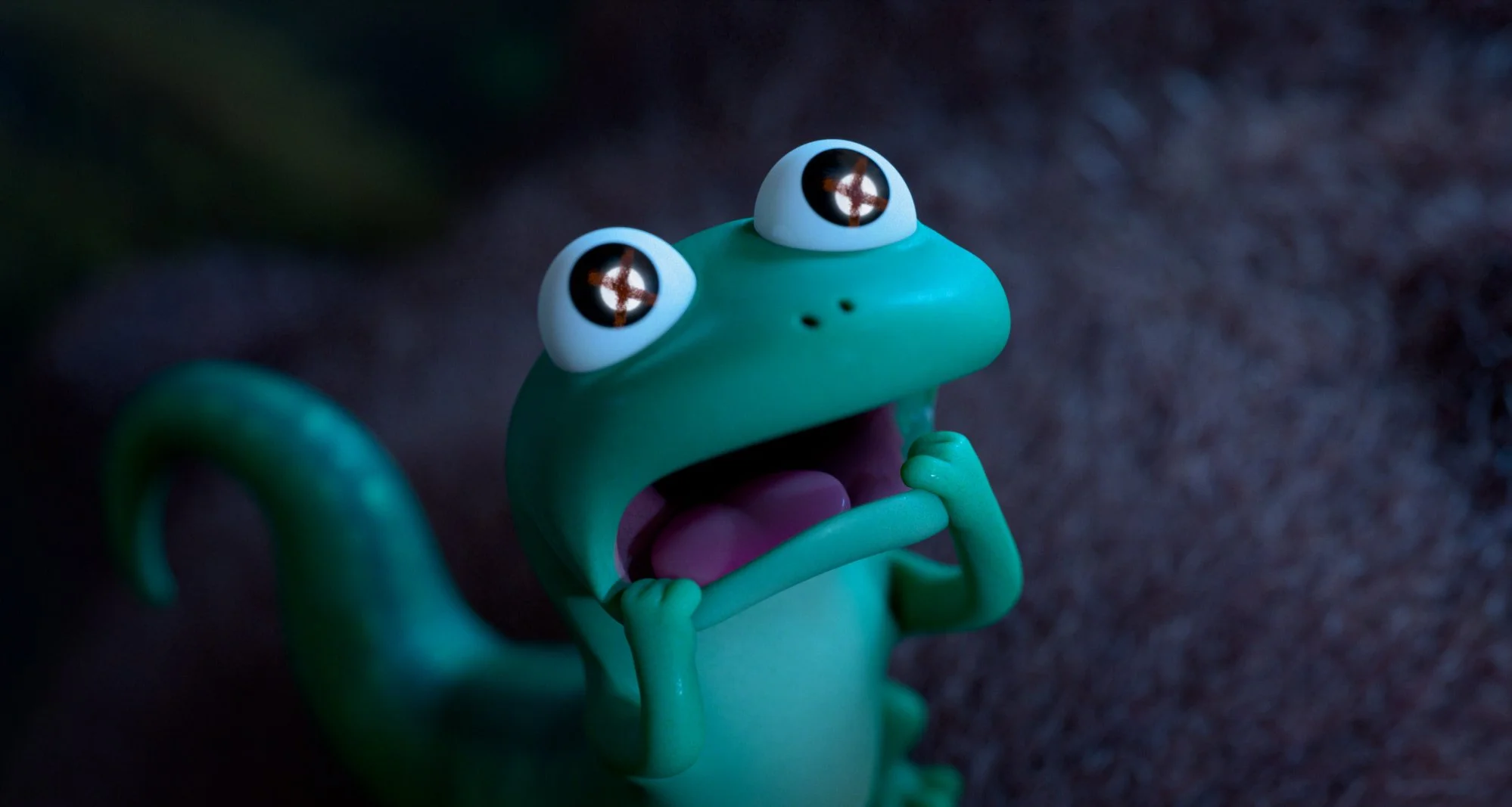
The eyes are one example that carried throughout the film. Pixar is known for their incredible detail in each and every project. While Hoppers is no exception, its unique style actually had to tone down the detail.
As explained, “it’s very easy to get lost in details in 3D animation,” and a moment with the characters screaming to explain what "the loud place" sounds like in their own different ways was showcased. However, it wasn’t the one in the movie.
Instead, we saw lush forest backgrounds in a wide shot that seemingly dwarfed the characters. Every decision is made with the story and narrative in mind, an as such, the shot was changed. Now, the trees and forest and all the details that were encompassed within were scaled back and removed, and the characters were now a bit more forward and their individual personas shined as the comedically scream into the ether of what is keeping them from returning to the glade. The same can be said for many backgrounds throughout the film, which actually reduced the comedy in the film as a lot of the nuance was lost in the over-detailing. To help, a colored haze was implemented to wash out the finer details in wider scenes, simplifying the backgrounds to almost basic geometric details so you got the feel of the forest and environments without getting lost in them.
Wildcats, Sing Along
According to the panel, there are two big moments in the film where the teamwork between all the departments really shines. The Apex Predator scene starring Diane (voice of Vanessa Bayer) was what they called “a warm-up” to how all their efforts would come together. To refresh, the scene showcases a flock of birds lifting a great white shark (Diane) into the sky on a cliffside road as they attempt to “squish” Mayor Jerry in his car while Mabel is simultaneously trying to save him.
Early concept art that showed this comedic action moment was featured with one big difference in how it was to be presented - on a bridge. In the movie, we know that this big moment hits in a tunnel. While many reasons were shared - the key one being that we don’t get that surprise Diane stealth moment - we got to see how all the departments had to work together in tandem while everything was changed.
While that may have been “a warm-up,” then the main event was the climax of the film, which sees a rushing river of water race down a hillside to extinguish a wildfire threatening the city. Everyone came together, digitally constructing a pre-visualization set piece since the story called for a hillside to have the water run down. Simulation teams got into that same digital asset and started working with the water simulation to see how it would flow and what would need to be changed in the set to make it flow better. Layout went in and figured out how the camera was going to move with the action, and animation teams would figure out where “hero trees” would need to bend and break with the water flow.
By The Numbers
When all was said and done, the scene didn’t quite have the action they wanted it to. Similar to the “too much detail” instances we learned earlier, trying to keep the realism with the water actually served as a hinderance to fast and action-packed dramatic pace this moment in the story called for. To make it work better, the water was sped up. Depending on what moment in the scene we’re looking at, the water is moving at 1.5x all the way up to 3x how it would move realistically, thus creating the memorable moment with the rushing whitewater racing toward Beaverton.
That wasn’t the only set of numbers we learned though. When asked how many sets were created for the film, the panel laughed. Nobody knew an exact number off hand. But we did learn that the Glade itself, the location that drives the whole story of the film, features five different sets with seven different variations. After all, we see it at different moments in time, we see it exploded at points in the film, and more.
And Diane the shark? There’s only one of her. Much to the surprise of many in attendance who swear her size changes throughout the film, credit where credit is due was given to the cinematography department and the director of photography.
Her size only seems to fluctuate thanks to a variety of different shots and lenses being used throughout the action scenes that feature her.
Jacket Weather
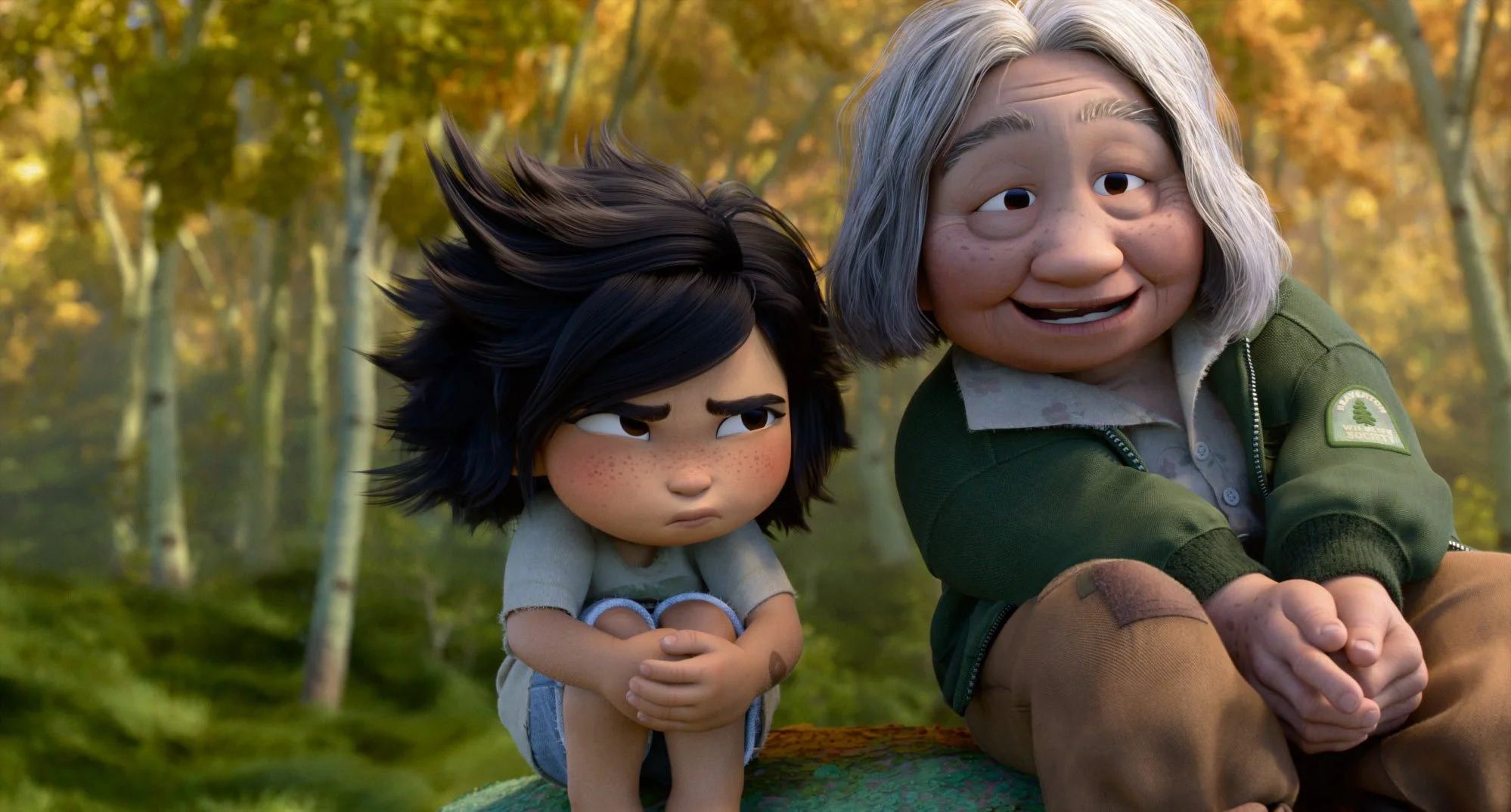
Pixar is known for their totems. What do I mean by that? An item or an object that is a symbolic heart for a key part of or emotional piece of the story. Without thinking too hard, I can point to the boot with the plant in WALL-E and the Grape Soda pin badge in Up. Hoppers is no different, with the a key prop in the movie becoming an emotional totem for Mabel in the form of her grandmother’s jacket.
Director Daniel Chong pointed to characters like Lindsay Weir in Freaks and Geeks who wore military-style green jackets for inspiration, according to the panel. But the jacket didn’t come across as comforting as they needed. So the crew took inspiration from park ranger jackets and dished out a template to many on the crew to embellish how they think the jacket should look. Reasonable ideas with various pocket placements and stitching and the aesthetic were all considered - while others (like one featuring a giant pocket on the back with an image of King George from the movie popping out) were scrapped.
The jacket, important for story and emotional reasons within, was also important because its the only piece of clothing in the entire movie that is green. This ties Mabel and her grandmother back into the idea of her mission to protect the environment (the glade) and connects with her all the animals she will befriend on her journey.
SIGGRAPH 2026 is happening all week long, with looks at other Pixar Animation Studios, Walt Disney Animation Studios, and Lucasfilm films, so be sure to stay tuned to Laughing Place for me.
Hoppers is now streaming on Disney+ and is available in physical and digital media formats.