
ATX TV Fest: "Inside Job" Panel Reveals What Non-Writing Producers Actually Do


ATX TV Fest kicked off its second day with one of its most illuminating panels: "Inside Job: TV's Non-Writing Producers." Moderated by Hope Sloop of Decider, the conversation brought together executive producers Melissa Bernstein (House of the Dragon), Stacey Sher (Mrs. America), and Kathleen McCaffrey (Industry), along with co-executive producer Karen Wacker (Lanterns). Together, they offered a candid and wide-ranging look at a role that, as multiple panelists acknowledged, most people couldn't define — including, sometimes, the producers themselves.
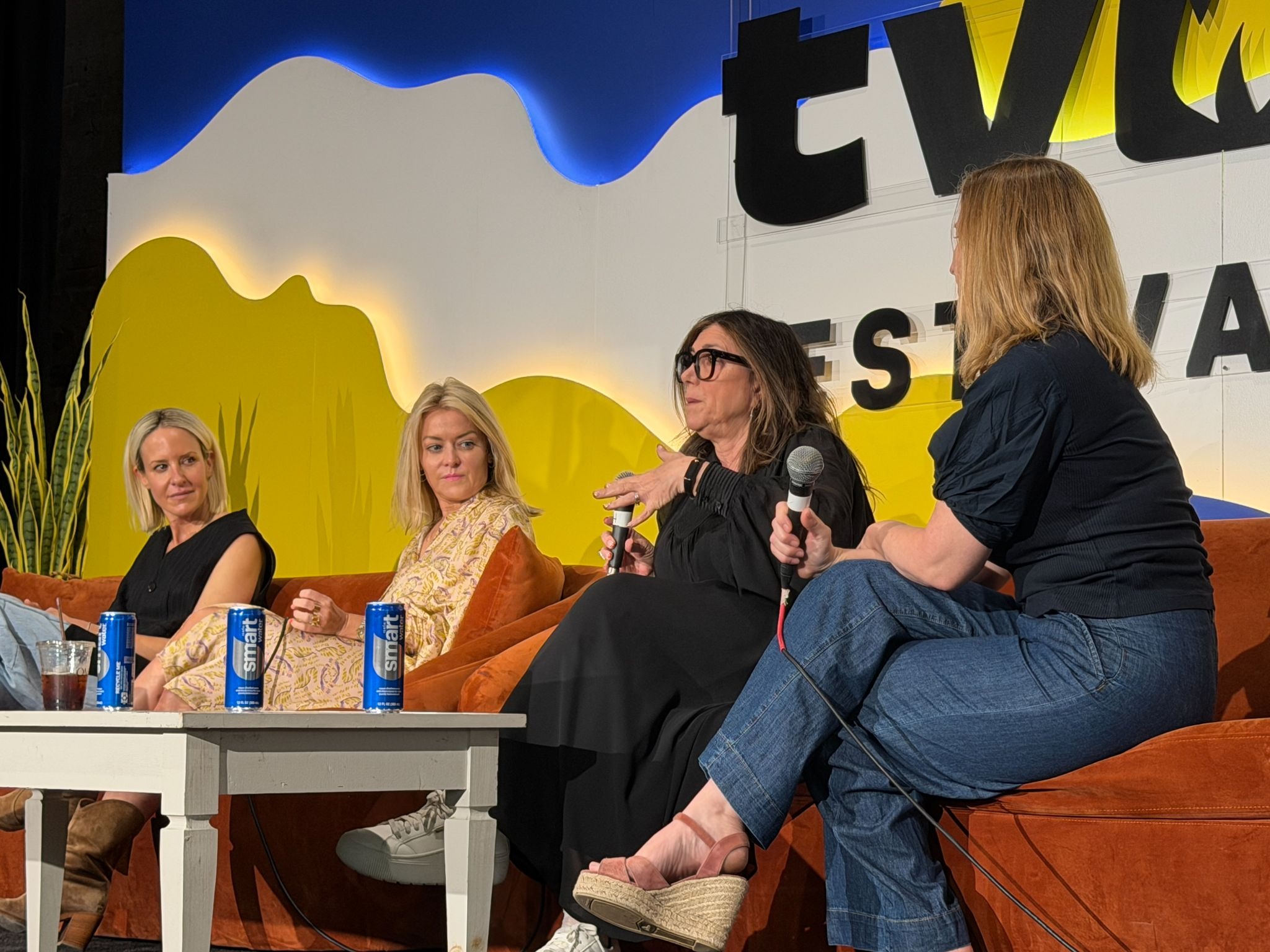
The question of defining the job came up early, and the answers were telling. "Nobody knows unless something goes wrong," Wacker quipped, while Sher noted that the confusion is partly structural: producing credit is not guild-regulated, which means financiers, managers, and others who aren't doing the daily work can end up with the same title as those who are. Bernstein acknowledged that even the job's closest collaborators — casting directors, music supervisors — don't fully know what the others do. "I don't know all the dark corners of each other's worlds," she said, "and I actually think that's part of the cool."
McCaffrey described the role as perpetually shifting: development, production, post, publicity — each phase demands something different. Sher added that beyond the internal creative work, there's an ongoing responsibility to help studio and network executives understand a project deeply enough to sell it upward. "When they really understand it in their DNA and their hearts," she said, "then we're all on the same side."
McCaffrey, who spent a significant portion of her career on the executive side at HBO before transitioning to producing, described the challenge of operating in both registers at once. She recalled an early HBO memory: the L.A. office having to make the case to New York that its executives needed to wear jeans to writers' meetings because showing up in a suit would make writers uncomfortable sharing their stories. "I'm an executive in jeans," she said, framing it as a kind of dual citizenship that producers have to hold.
Sher flagged the current contraction in the marketplace directly: "Things are challenging right now, there's no question about it, even though great things are getting made." She described pulling a project from one studio after that studio acquired a similar project, calling it a risk worth taking to protect the work.
With 38 years of industry experience, Sher offered one of the panel's most pointed observations about generational change. When she started, she said, women often had to soften their ideas to get them through. "I love seeing generations of young women that don't care about whether or not they're liked," she said. "They're just there doing their job." She framed that shift as genuinely significant, even while acknowledging that inequity persists.
Both Sher and Bernstein touched on the structural change from the 22-episode network era to the current shorter-season model. The old format, Sher argued, required writer-producers who could do everything and created an apprenticeship pipeline that has largely disappeared. Bernstein pointed toward democratization elsewhere: two films from YouTube creators are currently performing at the box office in ways that would have been unimaginable a decade ago. "All of the things we kept hearing — new voices, not accessible — people are figuring out ways to create," she said.
Each panelist had a different entry point. Wacker moved to Austin after graduating from Texas Tech with a PR degree, walked into a production office, and was hired as a special effects PA, falling into producing when someone left. McCaffrey started on a desk at UTA in Los Angeles, then migrated toward the creative side. Sher came up through music videos, a desk at TriStar Pictures, and early mentorship from producers Deborah Hill and Linda Obst. Bernstein came out of a communications background and tech PR before landing in student shorts at USC, then William Morris.
On finding the right creative partners, Bernstein described her longtime collaboration with Vince Gilligan, whom she met through producer Mark Johnson, as rooted in loving both his work and his way of collaborating. "Does somebody have something to say that you're interested in, and are they good people that you want to be around?" Those, she said, are the two boxes. McCaffrey described meeting Lena Dunham before Girls as the clearest version of that feeling.
Wacker spoke warmly about working with Chris Mundy (Ozark) on DC’s Lanterns, calling it one of the best experiences of her career. On the lead-up to the show's August release, she described the weight of world-building with existing IP — reading Reddit forums, watching marketing roll out, wanting fans to know how much care goes into that process. "I wish they knew how much we think about it and how much we care."
McCaffrey reflected on what it has meant to watch Industry finally get its due after years of being a smaller, more cultish show. "I always loved it when it was small and really special," she said. She also spoke with evident pride about showrunners Mickey Down and Konrad Kay, whom she's watched grow up professionally since 2015. Sher added that the true mark of the show's success is hearing new pitches described as "Industry in the world of..."
Sher's Into the Badlands came up as a standout creative experience, a show that brought Hong Kong fight choreographers to AMC, put the entire cast through fight camp, and delivered sequences she described as some of the best she's worked on, all while providing what she called "a front row seat to the death of cable." McCaffrey offered an equally fond memory of producing In Treatment during COVID, an impossible schedule, a pandemic backdrop, and scripts that felt strangely therapeutic to work on under the circumstances.
Wacker pointed to Watchmen as the project she's most proud of: the first day of production was devoted to the Tulsa race massacre, and seeing how widely that history reached audiences who had never heard of it crystallized for her what the job can mean. "I really hadn't understood the power of what we do," she said.
A brief detour into Reno 911 — the unlikely survivor of the slate Sher developed with Danny DeVito, Michael Shamberg, and John Langraf at Jersey Television — drew genuine affection from the room. Sher described the show as silly, improvised, made for almost no money, and still talked about decades later. She credited Niecy Nash's audition as a key moment, and noted that the question of where that generation of improv talent would land if they came up today is one the industry is still figuring out.
Full-circle moments ranged from the delightful (Sher spotting Robert Smith of The Cure wearing a Los Pollos Hermanos t-shirt) to the surreal (McCaffrey getting to interview Marcy Carsey — and tap dance at her house). Wacker cited getting to work with Kyle Chandler on both Friday Night Lights and Lanterns as a simpler but no less meaningful version of the same feeling.
The panel closed with what everyone was watching: Task drew enthusiasm from multiple panelists, and Hacks was praised by both Bernstein and Sher, with Sher singling out the glass box scene over the Vegas strip as a production achievement that still astonishes her. A lively sidebar about Bravo’s Summer House suggested the panelists' off-duty viewing habits run to the same waters as everyone else's.
Stay tuned for more coverage from ATX TV Fest.