
Behind the Castle Walls Review: It Doesn’t Absolve Bob Chapek, but it Does Explain Him


A great deal has been said and written about Bob Chapek’s brief tenure as CEO of The Walt Disney Company. However, until now, none of it has come from the man himself. That has changed thanks to Behind the Castle Walls: My Thirty Years at the Happiest Place on Earth. The new memoir, written by Chapek (with Don Yaeger), is the former CEO’s side of the story, and oh boy, is it a story.
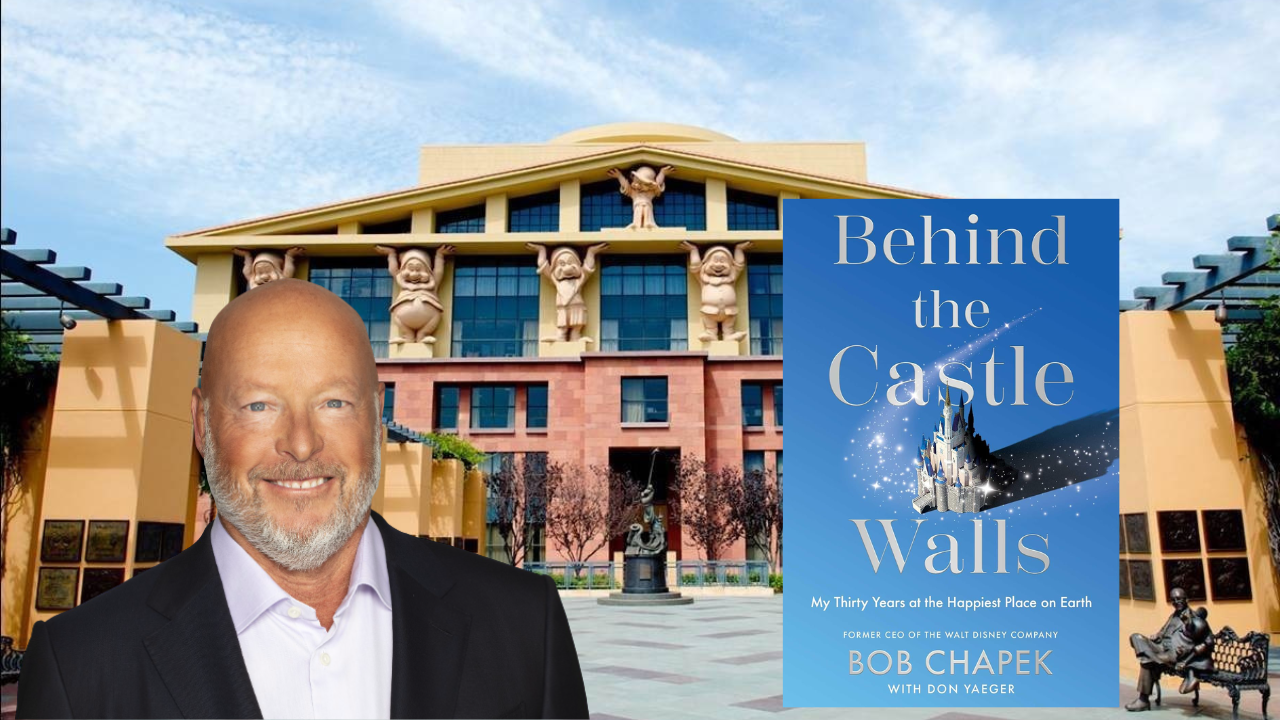
That story opens with Bob Chapek growing up in a working-class family in Indiana, and ends with him being ousted as CEO of the Walt Disney Company by what he believes was an orchestrated campaign by Bob Iger, the man whom he replaced, and who ultimately replaced him.
Those two ends of the story return time and time throughout the memoir. Chapek clearly feels he was a perpetual underdog due to his background, so he regularly makes reference to it with each of the major successes he describes. There's certainly no argument that he came a long way.
Some memoirs are written to highlight one's success. Others are about the way they learned from failure. Despite the way the story ends for Chapek, Behind the Castle Walls is all about success. That’s not without some justification; Chapek absolutely had a lot of success professionally. If he had any major stumbling blocks on his road to CEO, they are completely overlooked. He takes near-complete credit for everything from the Disney Vault home video concept to the creation of the Return of Jafar, the first of many direct-to-video sequels to Disney animated hits.

And in each case it isn't just success, but success by being a "disruptor." There's no argument that The Walt Disney Company has a lot of history and tradition, and despite repeatedly claiming that he loved that history, Chapek prides himself on being the guy willing to do new things, even when others doubted him.
The most surprising thing about the majority of Behind the Castle Walls is actually how little of it is surprising. Anybody who followed Chapek’s career as the head of Disney Experiences or as CEO would have said that when it came to Disney Parks, he seemed to favor vacationing families over Annual Passholders, and was a big proponent of giving guests who could afford it better experiences than those who could not. Chapek admits this with pride, seeing it as the obvious choice to benefit Disney’s bottom line and the guests that he saw as the most valuable.
Judged by the bottom line, Bob Chapek was certainly successful, but what’s clear, though he never says as much, is that he is no political animal. This fact appears to have helped him ultimately obtain the coveted position of Disney CEO, as those who played the political game to take over from Bob Iger, from Tom Skaggs to Jay Rasulo to Keven Meyer, lost out for one reason or another. When Bob Iger finally decided to retire, Chapek was the last man standing.
Unfortunately, Chapek’s clear inability to play the office politics game was likely his undoing once he took the top job. He believes that Bob Iger orchestrated a campaign against him to oust him as CEO. Whether this was personal against Chapek, or just a case of Iger deciding after the fact that he didn’t want to leave, is unclear. Regardless of the reasons, or even the accuracy of this belief, Chapek clearly had no idea what to do when forces stacked against him.
Judging this part of the book is difficult, of course. How accurate Chapek’s version of events is, is far from clear. I fully believe that he believes it all, but since this is one person’s view of one side of the events, it’s difficult to say. Chapek talks about things he’s heard or things he’s been told, but the reliability of these sources can’t be judged since we often don’t know who they are.

Some of his claims, while unverifiable, do at least make sense. One controversial call, Disney’s antagonistic response to Scarlett Johansson’s Black Widow lawsuit, Chapek took a lot of flak for what was seen as his inexperience working with creative people. He blames Bob Iger, who had creative control at Disney at the time, for approving the vitriolic statement.
As a Disney fan, there are a couple of events I felt that the book overlooked. Chapek makes only a brief mention of Disney Media and Entertainment Distribution (DMED), his massive (and largely unpopular) reorganization of the entertainment division of the company. It comes up as part of his discussion of a similar reorganization he made at Disney Consumer Products, which worked. It’s never mentioned during the chapters on his time as CEO. It focuses only on Iger’s alleged moves against him with the entertainment community.
Chapek also discusses the “Don’t Say Gay” battle in Florida, criticizing Bob Iger for publicly taking sides against Florida Governor Ron DeSantis, though he doesn’t mention that it all happened alongside plans to move nearly all of Walt Disney Imagineering to Florida, making the issue of even greater importance to Disney Cast Members.
Bob Chapek feels that not only was he unfairly removed as CEO, but he’s been unfairly removed from Disney history. There’s probably at least some truth in that (The removal of his name from a Castaway Cay sign has always seemed oddly petty). For good or ill, Bob Chapek was a significant part of the Walt Disney Company for three decades, and that's worth recognition if nothing else.
Behind the Castle Walls isn't likely to win the hearts and minds of Disney fans or curse the name of Bob Iger for all eternity. Still, it's a chapter in the Walt Disney Company that is worth considering. If Bob Chapek doesn't want to be forgotten, there's little chance of that.