
Pixar Filmmakers Share Their Takes on "Disneyland Handcrafted" at Emeryville Screening


There has been quite a bit of coverage surrounding Disneyland Handcrafted. This is warranted as it perhaps the most impactful celebration of Disney’s heritage in some time. While most of the coverage has been looking at the film from a Disney Parks fan's perspective, at a recent screening at Pixar, we got to hear about the film from the filmmaker's perspective.
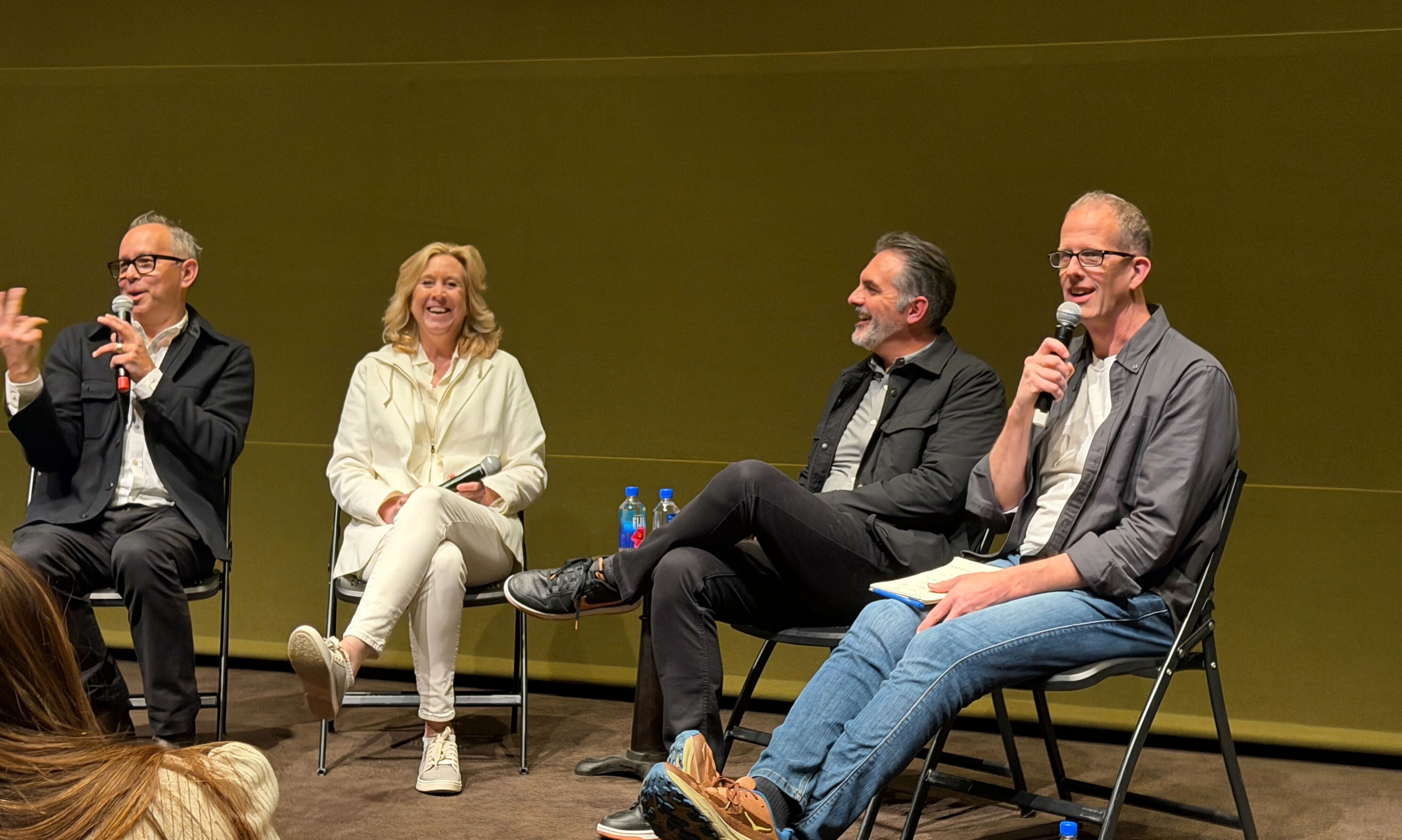
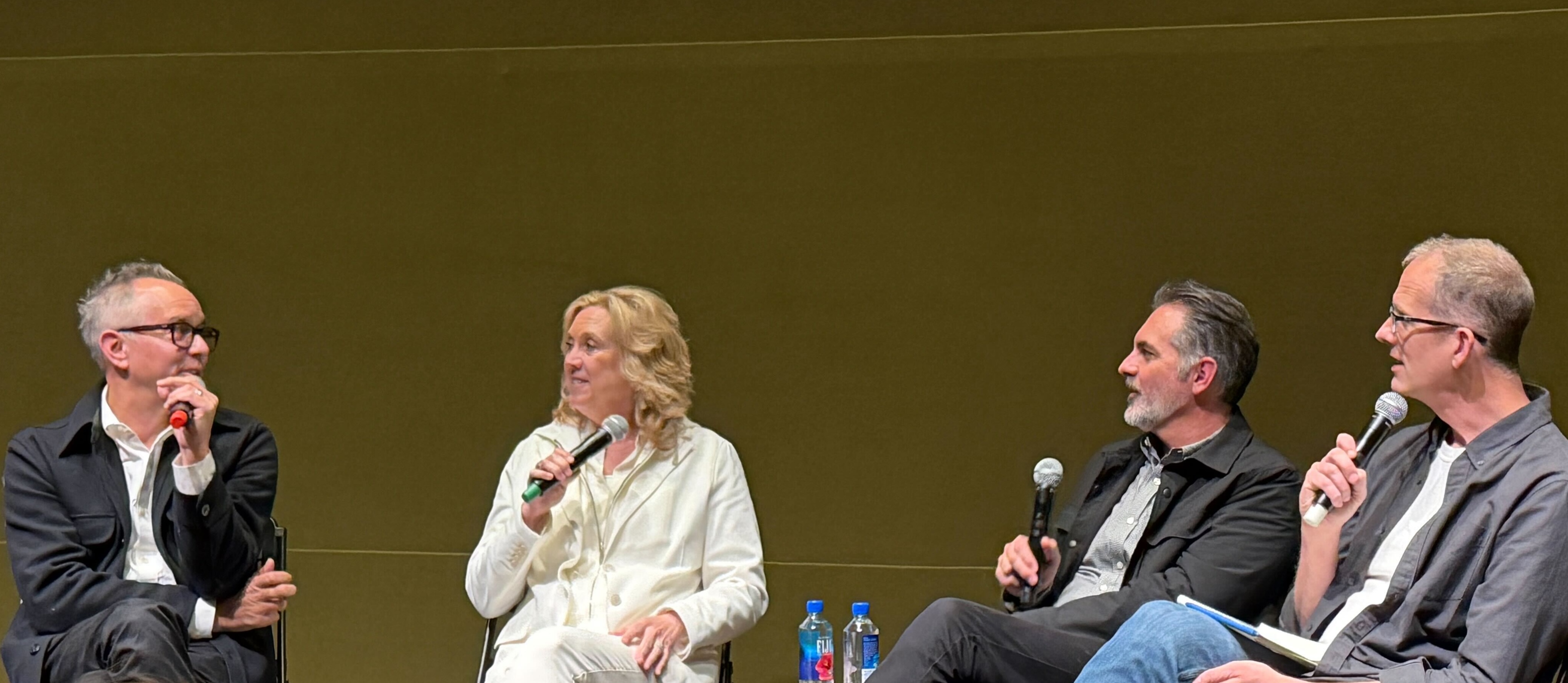
Pixar’s Chief Creative Officer Peter Docter and Executive Vice President of Production Jonas Rivera hosted a conversation with Disneyland Handcrafted filmmakers Leslie Iwerks and Mark Catalena. While Docter and Rivera are famously Disneyland fans (even hosting marathon screenings of raw Disneyland footage at the Pixar campus), they are also filmmakers who understand the emotional journey a film can take us on and the craftsmanship required to make that journey happen.
While we all know Disneyland as a success, it was a major risk at the time. Disneyland Handcrafted makes you feel that risk. That immediacy is exactly what struck Docter the first time he saw the finished film. "I don’t think I’ve ever seen something that really captures the risk-taking and the impossibility of this thing in such a visceral way," Docter said. "You really feel it while you’re watching it."
For a story as familiar as Disneyland’s creation, Handcrafted finds its power not in narration or hindsight, but in presence — placing the viewer directly on the construction site as the park inches, often precariously, toward opening day. Leslie Iwerks explained that the project emerged organically from archival discoveries made while working on The Imagineering Story. "We had all this footage we’d gotten from the film archives — some of it we’d never seen, and some of it we knew had never been seen before," Iwerks said.
Rather than shaping it into a traditional documentary, the team began to imagine something closer to cinéma vérité. The inspiration came from Apollo 11 — letting original images and sound immerse the audience without modern commentary imposed on top. Producer Mark Catalena recalled how quickly that idea clicked once a proof-of-concept was assembled. "When we found this footage, it was like, okay, we could do that. Let’s just let it live."
However, the film is much more than just piecing together old footage. To start, the archival reels were fragmented, mislabeled, and often spliced together out of sequence. Entire scenes had to be reconstructed shot by shot, sometimes with the help of Disney legends like Tony Baxter and Tom Morris. "Some of these reels were all over the map," Iwerks said. "We had to break them up, bin them, and figure out where was that mound of dirt, which direction the camera was facing, and what time frame it was."
That painstaking process allowed the team to discover something unexpected: a natural narrative arc driven by time pressure. "Once we realized we had enough footage just up to opening day, we kept saying, let’s focus on that," Catalena explained. "The deadline alone creates all the drama."
The title Handcrafted emerged organically during the edit, and quickly became the thesis of the film. "They were building this thing with no power tools, or very few," Catalena said. "Just the handcrafted nature of it—it felt right."
Docter was struck by the intimacy of the details. "The nerd I am, I’m looking at doors and bricks and thinking, that door’s still there. That brick is still there," he said. "I love that stuff."
Because the original footage was silent, sound design became one of the film’s most critical storytelling tools. "This had to sound authentic," Iwerks said. "Animated films can sound like fantasy. This couldn’t."
Every engine, footstep, and ambient noise was carefully chosen to match the period. Even moments that felt slightly too expressive were debated and often removed. "There was a moment where someone whistles," Iwerks recalled. "And I thought, I can’t imagine someone actually doing that. I didn’t want to impose something that wasn’t real."
The restraint paid off. As Docter noted, the result makes it feel as though the audience is standing just off camera, watching Disneyland take shape.
One of the most surprising notes on the film came from Bob Iger himself. "He told me, 'If anything, I’d add more conflict,'" Iwerks said. "I thought, wow, what CEO tells you to add more conflict?"
That note aligned perfectly with the filmmakers’ instincts. They wanted to resist nostalgia and instead emphasize uncertainty, he very real possibility that Disneyland might fail.
Even so, difficult editorial decisions remained. An early cut included Walt flubbing part of his dedication speech, a moment that split opinion in the room. "I liked it," Docter admitted.
"I didn’t," said Pixar producer Jonas Rivera, laughing. "We’d already earned the tension."
Perhaps the greatest validation of Handcrafted came from where it traveled internally. During recent leadership transitions, the film was cited by both Bob Iger and Josh D’Amaro as an example of the company’s foundational risk-taking. "I was shocked," Iwerks said. "But I was honored that it resonated at that level. They both reached out and talked about how important it was — for the company, for the parks, and for fans."
For Docter, the emotional core of the film arrives quietly. "There’s that shot of the little girl in the teacup," he said. "And it just hits you. Right now, somewhere, there’s a kid in that teacup. That’s the payoff."
It is a reminder that Disneyland was never about steel or concrete, but about creating moments that last far beyond opening day. "Walt was trying to bring Snow White, Cinderella, and Peter Pan into a three-dimensional space," Iwerks said. "That seed, that DNA, is what continues today."
The conversation closed with a realization: Handcrafted only scratches the surface. There is more footage. More stories. More perspectives from the people who quite literally built Disneyland. With discussions of VR and XR experiences underway, the possibility remains that audiences may one day step even deeper into these moments — perhaps even inside the Circle-Vision experience that connects directly to Iwerks’ own family history.
For now, Handcrafted stands as something rare: a Disney story that does not ask us to marvel at the result, but to sit with the risk it took to get there. And in doing so, it reminds us that Disneyland was never inevitable. It was earned through Walt’s creative vision, talented artists, and skilled craftspeople.
Disneyand Handcrafted is now streaming on Disney+ and YouTube.