
Behind the Magic: How "Family Guy" Pulled Off Its Disney Homage


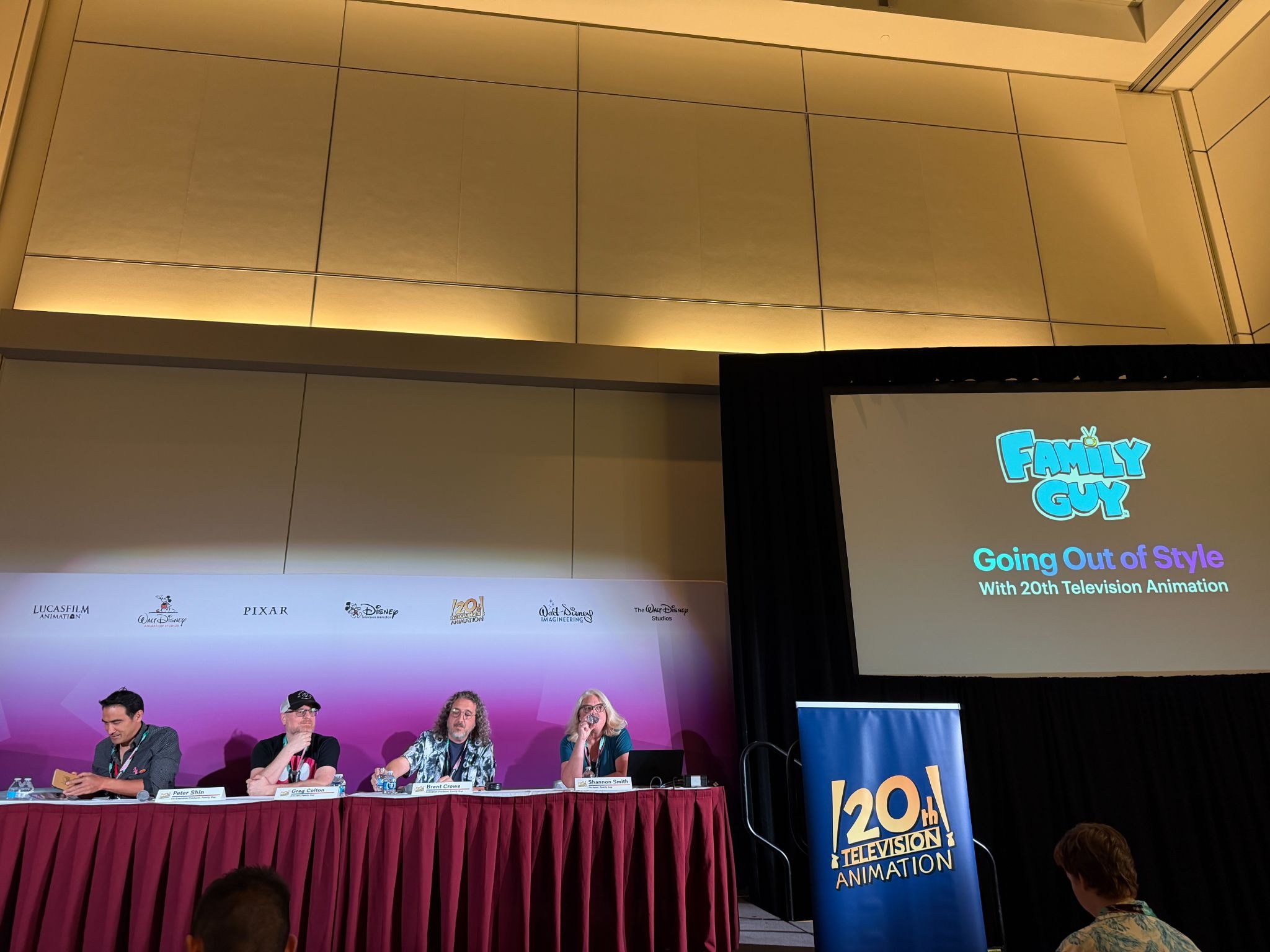
At LightBox Expo 2025, the Family Guy team pulled back the curtain on how the long-running comedy reinvents its animation style when the joke demands it. Hosted by animation producer Brent Crowe, the panel brought together Peter Shin (Co-Executive Producer), Greg Colton (Director), and Shannon Smith (Producer) to examine the creative and technical process behind some of the show’s most visually ambitious moments — chief among them, the beloved Disney sequence from “Road to the Multiverse.”
From its earliest days, Family Guy has relied on a pose-to-pose style designed for speed and clarity, with limited motion and snappy timing to serve the relentless pace of its dialogue. But every so often, the team steps outside that framework. These “style-break” sequences are opportunities to temporarily abandon the show’s flat, efficient design language and emulate the visual grammar of another medium, whether anime, stop motion, or, in this case, classic Disney animation.
For co-executive producer Peter Shin, the appeal lies in stretching what the show can do without losing its comedic rhythm. Each time Family Guy “goes out of style,” the challenge is to immerse viewers in a completely different world while keeping it recognizably Family Guy.
Director Greg Colton recalled first reading the “Road to the Multiverse” script and realizing the Disney section offered “a chance to create something that could have come out of a Disney feature, not just a parody of one.” Rather than simply dressing the Griffins in Disney trappings, Colton’s team sought to transform them — redesigning silhouettes, gestures, and background treatments until the sequence looked like a lost reel from the Disney Renaissance.
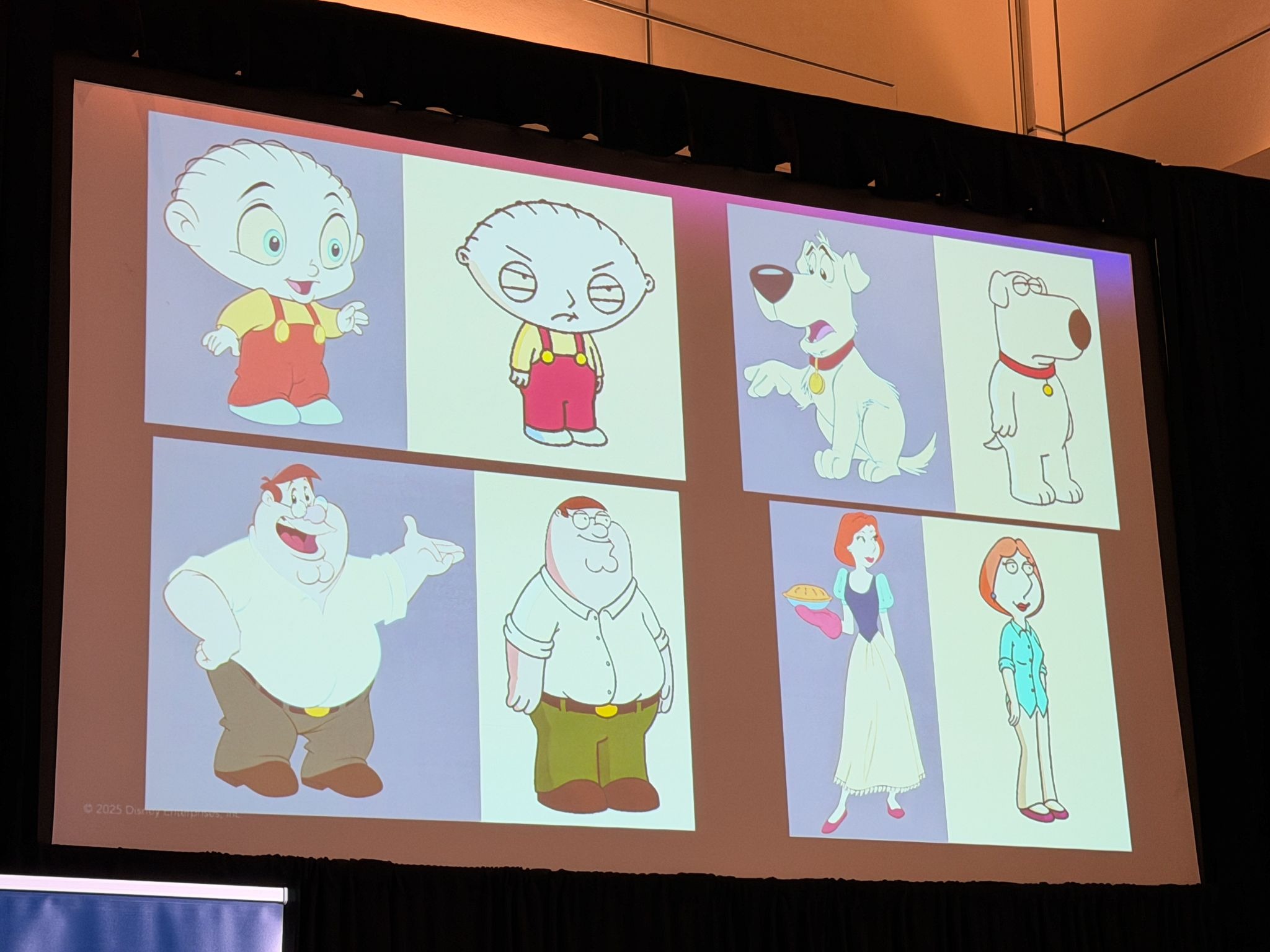
Each Griffin drew inspiration from a different lineage:
- Peter took cues from Maurice in Beauty and the Beast, rounded and fatherly.
- Meg was approached through the lens of The Little Mermaid’s Ursula — broad shapes, expressive eyes, and sweeping movement.
- Backgrounds adopted watercolor washes and soft lighting that immediately read as “Disney” to the audience.
The stylistic overhaul required a new pipeline. Instead of the show’s usual locked-down storyboards, where every pose and expression is dictated, Colton opted for looser, feature-style boards that left room for animator performance. Key animation was produced in Los Angeles with veteran feature animators, while cleanup and finishing moved overseas.
Producer Shannon Smith described how even small terminology gaps created big challenges: television animators and feature animators define “cleanup” and “timing” differently. Timing charts meant as strict instructions were interpreted as guidelines, leaving the team scrambling to add extra drawings when a musical moment ran short. To preserve authenticity, they sent sample keys showing a thicker, more nuanced cleanup line — lush and expressive compared to the show’s typical flat outline.

The result was a sequence that didn’t just reference Disney, it embodied it. The animators studied staging, camera moves, and musical phrasing in classic hand-drawn features, building the “Wonderful Day for Pie” number into a self-contained short. Colton emphasized that success came from total commitment: “If you’re going to step into another style, you have to live there completely. You can’t do it halfway.”
Fifteen years later, the “Disney Universe” remains one of Family Guy’s most celebrated moments — not because it mocked Disney, but because it spoke Disney fluently. By abandoning its own rules for just a few minutes, the show demonstrated a deep respect for animation as a language, proving that parody can also be homage when every brushstroke and timing cue feels genuine.