
"Monsters are Just People with Problems" - What Led Michael Giacchino to "Werewolf by Night"


Long before Michael Giacchino brought Werewolf by Night to the screen, he was the kid watching a monster movie and wondering why everyone was so determined to kill the monster. “When they shot him off of that building, I was so upset,” Giacchino recalled. “He didn’t ask to be brought over here.” The creature had been taken from his home, put on display, and pursued through a city he never asked to visit. To a young movie fan who knew what it felt like to be singled out for being different, the tragedy was difficult to miss.
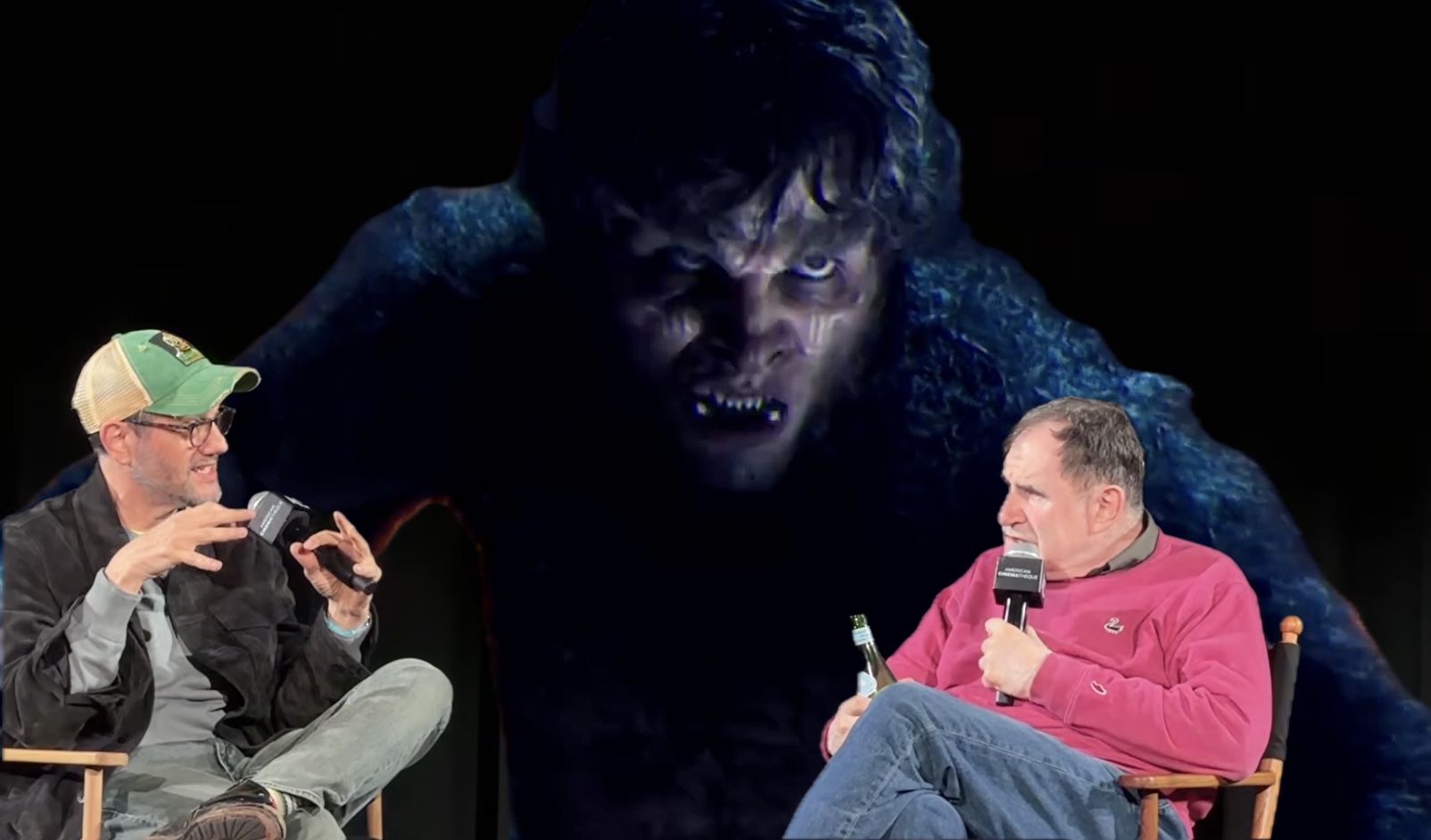
That sympathy became the foundation of Giacchino’s approach to Marvel’s Werewolf by Night. During an October 24 conversation with Richard Kind at Hollywood’s Egyptian Theatre, ahead of an American Cinematheque screening, the director and composer traced the special back to childhood comic books, homemade movies, and an enduring affection for outsiders. Along the way, their discussion offered a revealing look at how a filmmaker’s earliest interests can survive a career that takes him somewhere entirely unexpected.
Kind approached the evening as a friend eager to learn more about someone he already liked. “I don’t necessarily like these movies the way that Michael does, nor the way that you do,” he told the audience. Later, recalling a childhood screening that had left him gripping his chair, he put his reaction simply: “I was terrified.” But he had an anecdote that captured his friend’s personality. After a family gathering, a young relative had asked whether Giacchino was a child or an adult. For Kind, the question made perfect sense.
That youthful curiosity ran through Giacchino’s account of making Werewolf by Night. The childhood fascination was still there, but so was a clear understanding of what he wanted audiences to feel. As he put it, “monsters are just people with problems and they need help.”
Giacchino’s introduction to Jack Russell came through an inexpensive way of feeding a growing comic book habit. Growing up in New Jersey, he would accompany his mother on summer trips to Columbus, where she shopped for school clothes and shoes. While she looked around, he found a seller with stacks of comics. “So I could get a huge stack of comic books for like 50 cents,” he recalled. When Kind asked how many he actually read, Giacchino’s answer was immediate. “All of them.”
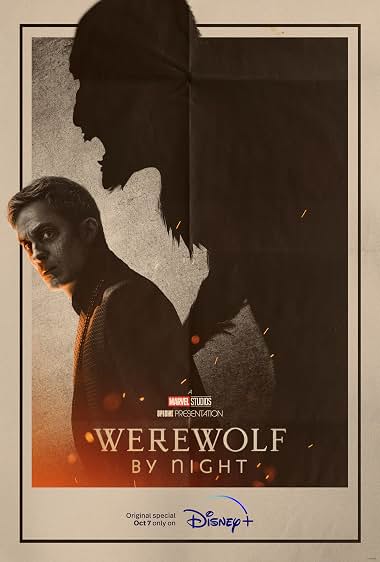
He discovered characters such as Doctor Strange and Werewolf by Night among the assortment. These were the figures that held his attention, occupying stranger corners of the comic book world than its most familiar heroes. “I liked the weirder things,” he told Kind. The attraction was personal enough that, decades later, he did not need to deliberate when Kevin Feige asked what he might want to make.
According to Giacchino, that conversation followed his short film "Monster Challenge," which he had made because he missed filmmaking. Feige had seen the short and knew about his background making movies. With Disney+ on the horizon, Feige posed a question that Giacchino recalled as, “If you could make anything for that, what would you want to make?” His immediate answer was Werewolf by Night. “And that was really how it started, just with that simple question,” Giacchino said.
The choice surprised Feige, Giacchino recalled, but it opened the conversation that led to the special. For Giacchino, the appeal was rooted in Jack’s predicament. Here was a character who feared the harm he could cause and repeatedly found himself in situations he had never wanted. “He never wanted to be where he ended up,” Giacchino said. That anxiety gave him someone to care about before the transformation ever began.
Giacchino connected that perspective to his own difficult middle school years. He described himself as “just a nerd kid that wanted to make movies,” whose love of Star Wars and other interests made him a target. “I was into all of the things that all the cool kids would then target you with as a reason to either beat you up, steal your stuff, or whatever,” he recalled. His affection for monsters grew alongside an awareness of how quickly a group could decide that somebody different did not belong.
His sympathy had limits, he joked. Giant tarantulas did not inspire quite the same generosity. “Insects don’t get a pass,” he said. But a person who had been cursed or transformed into something beyond their control was another matter. “And essentially they’re out there asking for help,” Giacchino explained. “And the first thing somebody wants to do is light a torch and burn them down and take them out as soon as they can.”
That distinction gave the developing Werewolf by Night story a consistent emotional direction, even as its premise changed. Giacchino recalled versions involving a Halloween party and pumpkin carving before the team arrived at the idea of a secret gathering. He described the adaptation as drawing themes and ideas from across the comics, rather than translating a single issue directly to the screen. Whatever shape it took, he wanted the audience to look beyond the idea of a monster as something to destroy.
Finding writers who understood that was essential. Giacchino said Heather Quinn joined first and remained involved throughout shooting, with Peter Cameron later helping work through the story’s mechanics. “We had the emotional underpinnings all in place that were working like gangbusters,” he explained. The next question was, “How do we get the mechanics of this story working?” He emphasized that Cameron’s arrival created a partnership with Quinn, rather than simply replacing one writer with another. “But Peter and Heather worked together incredibly,” he said. “And I loved having them.”
The same attention to character informed his casting. Gael García Bernal was his first choice for Jack. “This is the only guy that can do it,” Giacchino recalled thinking, admitting that “if he says no, I did not have a second choice yet.” He compared Bernal’s qualities to Buster Keaton, reaching for a reference that suggested how much he valued the actor’s particular screen presence. For Elsa Bloodstone, Laura Donnelly’s work in The Nevers had caught his attention, especially the strength she brought to her interactions with other characters.
After meeting Donnelly, Giacchino discovered another connection. She had grown up loving monster movies, too, and shared his appetite for the films that informed the special. Kind enthusiastically praised her stage work, but Giacchino’s account of choosing her returned to the specific quality he had seen on television. “That’s the strength I want for this,” he remembered thinking.
The films Giacchino loved as a child also shaped how he wanted this world to look. He cited both Marvel’s black-and-white horror publications and the old Universal monster movies as influences, envisioning a special that belonged in that tradition. Getting approval for the character, however, did not immediately mean getting approval for the presentation.
“The 'yes' didn’t come so quickly for the black and white,” Giacchino recalled. Even during production, the release format remained uncertain. “In the middle of shooting, we didn’t even know if we were going to be able to do the black and white or not,” he said. “There was just like this hope that it was going to be that.” They shot in color while using a separate monitor to view a black-and-white feed, checking the image after shots and making sure the lighting could serve both versions.
For Giacchino, the distinction involved more than removing color from the finished picture. He explained how colors translate into different shades of gray, affecting the way sets and lighting register on screen. The separate monitor allowed the filmmakers to keep evaluating the look they wanted while working within the uncertainty surrounding its release.
When a color version followed a year later, he wanted that presentation to have an equally deliberate identity. The inspiration shifted toward Hammer horror. “It was heavily saturated, really dense, and we really worked hard to get that, and also just the grain right and all of those things,” he explained. Both versions gave him a way to express his affection for the genre’s history, using different visual traditions to frame the same story.
For audiences who know Giacchino primarily through his scores, directing might appear to be a new ambition. His account made clear that it was an old one. He spent his childhood making films and went on to study filmmaking at the School of Visual Arts in New York, even as a fascination with music developed alongside it.
Piano lessons helped him identify what he wanted to understand. Playing a melody was only part of the attraction; he wanted to know what was happening underneath it. “I understand all these notes, and you’re having me play all these notes, but there’s something else going on that I’m not getting here,” he remembered telling his teacher. The answer was music theory, and an explanation of the chord structures supporting those familiar melodies opened up a new way of listening. He continued learning about orchestration and composition while still writing scripts and trying to find a path into directing.
An opportunity in video games changed that trajectory. While at DreamWorks, he was asked to write music for animation that would be shown to Steven Spielberg for The Lost World game. Giacchino delivered it the next morning and returned to his office, only to receive a call telling him Spielberg wanted to see him. He remembered hurrying toward an escalator, spotting Spielberg at the bottom, and abruptly freezing. “Do I continue running down the stairs?” he recalled wondering. “Or do I just sort of like sit there and just let it go?” He opted to let the escalator carry him toward the director.
The awkward descent led to a consequential conversation. “Without this moment that day, we wouldn’t be sitting here talking,” Giacchino said. Spielberg wanted him to score the full game with a live orchestra, an endorsement that gave him an opportunity to hear his work performed by living, breathing musicians. He credited that encouragement with helping set his career in motion, leading through Medal of Honor to an email from J.J. Abrams about an ABC series that became Alias. Brad Bird subsequently brought him aboard The Incredibles, and composing became the career that audiences would come to know.
Yet those years also gave him an extended education in filmmaking. Working with directors, editors, and producers taught him how stories function, while the demands of television forced him to make choices and trust his instincts. Discussing editing with Kind, he observed that “movies survive on the right rhythm.” “Music is storytelling,” he explained. “And if you’re not telling the right story behind those pictures, that’s going to confuse the audience, get them all mixed up.” His experience as a composer had kept him close to those decisions, even when he was not the person directing the scene.
Serving as both director and composer on Werewolf by Night brought a different problem. Normally, those two roles provide a valuable check on each other, with each collaborator able to question whether the other is making the right choice. “We watch out for each other,” Giacchino said of the composer-director relationship. Holding both jobs meant finding that perspective elsewhere. “And I can’t just sit here and go, oh, this is great because I say it’s great,” he explained.
Editor Jeffrey Ford became that collaborator. Giacchino had worked with him on The Family Stone and other films, and wanted him involved in Werewolf by Night from the outset. With Ford working in an office adjacent to his own, they could move between editing and scoring, testing changes quickly and considering how a musical choice might reveal something before the story was ready.
Giacchino described that exchange as one of the pleasures of making the special. An adjustment to a scene could create a new musical possibility, while a discussion of the score could reveal a better way to assemble the picture. “One of the things that I am so adamant about with the relationships that I have in this field are that we are honest with each other,” he said. Having a strong personal vision made that candid collaborator particularly valuable. “Jeff was the one who kept me straight and I never wanted to do a film without somebody to do that.”
That combination of conviction and openness helps explain what Werewolf by Night represents within Marvel’s screen storytelling. Giacchino brought a specific affection for an overlooked character and a particular tradition of horror filmmaking, then relied on writers, performers, and an editor to give those instincts their finished form. Disney+ provided an opportunity to follow that interest into a part of Marvel that had captured his imagination long before he had a career in movies.
The result also brings his journey back to the child who watched King Kong fall and felt that something was terribly unfair. The monster’s appearance could fill a screen, but the suffering underneath it was what stayed with him. With Werewolf by Night, Giacchino had the chance to make that feeling the center of a Marvel story, inviting an audience to look at a frightening figure and recognize someone worth understanding.
You can catch Werewolf by Night on Disney+. The soundtrack is available on all streaming platforms as well as on a collectible vinyl, available on Disney Music Emporium. For those in Southern California wishing to expand their Werewolf by Night experience, you can catch the LA Philharmonic perform the score live-to-film as well as see a first look at Michael Giacchino’s musical Headless.