
The Scale(s) of Tech Behind Walt Disney Animation Studio's "Zootopia 2" Revealed at SIGGRAPH 2026


How do you take the world of one of the most successful animated movies of all time and make it even more appealing while staying true to the first film? That’s what the tech team behind Walt Disney Animation Studios’ Zootopia 2 had to figure out, and what they explained at SIGGRAPH 2026 in a special panel.
.jpg)
Those in attendance were joined by:
- Jack Fulmer, Head of Environments, Walt Disney Animation Studios
- Adam Green, Animation Supervisor, Walt Disney Animation Studios
- Kira Lehtomaki, Head of Animation, Walt Disney Animation Studios
- David Hutchins, Head of Effects Animation, Walt Disney Animation Studios
- Tyler Kupferer, Director of Cinematography Layout, Walt Disney Animation Studios
- Daniel Rice, Director of Cinematography Lighting, Walt Disney Animation Studios
Who all explained and expanded on the lore and world building of Zootopia, from a technical standpoint.
The first Zootopia was introduced to audiences back in 2016, allowing viewers to enter a world inhabited entirely by anthropomorphic animals in a buddy-cop mystery that is filled with social commentary and satire. However, one of the most intriguing aspects had nothing to do with the root story, instead to ambitious world building that the film took on.
As such with the sequel, the artists needed to expand upon that already existing world, and with that expansion came an expansion of internal systems to allow for even more worlds, like new biomes that we hadn’t been introduced to in the first film.
Along with new environments came an expansion of characters - 178 characters representing 67 different species of animal.
While there was plenty of fur in the first film, we also got to meet Nibbles Maplestick, who alone has 570,000 individual hairs. Each Giraffe in the film also featured 9.6 million hairs on each of them.
If you think that’s a lot of numbers, there’s also over 85 different sets and locations that were used in the film, and this action comedy required multiple different camera shots and angles, sometimes in rapid succession. An average animated film from Walt Disney Animation Studios has 1600 shots. Zootopia 2 had over 2000.
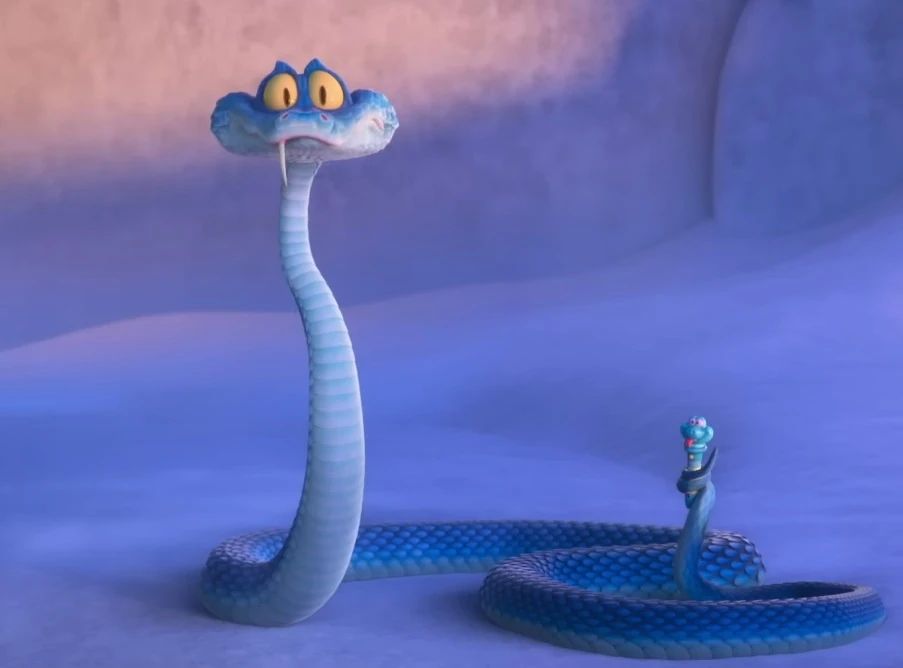
All these numbers are fascinating and challenging in their own right, but pale in comparison to a singular new character who stole the show - Gary De’Snake.
Gary is a blue pit viper voiced by Academy Award winning actor, Ke Huy Quan. The kind, optimistic, and lovable snake character is the first snake seen in Zootopia in many years (in the story of the second film), and is on a mission to restore his family’s reputation by uncovering the truth behind a decades-old mystery tied to his ancestors. As the investigation unfolds, Judy and Nick realize that Gary isn’t the threat everyone believes he is, and only becomes a target because of the long-hidden secrets he keeps.
As explained during the panel, Gary just might have been the hardest of the new additions to bring to life in Zootopia 2. A snake is basically a big rope, and according to the team - one of the hardest things to animated in CG is a rope.
Gary De’Snake, is basically a rope with a face. But, like with many CG animation lessons at Walt Disney Animation Studios, sometimes the answers can be found in the past. Gary’s artists took a lot of inspiration from another animated classic - Robin Hood.
Animators looked to Sir Hiss from the 1973 animated classic at the advice of soon-to-be-official Disney Legend Eric Goldberg.
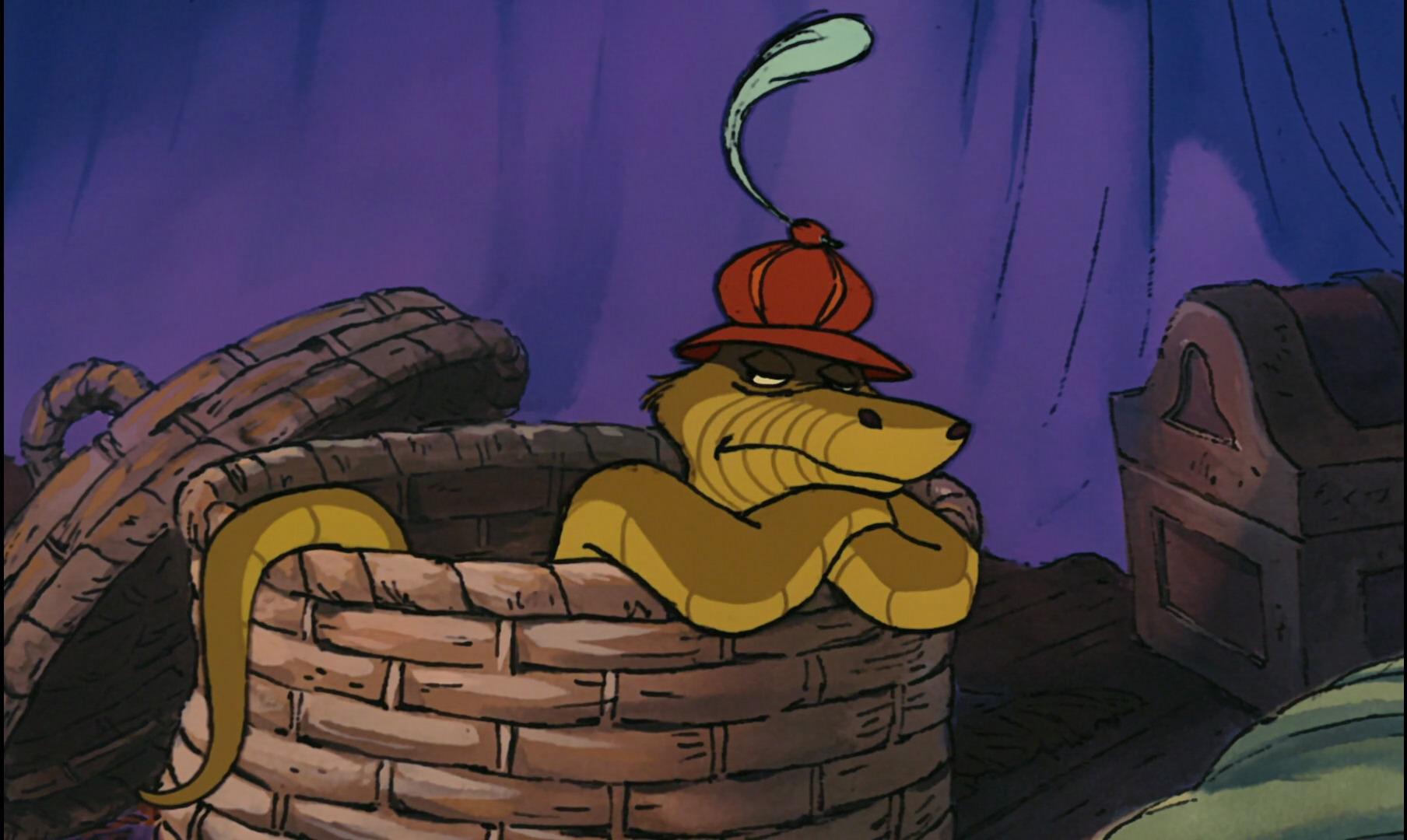
In fact, a number of 2D tricks were used to help bring Gary to life for the movie. Eagle-eyed viewers of Zootopia 2 may have noticed that Gary has two tongues. No, not at the same time.
In some shots, Gary has the traditional, forked tongue like a snake would have. At other times, he may open his mouth and a cartoony curved tongue is featured within.
In other poses, you may see Gary with a full set of teeth along with his fangs, but that decision isn’t just cartoony - it’s rooted in the real world. Blue Pit Vipers (like Gary represents) do have small teeth throughout their mouths.
As Gary can slither around smooth as silk in some scenes and has to be fast moving in others, another 2D trick was utilized at times - perfect for fans of the pause button to try and catch. In hand-drawn animation, multiple versions of the same character are used to add to a motion blur effect. While computer animation typically has simulations and formulas to add this more automatically, to capture the rapid-fire motion of Gary when he, say, ties himself into a knot around one of the Lynxleys in the film, you can see his face and skull numerous times in a single frame.
Another challenge - Gary’s Length. Different needs as called for by the story have Gary literally fluctuating in how long his serpent body is. In fact, some scenes feature multiple Garys stitched together. Sometimes two, sometimes three. In fact, in the Gala scene early on in the movie, there are moments when three Garys are used twice - so there are six Garys total.
New rigs were also created to help the CG character navigate the set with a predetermined path. His body would follow that path with ease, compared to the way other characters are animated in the film. Snap functions were also implemented to the character’s design so that the scales on Gary would flex and bend as needed. A rainbow texture system was also put into place for animators so that they could animate Gary more easily, that way that can adjust how his body and scales would slide and move in a more organic and believable style. And how many scales are there? According to the panel, Gary has 3010 scales.
Along with new characters like Gary, we also get to know new biomes - like Marsh Market, the first below and above water environment in Zootopia. Most of the early development of this area focused on water simulation. Disney fans might immediately think of animated water in the worlds of The Little Mermaid or more likely, Moana and its sequel Moana 2. Those are ocean water simulations with crashing waves, seafoam, and whitewater.
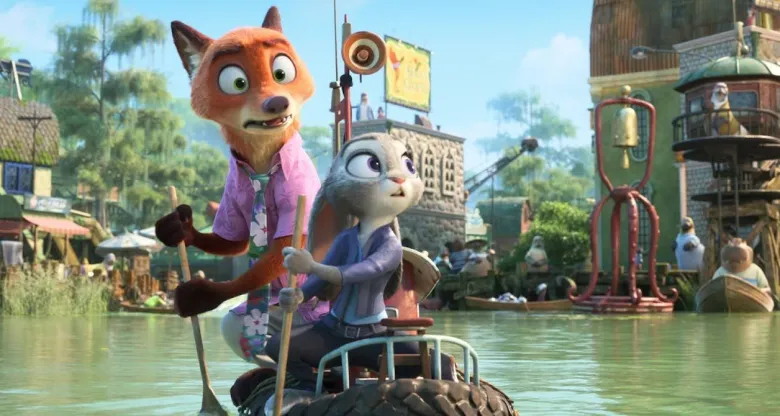
For Marsh Market, the water needed to be largely still, so all the renders were done with a flat tank simulation in the 3D and VFX software package, Houdini. Any kind of big swells or ocean waves were not part of the simulation.
Boats are and floating objects and animals are also featured in this animated world, and again, because its not an ocean, the water had to be toned down and tuned to not feature whitewater and foaming effects in the wakes made by these characters and objects.
The world of Marsh Market is also populated by Pinnipeds, semi-aquatic mammals that can go in and out of the water. As such, new processes to show their wet fur were also created. Similar to Gary, to animate these characters just right the artists took a look to the past, and started animating how the characters would move in hand-drawn animation. After doing some tests, the sequences of Seals, Sea Lions, Walruses and more were carried over into CG and also applied to other mammals like Elephant seals.
In fact, there are so many of these characters populating the world, the animation team held what was called “animjams,” where each artist was tasked with animating a single vignette, with the only rule that it had to be grounded in something from their animal research. As such, funny little vignettes and gags would come in and some made it to moments in the background of Marsh Market.
Another unique location that we saw in this film was the interiors of the Weather Walls. Designed to keep the biomes for their respective creatures in an appropriate climate, these dividers were a large part of the world building in the original film, but story demands for Zootopia 2 called for interior shots.
In the early development, 2D drawings of these interiors were so good and so elaborately, the 3D teams tried to model them exactly in the layout process and duplicate those sets. Part of it was a collection of modeled piping and wall assets that could be moved in used over again in a modular process as each set was built and needed.
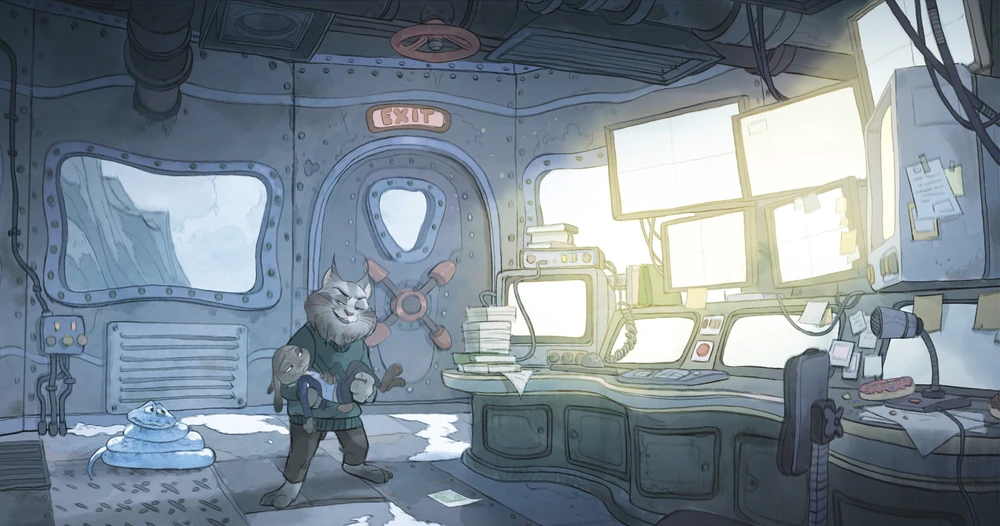
At a climactic moment in the film, we see various security camera feeds across monitors each with their own image. For this, and the 14 different cameras featured, each screen was populated with their own separate shot placed into the scene. There was talk of making them animated screen savers but was probably for the best to be left alone as is. Any creatures and characters on those screens might be a bit distracting given the story moments that are taking place in these interiors.
Others might notice all the Neo-noir inspired color choices that happen in these moments, with a stark blue for sadness - as Gary’s heat vision is set to immediately contrast the moment with bright, warm colors just a few beats later.
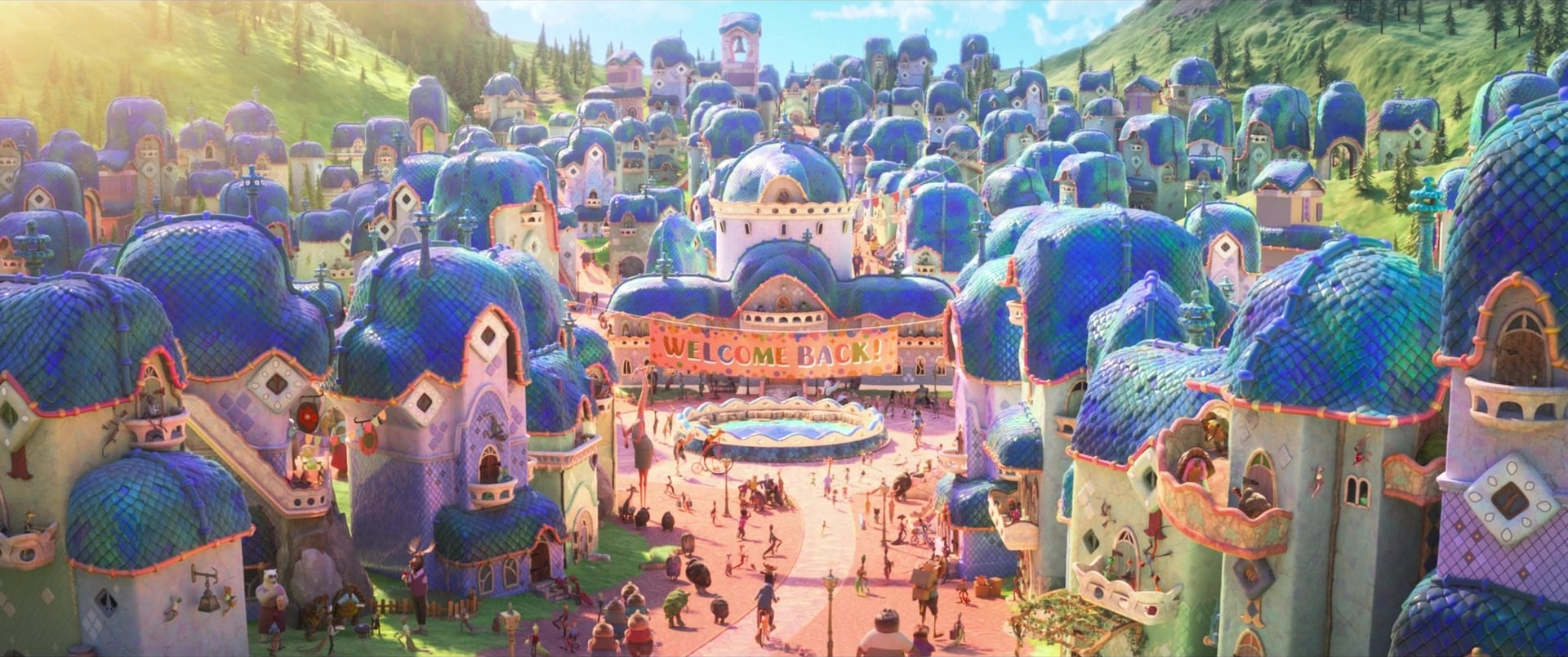
Snake details are also what inspired Reptile Ravine, seen flourishing later in the film with reptile shapes featured throughout the town, and noticeable scaling on roofs and walls. Considering most of the residents of this realm may or may not slither, eagle-eyed viewers will also notice that the grounds are mostly flat and smooth surfaces, and even an area rug twists and turns to allow for the slithering of those on top of it.
With all the fun tech and details shared, we were also reminded that more fun from the world of Zootopia is on the way, being told “rest assured, the adventures will continue for our dynamic duo.” Though, this is not a big surprise. Anyone who has stayed through the end credits of Zootopia 2 is treated with a tease promising another story - likely involving birds.
Check it out for yourself with Zootopia 2, now streaming on Disney+ and available on physical and digital media now.