
Disney's "Coaster Crisis" and the Homogenization of Family Thrills


With less than a month to go until D23: The Ultimate Disney Fan Event, Disney Parks fans are once again preparing for one of the convention's most anticipated presentations: the Disney Experiences Horizons panel. Every two years, the showcase provides fans with a glimpse into the future of Disney Parks and Disney Cruise Line, revealing new attractions, lands, and experiences that will shape the company's next era of themed entertainment.
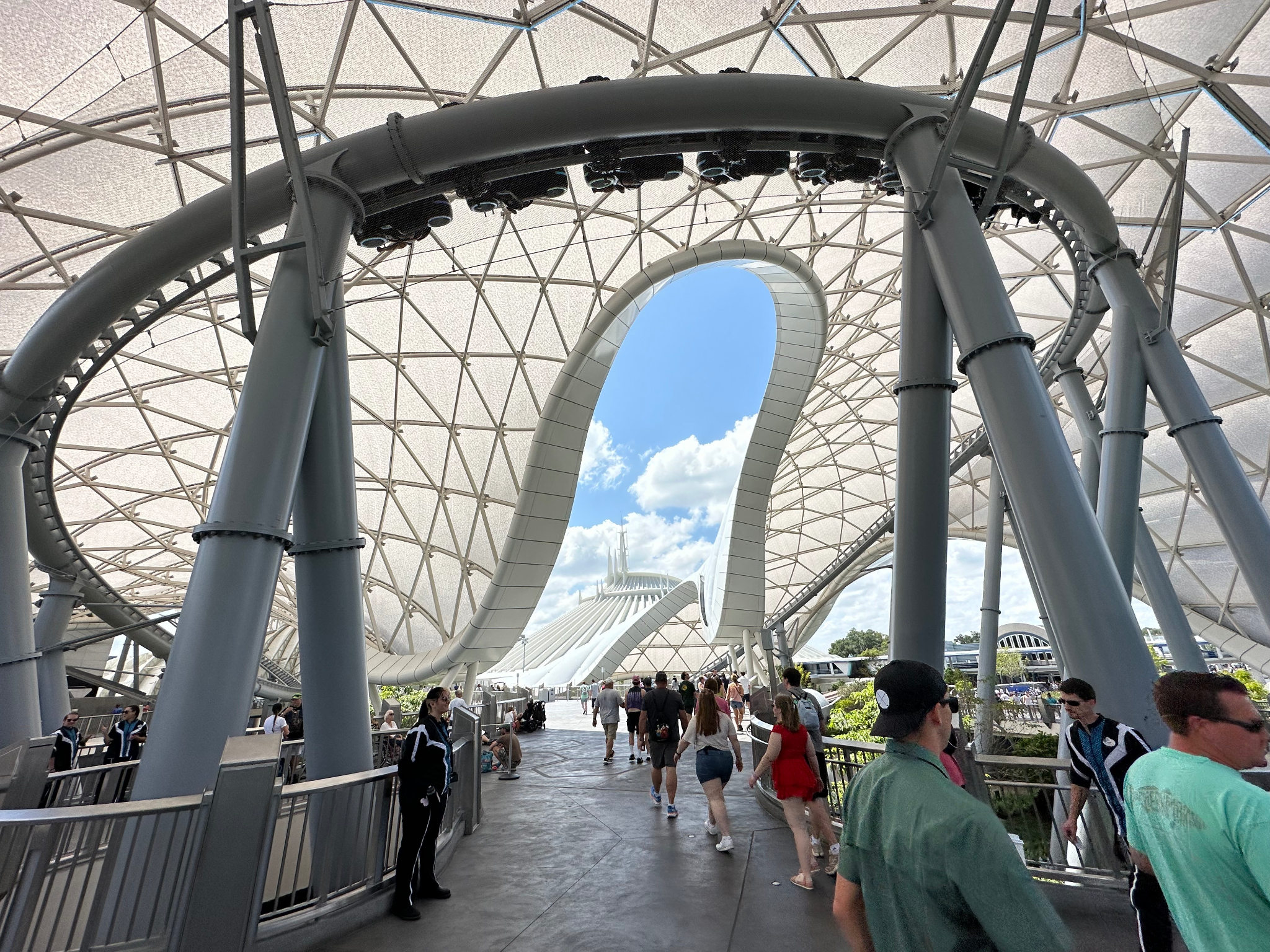
This year, one rumor has particularly captured the attention of fans: the possibility of a major reimagining of Space Mountain at Magic Kingdom. Reports have suggested everything from a simple modernization of the attraction to a complete replacement of the existing layout with a new family launch coaster. While nothing has been confirmed, the rumors do present an interesting opportunity to discuss what I would like to dub the “coaster crisis.”
For Walt Disney World specifically, roller coasters have become a consistent addition. Since 2018, the resort has added Slinky Dog Dash, Guardians of the Galaxy: Cosmic Rewind, and TRON Lightcycle / Run. All three attractions have been immensely popular additions, representing some of the Disney’s most impressive and expensive attractions ever built. However, despite their differences in ride systems and themes, they all share a similar philosophy in their execution. Launches, large sweeping turns, shallow drops, and relatively low-intensity maneuvers have become the defining characteristics of Disney's modern roller coasters.
This is not necessarily a criticism of the attractions themselves. Cosmic Rewind is one of Disney's greatest achievements, and TRON's motorbike ride vehicles (which, admittedly, are far from revolutionary in the coaster world) create one of the most visually impressive experiences at any Disney resort. I need to clarify here, the issue is not the roller coaster. Just like omnimovers, trackless dark rides, or the Enhanced Motion Vehicle system, roller coasters are simply tools. It ultimately comes down to how Imagineers choose to utilize them.
Looking back to the 1990s and early 2000s, Disney seemed far more willing to push guests outside of their comfort zones. Attractions such as Indiana Jones Adventure, Countdown to Extinction (DINOSAUR), Twilight Zone Tower of Terror, Expedition Everest, and Rock 'n' Roller Coaster all embraced thrills in different ways. Some relied on speed and intensity, while others utilized suspense and storytelling to create memorable experiences. Many of these attractions also maintained relatively low height requirements, allowing families to experience these thrills together.
Disney had successfully expanded the definition of what a family attraction could be, lightly competing with the less apologetically thrilling coasters and experiences found at other major theme parks. Today, however, there seems to be a growing desire to ensure that attractions appeal to everyone at all times. Even attractions that are, on paper, major thrill rides often feel carefully designed to avoid becoming too intense. Cosmic Rewind and TRON both launch riders to approximately 60 miles per hour, placing them firmly within the thrill category. Yet both attractions largely avoid aggressive maneuvers, airtime, inversions, or moments that could genuinely intimidate riders.
Ironically, this approach does not necessarily make these attractions more family friendly. A child who is afraid of roller coasters is unlikely to suddenly become comfortable with an attraction simply because it has fewer intense elements. TRON's outdoor launch remains one of the most intimidating visuals in all of Walt Disney World, regardless of how tame the ride itself may be. The same could be said for Cosmic Rewind's backward launch and rotating vehicles. Instead, Disney often finds itself in an unusual middle ground where attractions are marketed as thrilling experiences but are designed in a way that minimizes the very aspects that traditionally make roller coasters exciting.
However, this philosophy extends beyond Walt Disney World. Shanghai Disneyland's TRON Lightcycle Power Run (the original, now cloned at Magic Kingdom) and the upcoming Spider-Man coaster continue this trend, emphasizing large, drawn-out elements rather than pushing the boundaries of intensity. Admittedly, Spider-Man has not opened yet, but based on the finished (and mostly unthemed) coaster track, we can deduce the type of ride experience Disney is going for here. While these attractions will undoubtedly be fun and impressive, they also feel noticeably more restrained when compared to many of the major attractions being built elsewhere in the industry.
That is somewhat disappointing because Disney has repeatedly demonstrated that roller coasters can be incredibly effective storytelling tools. Space Mountain transformed a simple indoor roller coaster into an unforgettable journey through the cosmos. Expedition Everest's switch track remains one of the most iconic moments in modern themed entertainment. Even Big Thunder Mountain Railroad utilizes uncontrolled movement and environmental storytelling to create a sense of danger and excitement.
Roller coasters possess an enormous creative scope. Launches, inversions, unique seating arrangements, switch tracks, tilt tracks, and other special elements can all be utilized in service of a story. Disney has never been afraid of innovation when it comes to ride systems. And, while Disney has always had coasters, they all seemed to have their own identity within the Disney Parks. Disney's greatest strength has always been its ability to create a wide variety of experiences for different audiences. However, there is also value in attractions that challenge guests and create moments of genuine suspense. Some of the best memories I have from growing up come from facing my fears and trying new experiences.
As we move toward another Horizons panel and another era of Disney Parks expansion, it will be interesting to see whether Disney continues its recent trend of utilizing ride systems in familiar ways (I’m also looking at you trackless rides) or if Imagineering once again embraces the creative risks that helped define previous generations of attractions.