
Appeal Is Clarity: Disney Animator Renato dos Anjos Shares Lessons From "Bolt" to "Hexed" at LightBox Expo


Walt Disney Animation Studios closed out LightBox Expo with "The Art of Performance in Animation" with animator Renato dos Anjos, a session that served as both a career retrospective and masterclass. Nearly two decades into his time at the studio, stretching from Bolt to the upcoming Hexed, dos Anjos explained that what makes a character appealing can come from many places, whether a shape, a pose, or the way a character moves from one place to another. He spent the hour focused on those three building blocks: motion, poses, and shapes.
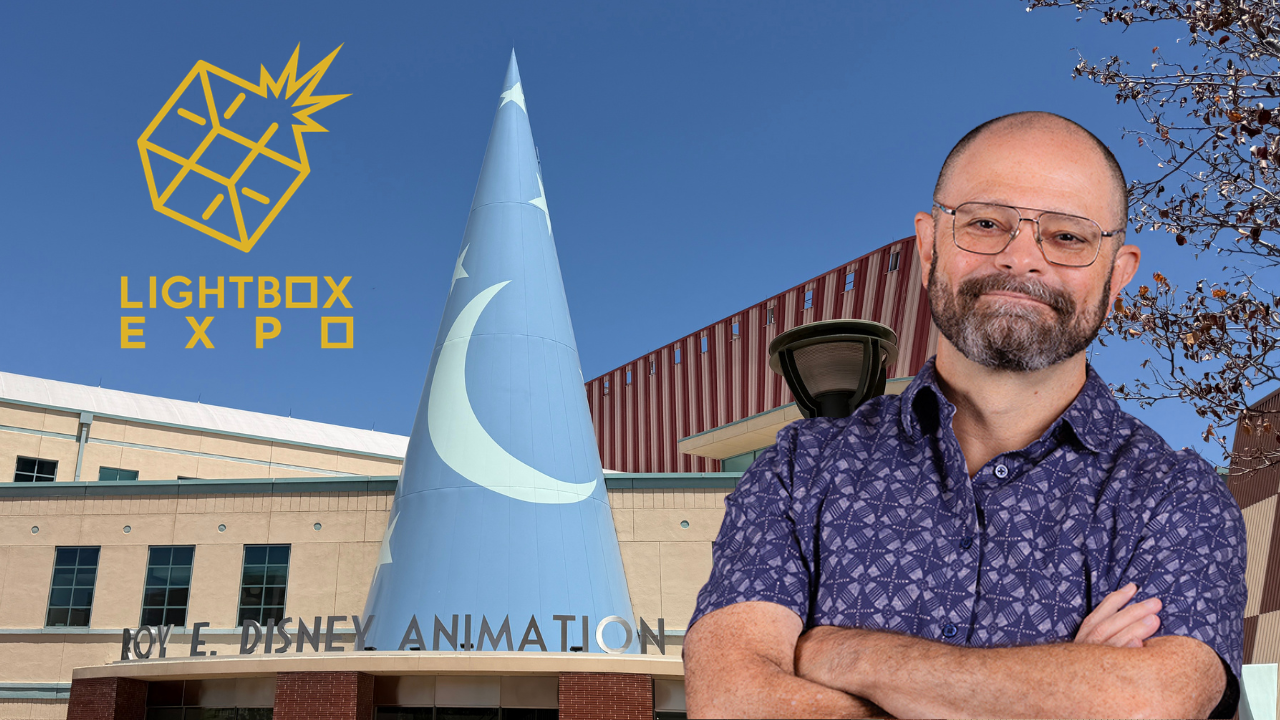
Renato dos Anjos opened by describing one of his favorite things about working at Disney Animation: everyone in the department is hired as an animator first, but can rotate into different roles from project to project. Over the years, he has served as a supervising animator, as Head of Animation, and most recently as a drawover lead, bouncing between positions depending on what a film needs. He isn't sure any other studio is structured this way, and he values that it keeps artists from doing the same single task forever. Still, he says animating itself remains his place of calm and where he is happiest.
Dos Anjos grew up in the state of São Paulo, Brazil, in an industrial city known for car manufacturing, where most people aspired to factory work and becoming an artist was a tricky proposition. He described himself as a shy kid who wasn't especially drawn to academics, instead escaping into cartoons and drawing. São Paulo's large Japanese community meant much of what he watched growing up was Japanese animation, alongside a smaller amount of Brazilian work.
A friend who worked as an animator let him visit and ask for help, and eventually decided his drawings were strong enough to show at his studio. He was hired at just 14 for a salary he still finds hard to believe. The work was mostly commercials, and while budgets were large, he recalled that the acting was shallow by necessity, since there's only so much range in a spot for breakfast cereal.
His next break came when Sandro Lúcio Cleuzo called about Fox Animation Studios in Arizona, the studio behind Anastasia, which brought dos Anjos to the United States for the first time. He later arrived at Walt Disney Animation Studios in 2007 to work on Bolt, where he worked closely with animator Wayne Unten. What has kept him at Disney, he says, is the people who combine extraordinary talent with genuine humility and are always willing to share their time.
Like many animators, Pinocchio solidified his desire to pursue a career in animation, and he calls the craftsmanship nearly impossible to match. It’s still his favorite film, and he describes the studio's early classics as a bar set so high that it serves as a permanent goal. He summed up the Disney Animation formula as universal stories set against imaginative worlds and populated by compelling characters, noting that his slice of that pie is the character side.
As Head of Animation on Encanto alongside Kira Lehtomaki, dos Anjos leaned heavily on a tool he has used throughout his career: the drawover. Rather than only describing notes to an animator, he draws directly over their work to help them see the possibilities in a shot. When you're deep in a scene, it's easy to get lost in detail and difficult to step back.
That problem is especially acute in CG. Disney's character models and rigs are so well designed that the computer essentially tells you what you're looking at is already good, and the longer you work, the more perspective you lose on how much further you could push a pose. A drawover gives animators fresh eyes and reminds them there is often a lot more that can be done.
That reputation led to his role as drawover lead on Zootopia 2. Dos Anjos stresses that every project should begin with research, which he calls the most important step. For the sequel's new pinniped characters, the team observed sea lions at the Vancouver Aquarium, and he encouraged artists to return to research whenever they feel stuck.
Because building a model and getting a rig up and running can take several weeks, dos Anjos also created hand-drawn animation tests early in development. He showed the crowd one such test, the "Hey bub" sequence, explaining that putting something in motion in front of the directors is the fastest way to ask, "Is this what you mean?" The lessons from that test, such as how the character's lips should separate or where a pose could be simplified, then fed directly into his notes for animators once production began. Sometimes the changes he suggests are very small, but a single unclear shape can keep a shot from working.
He also cautioned against copying live-action reference too literally. Animators should extract the emotion from reference but make sure the movement fits the character, since a fox should move as a fox and a person should move like a person.
If there is a single thesis to the session, it's that the appeal is clarity. To illustrate, dos Anjos screened a test he animated while the studio learned new animation software (Presto), in which Judy Hopps and Nick Wilde drive and pull over to arrest a lynx. He then opened the shot in Photoshop and drew over his own work live, pushing Judy higher on her jump, stretching her body further, and widening her smile to add energy. Push something that far, he noted, and there are consequences elsewhere, such as the apex of the jump needing to sit higher as well.
With refreshing candor, dos Anjos admitted he played parts of the original test safe because he was still unfamiliar with the software, and wished he hadn't taken the easy route. Poses should be as clear and interesting as possible, so the audience is captivated and wants to keep following the characters.
Dos Anjos also served as an animator on Hexed, Disney's upcoming 65th animated feature, and pointed out a shot of his that appears in the trailer, in which Beef Roger Crummchuk spits on a gas tank. During the Q&A, he used Hexed to illustrate how animators collaborate with downstream departments. In one scene, Beef does something with his bathrobe that seemed obvious in dos Anjos' mind, but the cloth team didn't pick up on his intent, so he went back and made drawings to show them what he wanted.
That kind of communication is built into the studio, he explained. Drawover artists are now embedded in other departments, including cloth, hair, and effects, so an animator who imagines a particular magical flourish can ask for a drawing to visualize it before handing off the shot.
Asked whether he takes cues from big stage performances or more subtle screen acting, dos Anjos says he has always loved people watching. He shared advice from a mentor that stuck with him: if you pull from another artist, you inherit their interpretation, but if you pull from life, you're free to make it your own. While he acknowledged the value of studying how actors and dancers move their bodies, he tries to draw from life whenever possible.
For an artist who once found refuge in cartoons as a shy kid in Brazil, Renato dos Anjos' talk was ultimately about seeing clearly, whether that means studying sea lions, drawing over a colleague's shot, or admitting that his own test could have been pushed further. Audiences will get to see the latest results of that philosophy when Hexed arrives in theaters on November 25th.