
Scarecrows, Detective Cats, and Mouth Charts: Inside the "Big City Greens" Character Design Process at LightBox Expo


LightBox Expo in Pasadena hosted "Farm to Tablet: Cultivating Characters for Big City Greens," a Disney Television Animation panel on how the long-running series creates memorable characters from scratch. On stage were character designers Ali Jafari and Stephanie Ramirez alongside clean-up artist Cierra Wiley, who together took attendees from the first rough sketches of an episode through the final model sheets sent to the overseas animation studio.
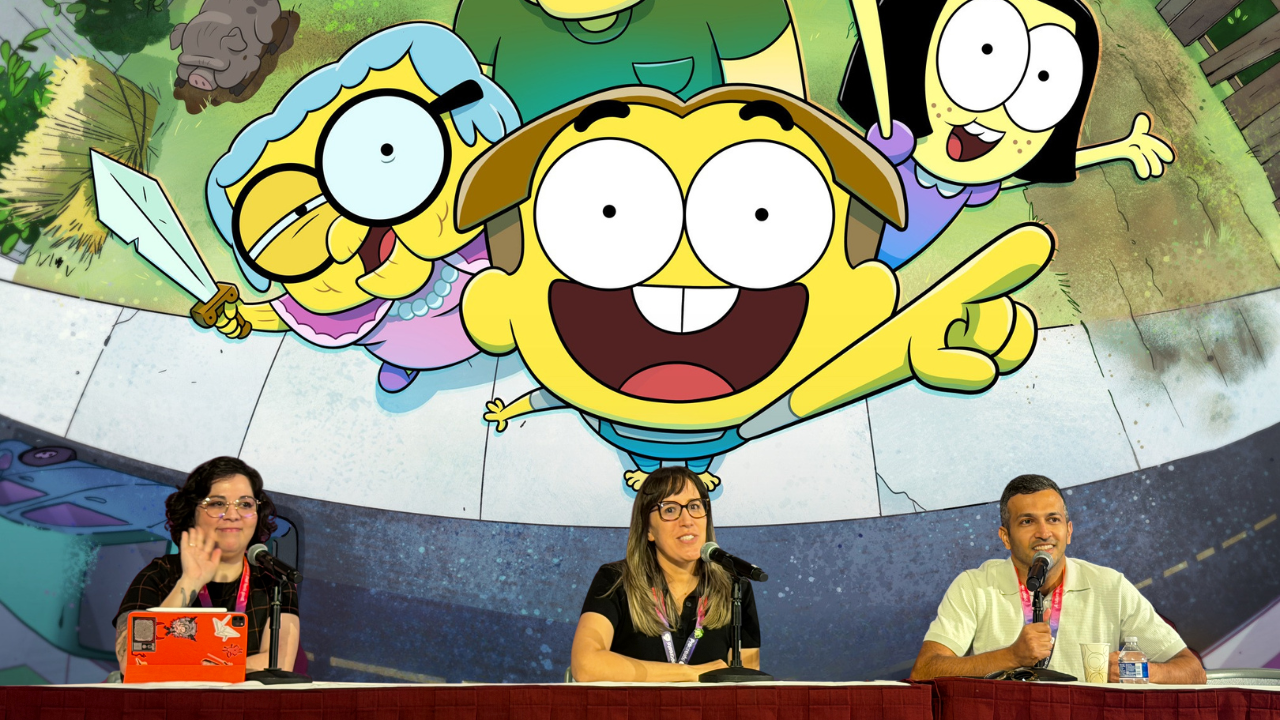
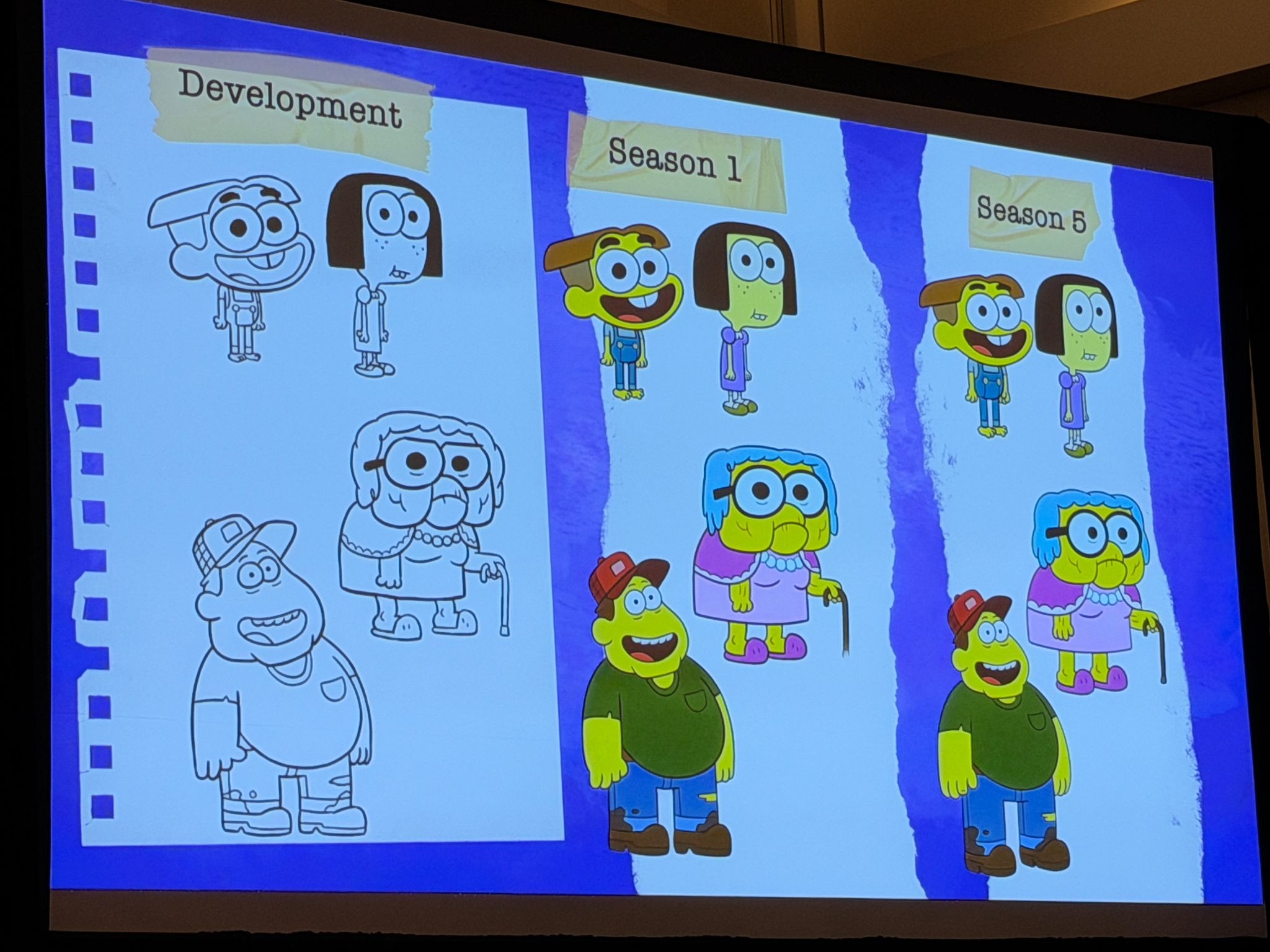
Ali Jafari opened the panel by noting he has designed for Big City Greens for about ten years, from the very beginning of development through the current wrap-up of Season 5. He started with early development art of the main cast, pointing out the small changes that came once the characters needed to animate well. Bill was made taller, for example, while Cricket's head was made smaller.
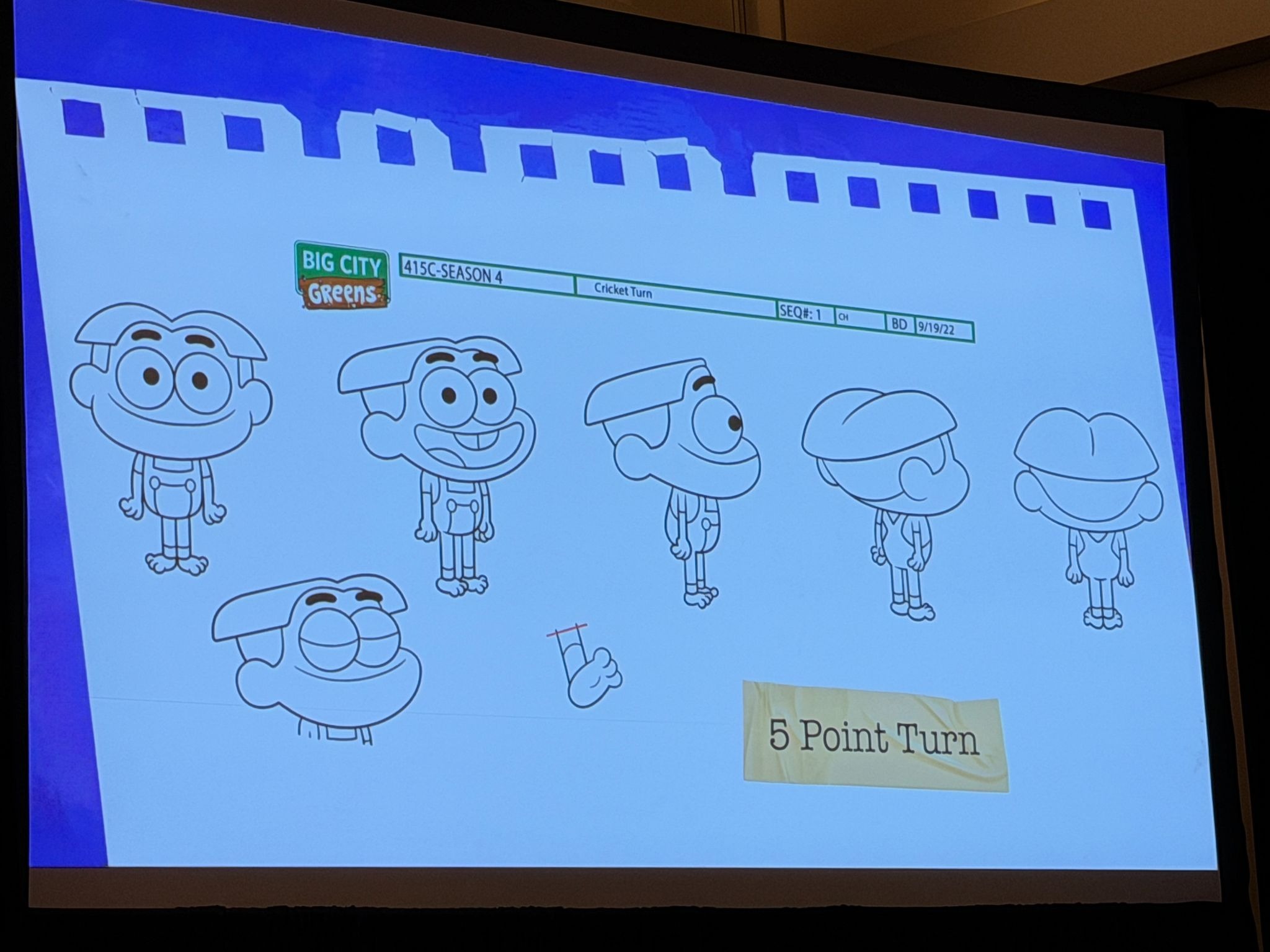
Because so many artists touch the show, Jafari explained, the team relies on clear rules and dos-and-don'ts for each character. The core tools are the turnaround (a five-point turn showing the character from multiple angles), a size chart, and a mouth chart. Jafari said the size chart was especially important, since a design that looks great on its own can end up with the wrong head size once it stands next to the rest of the cast. Mouth charts matter just as much because every character in Big City Greens talks differently, with distinct teeth and mouth shapes that can get quite extreme.
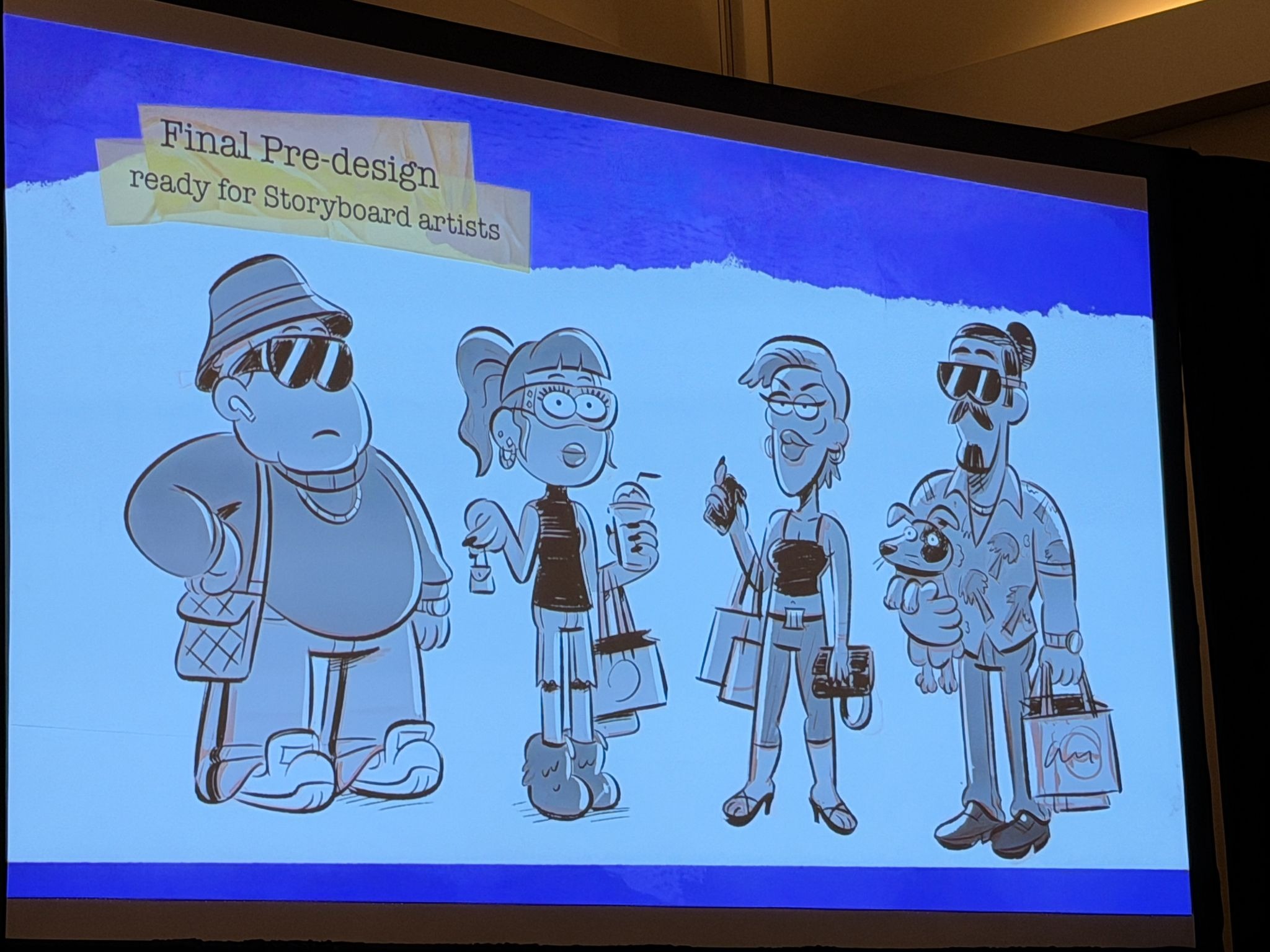
Jafari then walked through a typical assignment: an episode in which Bill and Gloria venture into a fancy neighborhood (Bougerlie Hills). He described researching what the most fashionable people were wearing and sketching widely. For the episode's two antagonists, he explored roughly five options for a Kardashian-style, TV-personality look before the showrunners picked a favorite. That pre-design went to storyboard, and once the board was finished, it came back to the design team for full turnarounds. Among the background characters he showed from that episode was a dog, who emerged through the pipeline sporting a man bun and a goatee like its owner.
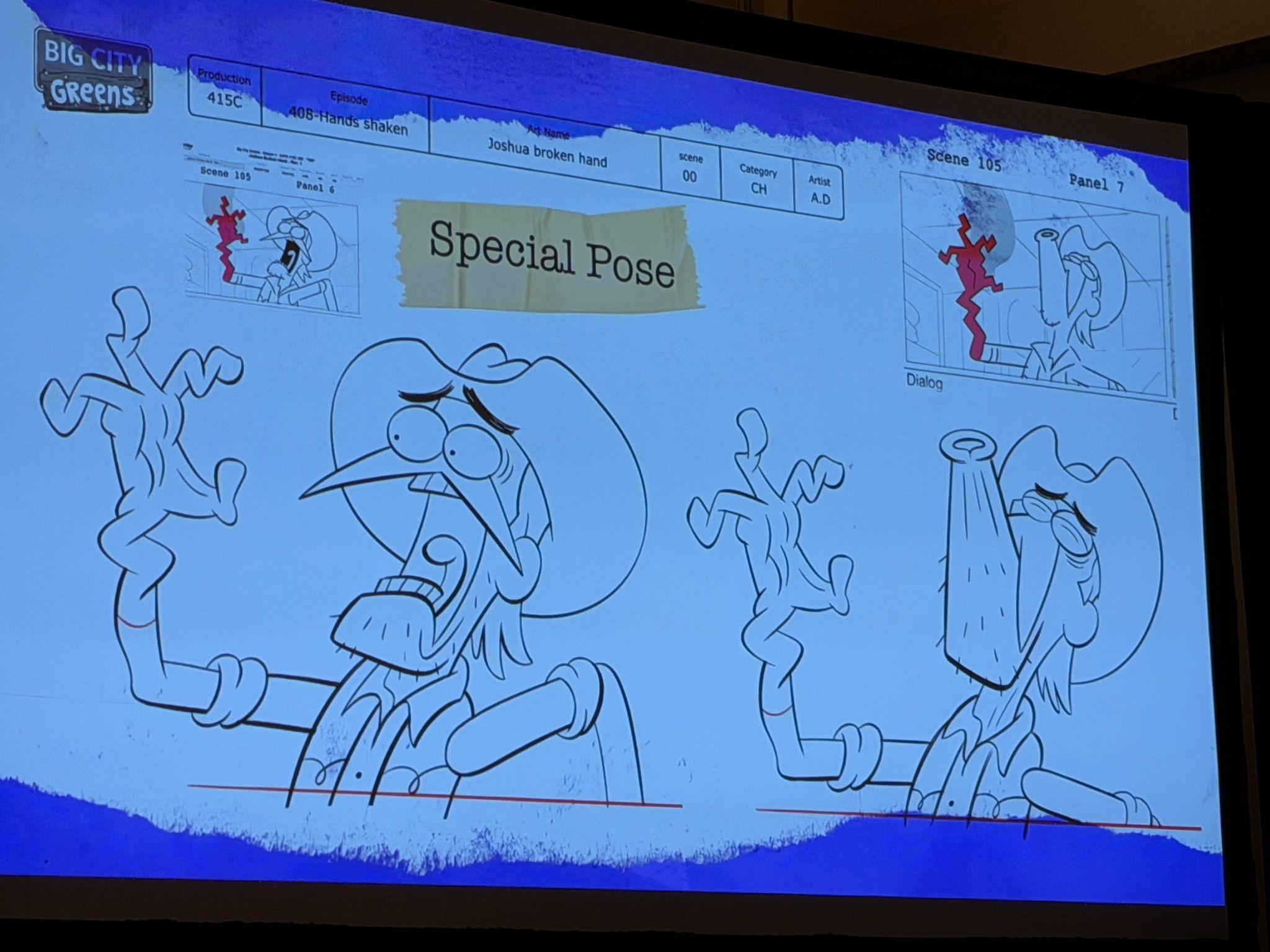
Not every character gets the full treatment, Jafari noted. Some appear only briefly, so the team might design only a front-and-back view to move faster. Others need many special poses, such as a character named Joshua from a special episode that Jafari said let the team push the show's style even further while staying in the same universe.
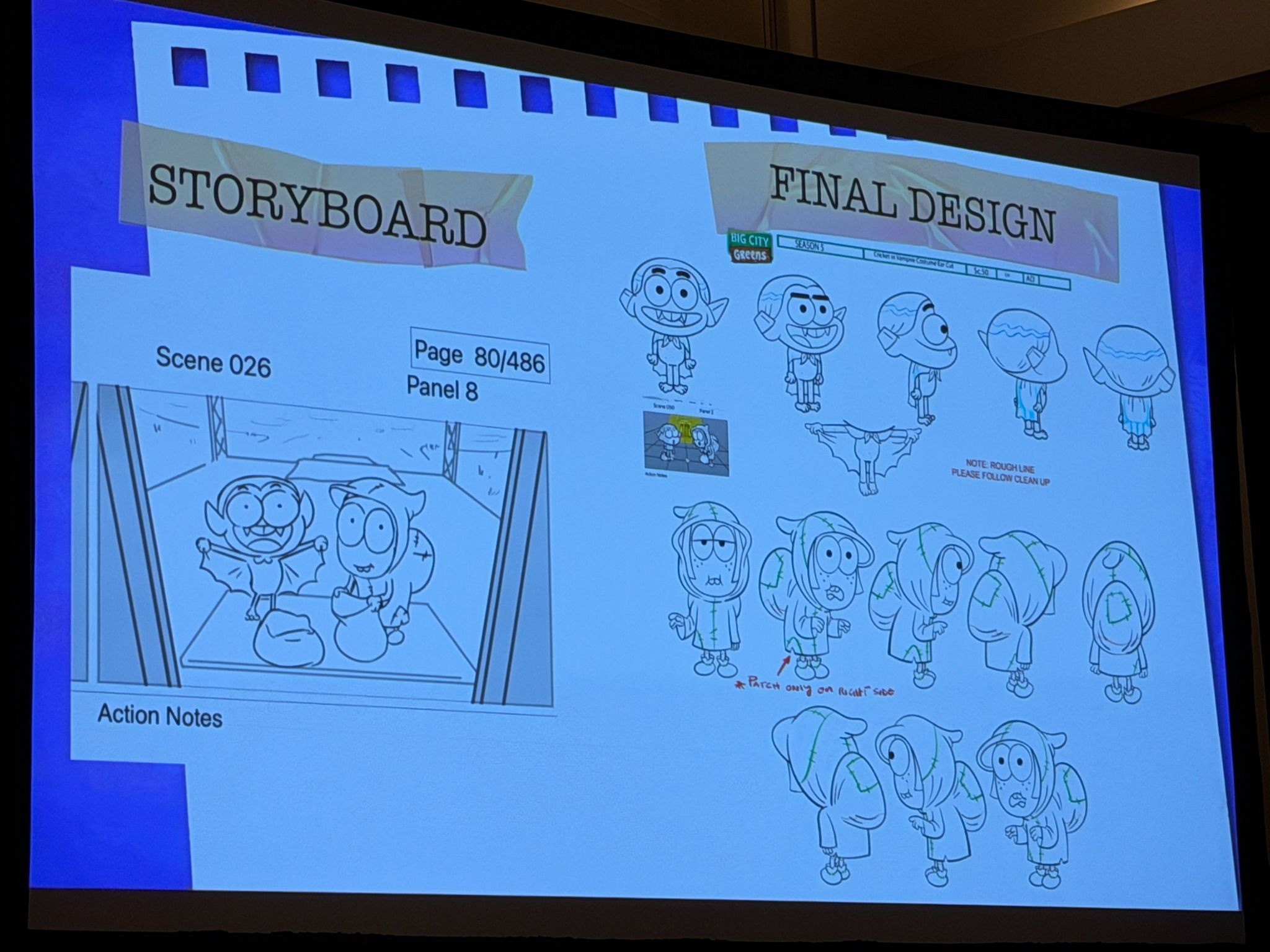
Stephanie Ramirez, who has worked at Disney for over 13 years, recounted moving from Gravity Falls to Star vs. the Forces of Evil before landing on Big City Greens, where she has stayed because the show keeps going. She explained the pipeline from script to development to storyboard, using Cricket’s vampire costume from the recent Halloween episode as an example. With only a line in the script to go on, she explored a homemade-looking vampire wearing something like a union suit, while Tilly's costume might be as simple as a pillow stuffed into a jacket. Storyboard artists then refined the design depending on how the action played.
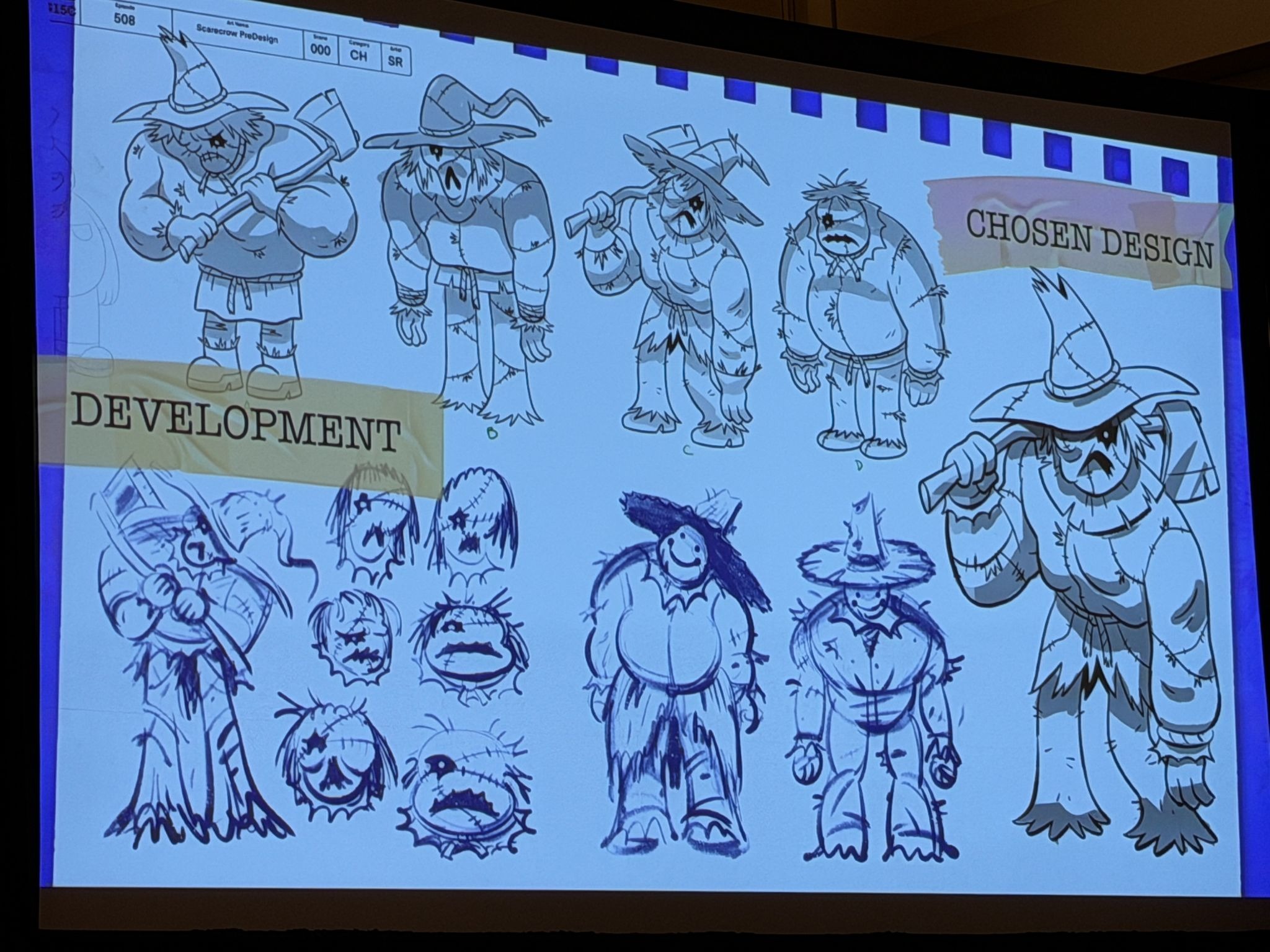
The centerpiece of her presentation was the scarecrow villain from that same episode. Ramirez said the team deliberately made him a little off the show's usual style, with more detail than typical, so he would feel extra scary and slightly unsettling. The script called for him to be very tall and menacing and to carry an axe. After a round of development sketches, the team chose a lanky, asymmetrical direction, leaving viewers to wonder whether anyone is actually inside. Because of that asymmetry, his final turnaround needed more angles than usual. Ramirez also shared special poses, including one she worked on for a full day that flashes by on screen in an instant, and a mouth chart featuring a twisted, demented-looking grin.
Cierra Wiley, in her sixth year at Disney Television Animation, explained that she started as a production assistant before moving into design and now serves as the show's clean-up artist. Her job is the final pass on every design before it goes to the overseas studio, which is instructed to follow the model sheets as closely as possible. That means any stray line or inconsistency would be copied faithfully into the animation.
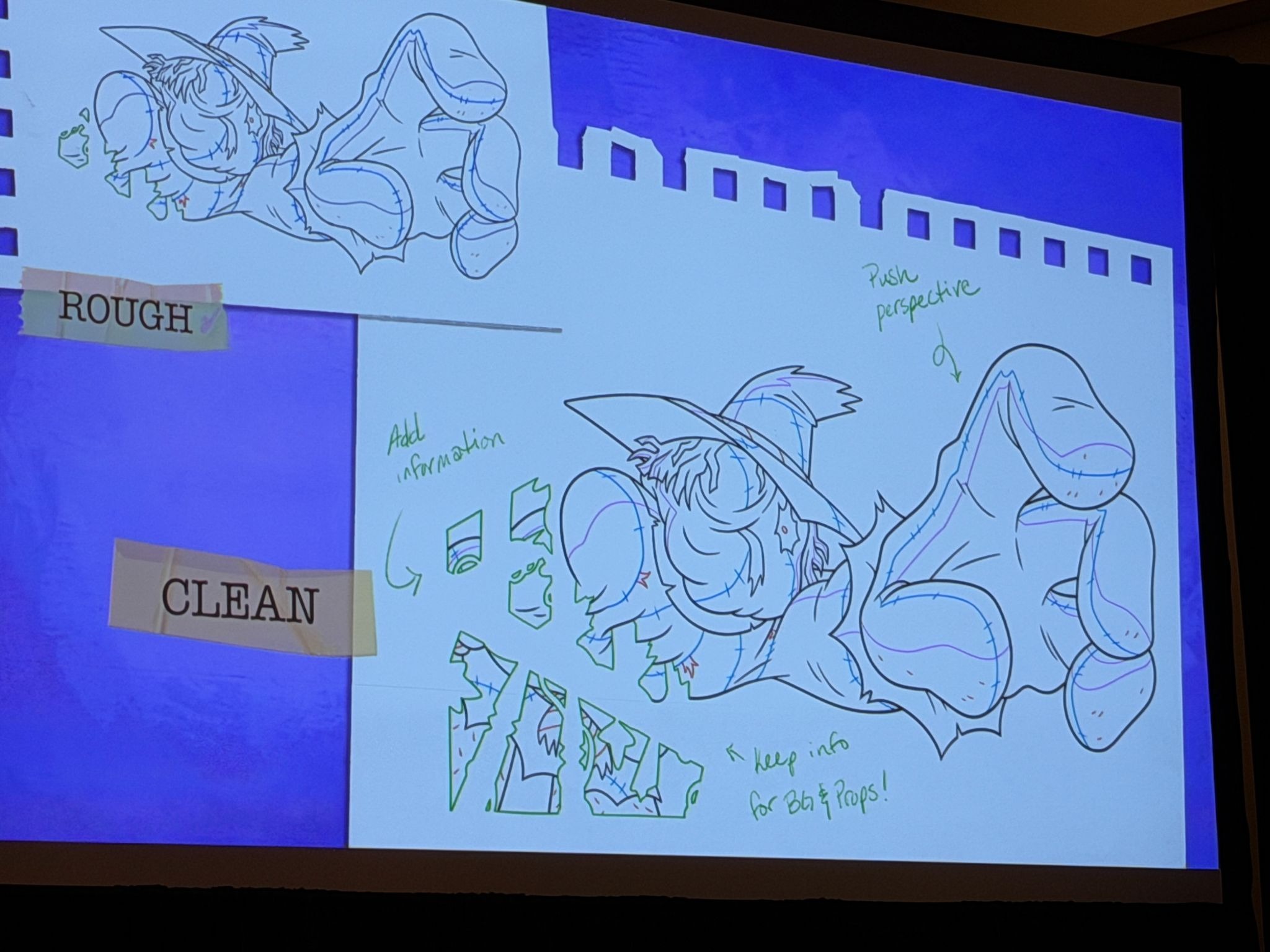
Using the scarecrow as an example, Wiley showed how she pushed perspective a bit further and adjusted line weight to add heft, such as thickening the underside of his hat brim so it reads as heavier. Clean-up is also where she catches small errors, often by pulling reference from the props and backgrounds teams, who work at the same time as the designers. Her favorite part is unifying the work of many different designers so the final result looks like it came from a single hand.
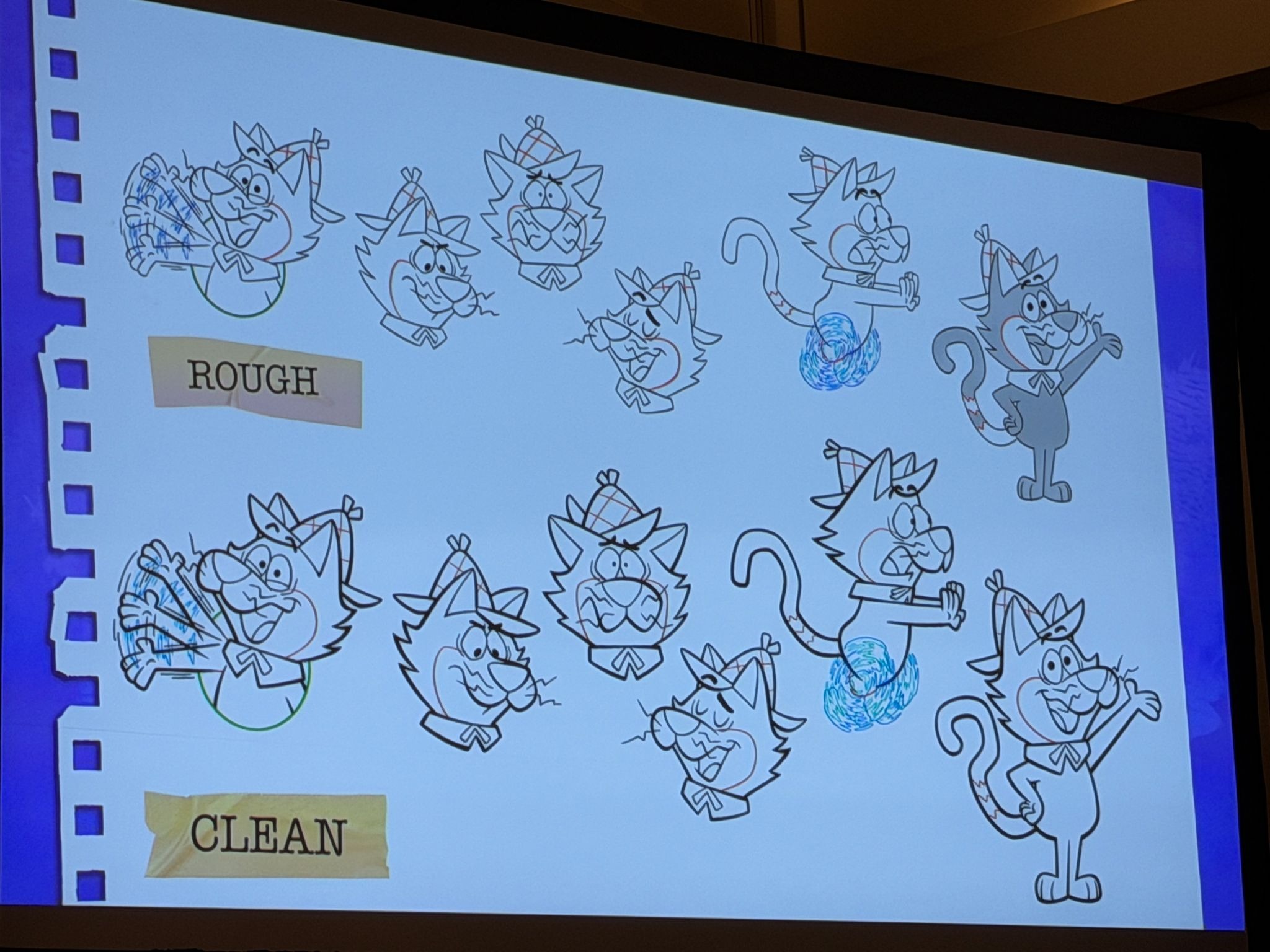
Wiley also gets to play. She showed a Hanna-Barbera-inspired, 1970s-style detective cat design from "Spinned Off" of Murglepurr, a second shading pass on a design, and monsters created for an Andromeda intro, noting that some of these stylistic departures got approved even when they strayed wildly from the usual look.
New episodes of Big City Greens continue to roll out on Disney Channel and Disney+. Don’t miss our episode recaps, courtesy of animation expert Tony Betti.