
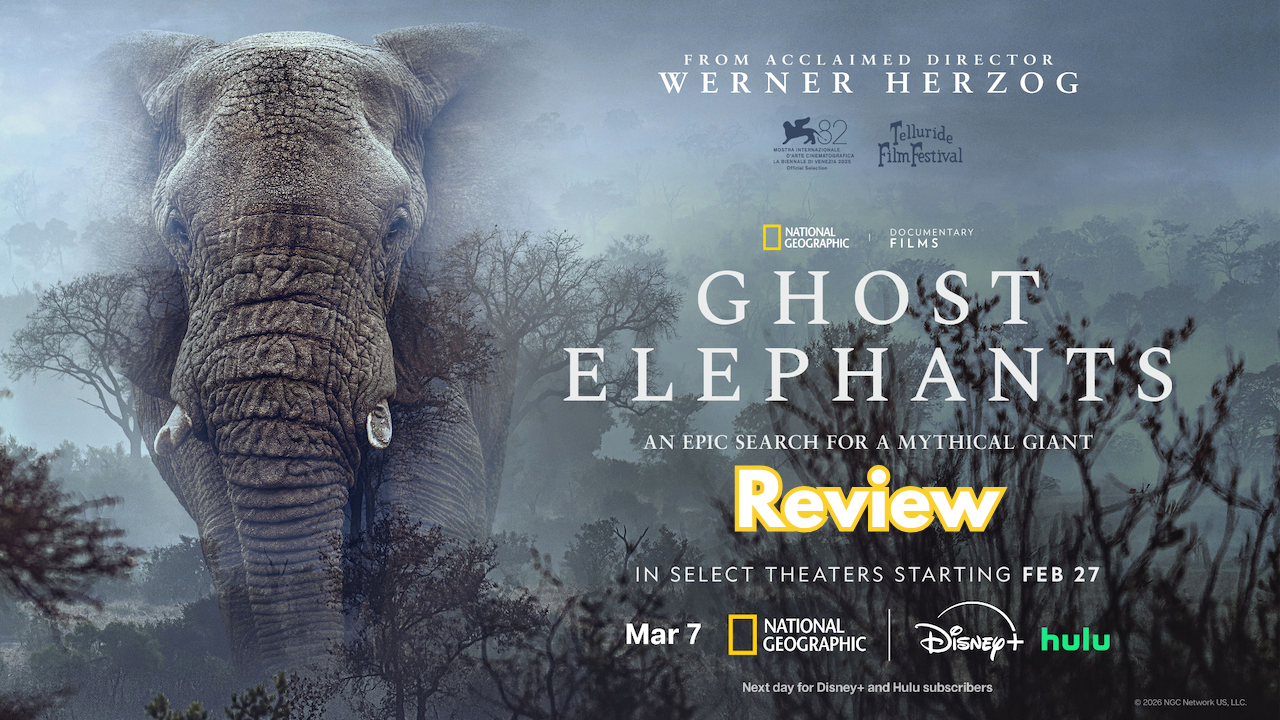
Review: Werner Herzog’s "Ghost Elephants" Is A Poetic Search for Angola’s Elusive Giants


In the documentary Ghost Elephants, Werner Herzog shifts his lens toward one of the most elusive legends in modern conservation, a mysterious herd of “ghost elephants” rumored to roam the highlands of Angola. At the core of this expedition is conservation biologist and National Geographic Explorer Dr. Steve Boyes, who has spent years searching for what may be descendants of the largest land mammals ever recorded, animals long believed to be myth. Begging the question, what if the most important discovery isn’t whether something exists, but how we choose to look for it? The question quickly shifts. It's less about proving the existence of elephants and more about why we feel compelled to search for them in the first place.
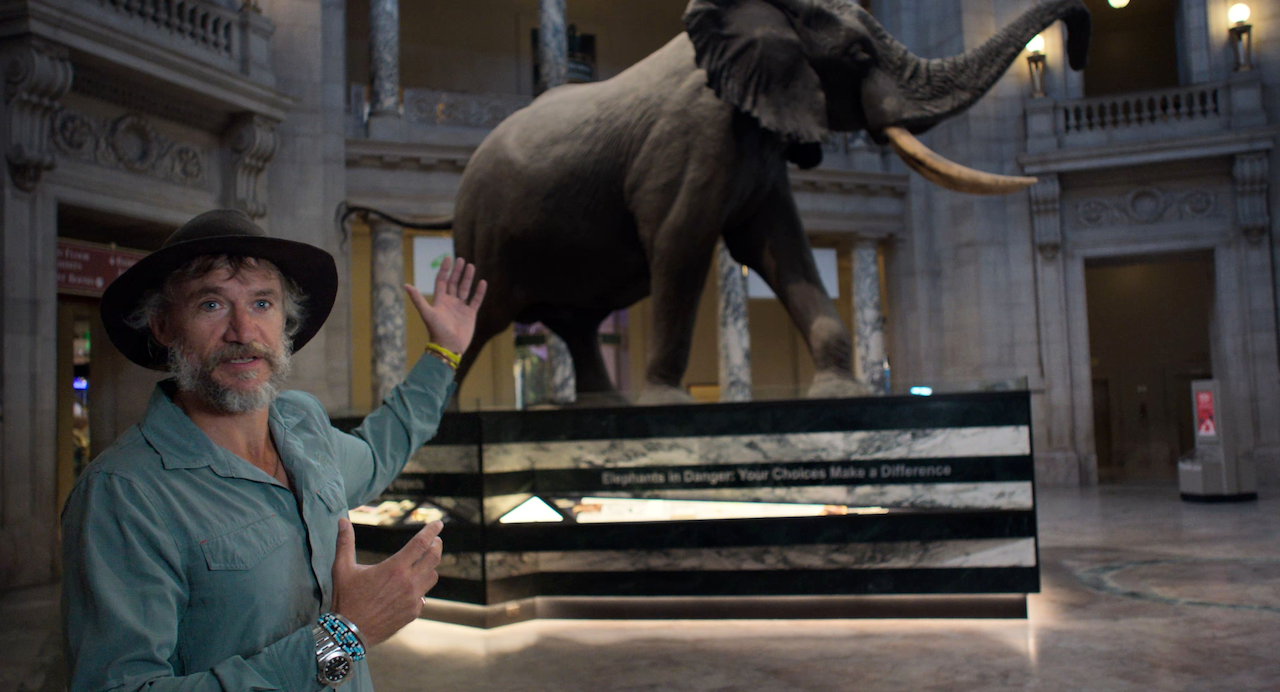
The journey begins at the Smithsonian National Museum of Natural History in Washington, D.C., where the largest elephant ever recorded stands preserved in taxidermy. Officially named the Fénykövi elephant after the Hungarian hunter who killed it in 1955, the massive specimen is more fondly referred to by museum staff as Henry. Weighing 11 tons, the mammal is believed by Boyes to have been at least a century old at the time of its death.
Boyes’ theory of the distinct subspecies leads him to the remote highland wetlands of Angola. The region is sparsely populated and roughly the size of England, and is extraordinarily difficult to access. Yet Boyes describes it as one of the most biodiverse ecosystems on Earth, noting that every species his team has documented there appears to be endemic to the area.
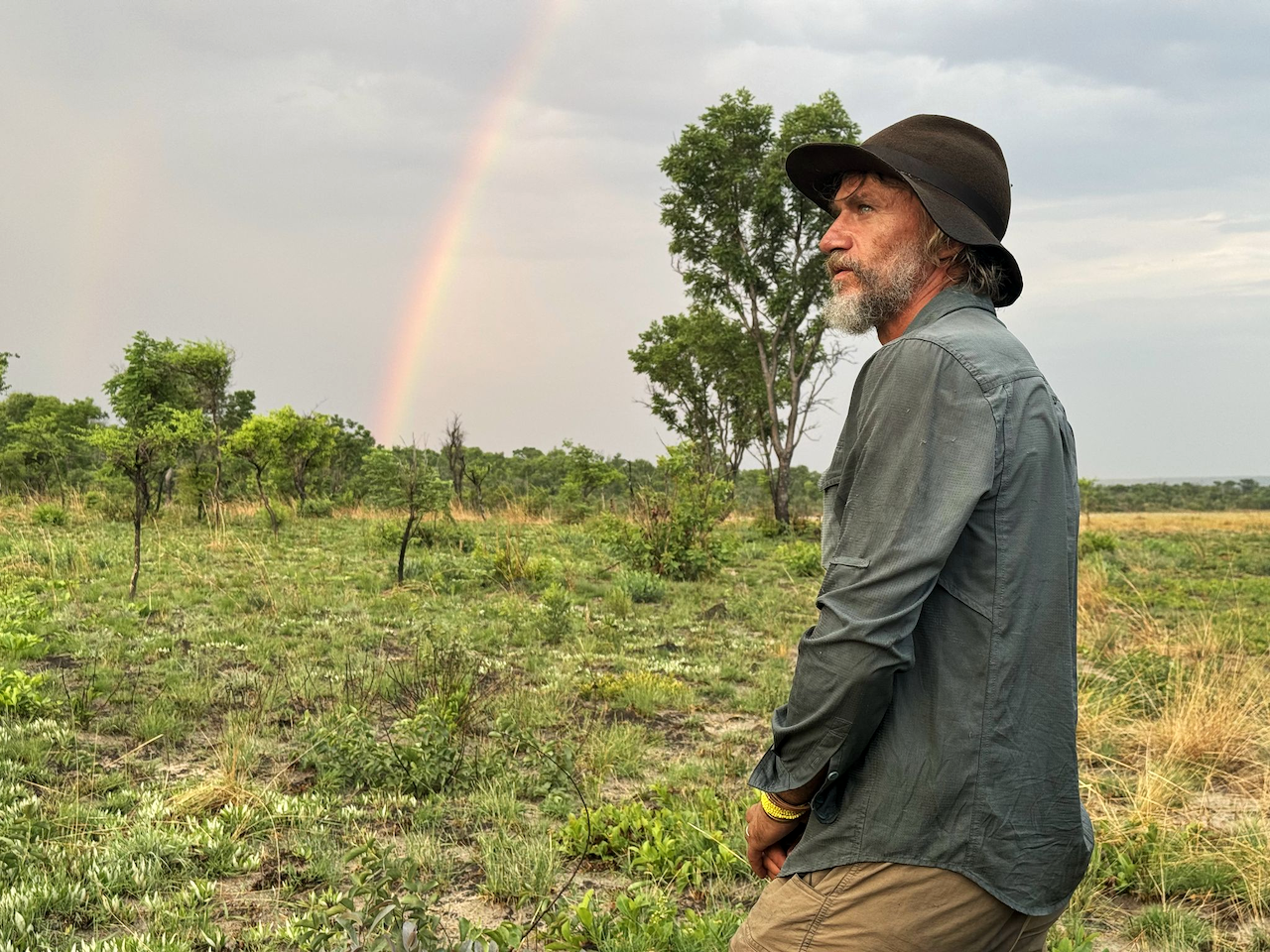
Upon arriving in Africa, Herzog asks Boyes a quintessentially Herzogian question: Does it matter if the ghost elephants are real? Boyes calmly replies: “It doesn’t matter to me”. Boyes’ response sets a tone and begins to untangle the philosophical backbone of the film. If the elephants remain a dream, he suggests, perhaps they will always exist.
Throughout the documentary, Boyes’ search feels less like mania and more like devotion to a lifelong commitment to conservation and curiosity. His path is led deep into Angola’s forested highlands in pursuit of the ghost elephants of Lisima, rumored survivors hidden within dense terrain and oral histories. Alongside him is fellow National Geographic Explorer Kerllen Costa, as well as three extraordinary master trackers.
Satellites, drones, and data sets are brought into the field, yet Herzog quickly reveals their limitations. Technology cannot compete with ancestral knowledge honed over generations. The trackers read the earth with physical characteristics such as faint impressions in dust, subtle bends in grass, and barely visible scat. The film teaches its audience how to listen, move slowly, and trust knowledge systems dismissed by Western science.
Visually, the documentary is compelling without being showy. The Angolan highlands are rendered in muted greens and silvers, their opacity reinforcing the theme of absence. The long stretches of landscape unfold in contemplative silence suggests that what we do not see may be just as significant as what we do. There are breathtaking underwater sequences of elephants swimming, set against orchestral music that swells but never overwhelms. Close-ups of native rituals feel intimate.
The film does not shy away from humanity’s darker past. Archival footage shows elephants gunned down from helicopters. We are shown skeletal remains scattered along roadsides, discussions of poaching, sport hunting, and even exploitative filming practices that are deeply sobering.
The film’s visit to the Smithsonian archives, where massive elephant skulls and tusks are examined up close, feels illicit, as though viewers are being allowed behind the curtain. Toward the end of the documentary, discussions of DNA analysis hint at future conservation tools, comparing the genetic material of the ghost elephants to known species.
Ghost Elephants clocks in at one hour and thirty-eight minutes, moving gently and deliberately. It is less a film about finding animals than about recovering ways of seeing. For viewers interested in elephants, conservation, and foreign mythology, Ghost Elephants is a contemplative and deeply moving watch.
More National Geographic News:
- "Ghost Elephants" First Look: National Geographic Unveils First Trailer and Release Date for Werner Herzog's Latest Documentary
- "Pole to Pole with Will Smith" Soundtrack Now Streaming On All Major Digital Streaming Platforms
- National Geographic Announces Premiere Date for "Secrets of the Bees" Docuseries