YouTube TV Responds to Disney's Request to Restore ABC for Election Day
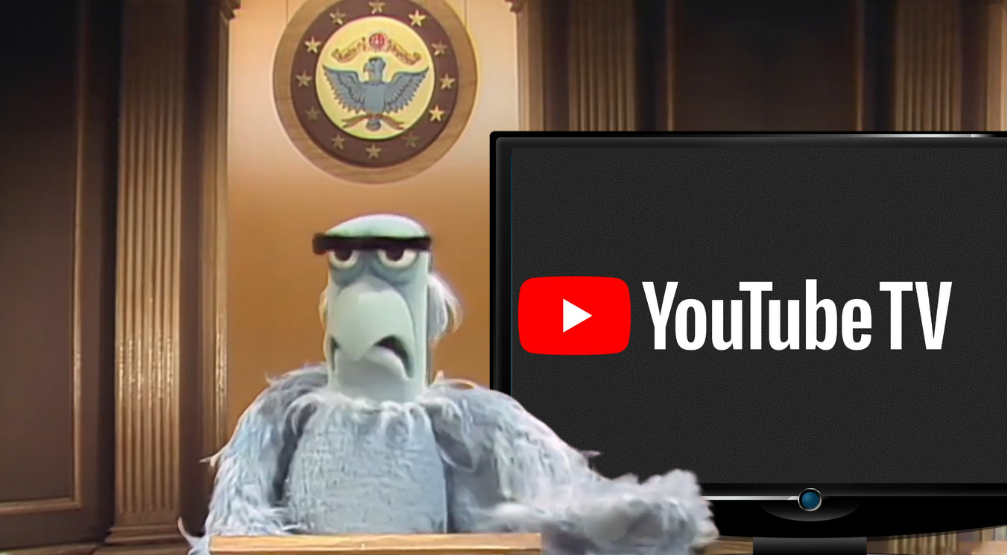
Disney missed the opportunity to point out that stopping in the middle of Election Day coverage is "distinctly unpatriotic".


Update added below with YouTube TV's response to Disney.
Variety is reporting that Disney is making a new public appeal in its ongoing carriage dispute with YouTube TV. Following a blackout that began last week, the media conglomerate is now asking the Google-owned service to restore at least one channel, ABC, for a very specific reason: Election Day on November 4.
What’s Happening:
- Disney has publicly requested that YouTube TV restore ABC on November 4, so subscribers do not lose access to election coverage.
- This appeal is the latest development in a blackout that began late on October 30. YouTube TV removed all Disney-owned networks, including ABC, ESPN, and others, after the two companies failed to agree on a new contract.
- The core of the dispute is money. Disney is asking for rate hikes for its channels, which Google (YouTube TV's owner) is unwilling to pay, arguing it would lead to price increases for customers.
- YouTube TV has stated that if the channels remain unavailable for "an extended period of time," it will provide subscribers with a one-time $20 credit. The base plan for the service costs $82.99 per month.
- In the meantime, Disney has been pushing viewers to alternative, non-traditional methods. ABC News coverage is available on the free live-streaming channel ABC News Live. Over the weekend, ESPN made "College GameDay" available via the X platform and the ESPN app without requiring a subscription.
What They're Saying:
- Disney's statement: "Despite the impasse that led to the current blackout, we have asked YouTube TV to restore ABC for Election Day so subscribers have access to the information they rely on. We believe in putting the public interest first and hope YouTube TV will take this small step for their customers while we continue to work toward a fair agreement.”
- YouTube's response (added 4/3/25 at 4:25pm PT): "Our team just shared this email with Disney leadership, regarding their ask to restore ABC for 24 hours: Thanks for your proposal. We agree that the right priority here is to give customers what they want. As you know from the many content disputes you’ve been part of, customers don’t want companies fighting and content blackouts. But unfortunately, your proposal would permit us to return Disney’s ABC stations only for a day and will cause customer confusion among those who may briefly see ABC on YouTube TV only to lose it again shortly after. There are plenty of other options for customers - election news information is very widely available across other broadcast stations and news networks on YouTube TV, as well as on the main YouTube service, for free. In fact, on the last two U.S. election days, the vast majority of tuned in YouTube TV subscribers chose not to watch ABC. Publicly resorting to the same tactic that Disney relied on in past disputes fails to acknowledge the distinction between YouTube and other distribution platforms. As you know, Disney can continue to livestream news information on the ABC News YouTube page, which has 19.1M subscribers, and its ABC local stations can also do so on their YouTube pages. To truly achieve what is best for our mutual customers, we propose immediately restoring the Disney channels that our customers watch: ABC and the ESPN networks, while we continue to negotiate. Those are the channels that people want. f you agree with our proposal and give us approval, we can get our operational teams together and get these channels live in hours. Let us know how you’d like to proceed. More importantly, let's get a fair deal done so we can get back to providing our mutual customers with the content they want. Thank you."
The Blame Game and a History of Disputes
- This public appeal follows an internal memo sent to Disney staffers last week, which firmly placed the blame on Google for the blackout. The memo, from executives Alan, Dana, and Jimmy, claimed YouTube TV "pulled our channels from their service, prior to the midnight expiration of our deal, and with no advance notice."
- The memo also alleged that the streamer "deleted all previously recorded shows and events from their subscribers’ libraries," and accused Google of wanting to "eliminate competition and devalue the very content that helped them build their service."
- YouTube TV has its own strong counter-argument, which it made public before the blackout. A spokesperson stated that Disney was "proposing costly economic terms that would raise prices on YouTube TV customers" while simultaneously "benefiting Disney’s own live TV products – like Hulu + Live TV."
- This is far from Disney's first blackout battle. The company's content was temporarily removed from Charter (Spectrum) in 2023, Dish Network in 2022, and DirecTV in 2024 over similar disputes. YouTube TV is also no stranger to these fights, having recently reached deals with Paramount Global, Fox Corp., and NBCUniversal, all while a deadline loomed. However, YouTube TV did drop Univision networks at the end of September, and those channels remain off the service.
- Update: YouTube TV's response is another example of the public bitterness that is often displayed by the companies involved in these types of disputes, with the jab "on the last two U.S. election days, the vast majority of tuned in YouTube TV subscribers chose not to watch ABC."
About Carriage Disputes: Why Your Channels Disappear
- The Disney vs. YouTube TV fight is just the latest example of a "carriage dispute," a conflict that has become increasingly common in the media landscape. Here’s a brief look at what's happening behind the scenes.
- A Carriage dispute is a disagreement between a content provider (the "owner" of the channels, like Disney, Paramount, or NBCUniversal) and a multichannel video programming distributor, or MVPD (the "seller," like YouTube TV, Comcast, or DirecTV).
- The conflict is almost always about money, specifically "retransmission fees." The distributor (YouTube TV) must pay the content provider (Disney) a fee for every subscriber who has access to that provider's channels.
- These agreements are set by multi-year contracts. When a contract expires and the two sides cannot agree on the new fees (with the provider wanting more money and the distributor wanting to pay less) the distributor legally loses the right to "carry" those channels. The result is a blackout for subscribers.
- Content providers like Disney use their most valuable, "must-see" programming as leverage. For Disney, this is ESPN and live sports like the NFL, college football, and the NBA.
More Disney TV News:
- Disney Recording Artist Freya Skye from "Zombies 4" Sells Out First-Ever Solo Acoustic Shows In Minutes
- ABC Developing Legal Drama "Roman Law" from Writer Jeremy Svenson
- Ariana Grande Among a Cast of Returning Favorites Revealed for “American Horror Story” Season 13
- Evan Rachel Wood Joins Ryan Murphy’s Latest FX Series “The Shards”
Sign up for Disney+ or the Disney Streaming Bundle (Disney+, ESPN+, and ad-supported Hulu) now